
Description
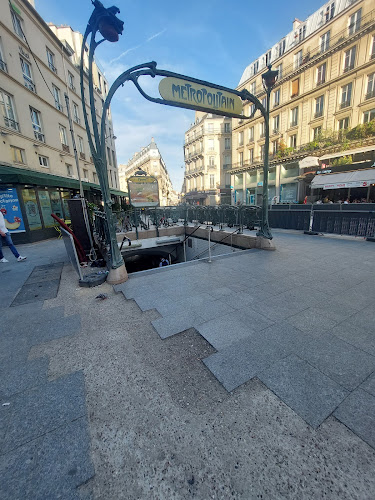
The Édicule Guimard of the Colonel Opéra station is a true gem of Paris. Located in the 9th arrondissement on Rue Auber, this iconic building was built in 1895 and is one of the earliest examples of Art Nouveau architecture. Its unique style and intricate details make it a masterpiece of the Art Nouveau movement. The Guimard Édicule is a must-see for anyone interested in architecture or design. Its flowing lines and organic forms are a testament to the creativity and innovation of the Art Nouveau style. The building has been described as the most beautiful in the world, and it’s easy to see why. But the Guimard Édicule is more than just a pretty facade. It also serves as an important piece of Parisian history. The building was originally part of the entrance to the Colonel Opéra station, which was one of the first metro stations in Paris. Today, the Édicule Guimard is the only remaining original entrance to the station, making it a rare and valuable piece of Parisian heritage. Visitors to the Guimard Édicule can admire its intricate details up close and personal. The building is small but packed with intricate details, from the delicate floral patterns that adorn the exterior to the intricate metalwork that frames the windows and doors. It’s a true feast for the eyes. Overall, the Guimard Édicule is a true treasure of Paris. Its unique style, historical significance, and stunning beauty make it a must-see for anyone visiting the city. So if you’re in Paris, be sure to add the Guimard Édicule to your itinerary. You won’t be disappointed.
Principales caractéristiques
The Édicule Guimard of the Colonel Opéra station, located in the 9th arrondissement, is a Neo Baroque opera house with connections to 3 Metro lines. The main feature is the subway station opening out onto the opera house, offering a unique blend of transportation and architectural grandeur.
Accessibilité et commodités
The museum offers accessibility features for visitors with disabilities, including ramps and elevators. Amenities include restrooms, dining options, and gift shops. Additionally, visitors can avail themselves of services such as audio guides and coat check facilities.
Planifier votre visite
To avoid crowds, it's best to visit the monument during off-peak hours. Visitors typically spend around 1-2 hours exploring the subway station and its surroundings. Recommended itineraries include exploring the architectural features of the opera house and enjoying the convenience of the nearby Metro connections.
What Makes the Édicule Guimard at Opéra Notable
The Édicule Guimard of the Colonel Opéra station is an unusually complete encounter with the Paris Métro’s Art Nouveau identity. Designed by Hector Guimard, this rare surviving entrance structure stands on Rue Auber, its green cast-iron framework and distinctive canopy turning a practical station access point into an object of urban design. The “colonel” designation refers to this recognisable covered form.
Its appeal lies in looking closely rather than treating it as a quick photo stop. The ironwork gives the entrance a sinuous, plant-like character, while the canopy creates a strong threshold between the busy pavement and the underground network. It is a compact monument, but it explains much about how Paris brought architecture and public transport together at street level.
Location and Neighbourhood Context
The entrance is on Rue Auber in the 9th arrondissement, in the Opéra quarter. This is a dense central district shaped by broad streets, major cultural buildings, shops and offices, so the edicule is best read as part of the everyday Parisian streetscape rather than as an isolated attraction. The surrounding pavements can be particularly active during commuting and shopping periods.
It fits easily into a walk around the Opéra area. Allow time to approach from more than one angle: the canopy is most legible from a short distance, while the decorative construction rewards a closer look. Rue Auber also makes it convenient to combine with other central 9th-arrondissement streets and the wider Grands Boulevards area. The Seine is not the immediate setting; this is a city-centre experience defined by boulevards and transport rather than riverfront views.
Points forts des visiteurs
- A rare surviving Guimard-designed Paris Métro entrance, with an ornate green cast-iron structure.
- The covered “colonel” form, whose canopy distinguishes it from simpler Métro entrances.
- A useful stop for travellers interested in Art Nouveau, design history and the visual language of public infrastructure.
- An easily observed monument for walkers exploring Opéra and the 9th arrondissement, with no need to build an entire day around it.
- A strong subject for architectural photography, especially when details of the metalwork are given equal attention to the overall silhouette.
Practical Planning Tips
Visit in daylight if your priority is studying the ironwork and canopy. Earlier in the day can make it easier to pause on the pavement and frame photographs before the area becomes busier; at other times, be considerate of people using the station entrance. Since this is a functioning Métro access point, keep clear of the flow in and out and avoid blocking the steps or gates.
This is best planned as a short architectural stop rather than a timed visit. There is no need to rush: spend a few minutes viewing the structure from across the street, then examine its materials and forms at close range. If you intend to continue into the Métro, check current network information through the official transport operator before travelling, as access arrangements can change.
Questions fréquemment posées
Where is the Édicule Guimard of the Colonel Opéra station?
It is on Rue Auber in Paris’s 9th arrondissement, in the central Opéra quarter.
Why is this Métro entrance important?
It is a rare surviving Art Nouveau Métro entrance designed by Hector Guimard, notable for its green cast iron and covered colonel-type canopy.
How long should I allow for a visit?
It works well as a brief stop within a walk around Opéra. Allow extra time if you want to photograph or study the decorative details.