
Description
The Édicule Guimard of the Place d’Italie station may not be on the usual tourist itinerary, but it’s worth a visit for architecture enthusiasts. This elevated station on the Paris Métro, located in the 13th arrondissement, opened in 1930 and was closed for renovations from 2006 to 2010. Designed by Hector Guimard, the station’s entrance is a striking example of Art Nouveau architecture. The Édicule Guimard, or Guimard Pavilion, is a small structure that houses the entrance to the station. It features intricate ironwork and colorful glass panels that create a beautiful interplay of light and shadow. While the station itself may not be accessible to people with reduced mobility, the Édicule Guimard is a must-see for anyone interested in the history and aesthetics of the Métro system. It’s a testament to the enduring appeal of Art Nouveau design, and a reminder of the importance of preserving Paris’s architectural heritage.
Principales caractéristiques
The Édicule Guimard of the Place d'Italie station is a unique and historic subway station located in the 13th arrondissement of Paris. Designed by Hector Guimard, it is known for its iconic Art Nouveau architectural style, characterized by flowing lines and organic forms. The station's entrance, or édicule, is a remarkable example of Guimard's work and is a must-see for architecture enthusiasts and history buffs.
Accessibilité et commodités
The museum is equipped with accessibility features to accommodate visitors with disabilities, including wheelchair access and accessible restrooms. Visitors can also enjoy amenities such as dining options and gift shops. Additionally, the museum offers unique services such as audio guides to enhance the visitor experience.
Planifier votre visite
To avoid crowds, it is advisable to visit the Édicule Guimard of the Place d'Italie station during non-peak hours. Visitors typically spend around 30 minutes exploring the station and learning about its historical significance. For a comprehensive experience, it is recommended to combine the visit with other nearby attractions in the 13th arrondissement.
What Makes the Édicule Guimard Notable
The Édicule Guimard at Place d’Italie is a surviving expression of the Paris Métro’s early visual identity. Designed by Hector Guimard around 1900, this green cast-iron entrance canopy brings Art Nouveau to the pavement: its structure uses the fluid, plant-like lines and integrated decorative approach associated with the style. Rather than functioning as a separate monument behind gates, it remains part of the everyday city, marking an entrance to the métro at a major public square.
Its appeal lies in that contrast between intimate design and metropolitan scale. Place d’Italie is a busy crossroads, while the édicule rewards a slower look at its ironwork, proportions and relationship to the street. It is especially relevant for visitors tracing Guimard’s contribution to Paris, as well as anyone interested in how transport infrastructure can shape a city’s architectural character. This is a quick stop rather than a stand-alone day out, but a memorable detail within a walk through the 13th arrondissement.
Location and Neighborhood Context
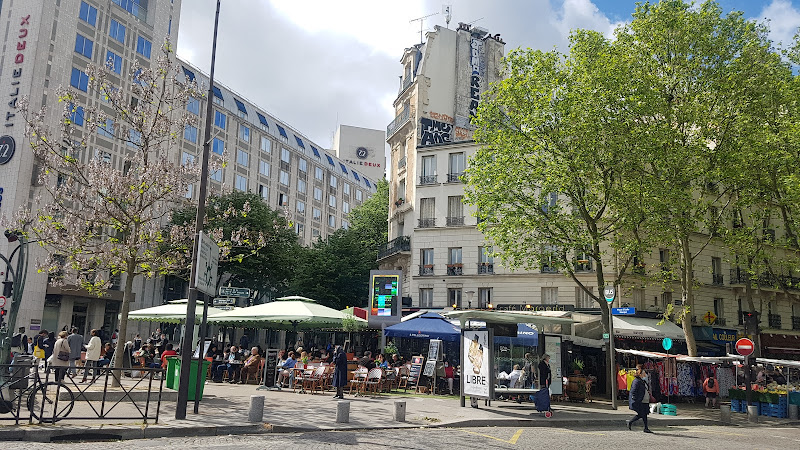
The entrance stands at Place d’Italie in the 13th arrondissement, a broad urban meeting point where several major streets converge. The setting is more active and civic than museum-like: traffic, pedestrians and métro users make the square feel like a working piece of Paris rather than a preserved historic enclave. That is precisely why the ornate canopy has such presence.
Use the stop as an anchor for exploring the surrounding 13th. The official station exits indicate directions towards Boulevard Auguste Blanqui, Boulevard Vincent Auriol, the Mairie du 13e and the Manufacture des Gobelins. These provide useful bearings for a self-guided walk. The nearby Gobelins area suits visitors interested in extending an architectural pause into a wider look at the district’s streets and public spaces. Allow time to cross the square carefully and view the édicule from more than one angle.
Points forts des visiteurs
- Art Nouveau in daily use: See a Hector Guimard-designed métro canopy in its original urban role, rather than only in a museum context.
- Street-level architecture: The green cast iron is best appreciated slowly, with attention to the curving forms and canopy silhouette.
- An efficient cultural stop: It works well as a short addition to an exploration of Place d’Italie and the 13th arrondissement.
- Ideal for design-minded visitors: Architecture students, photographers and admirers of Paris transport design will find the strongest reason to pause.
- A useful orientation point: The square connects routes towards the Gobelins, the mairie and Boulevard Vincent Auriol.
Practical Planning Tips
Visit in daylight if your priority is studying the canopy’s form and making photographs. Early morning can offer a calmer impression of the square, while later in the day brings a fuller sense of Place d’Italie as a transport hub. Since this is an outdoor métro entrance, there is no separate monument visit to schedule; simply build it into a walking route and leave a little time to navigate the busy roads around the place.
There is no need to treat the édicule as a lengthy stop. A measured look from the pavement, followed by a walk towards the Gobelins or the Mairie du 13e direction, gives the visit context. If you plan to use the station itself, check current transit information before travelling, as station access and service arrangements can change.
Questions fréquemment posées
Where is the Édicule Guimard?
It is at Place d’Italie in Paris’s 13th arrondissement, at the Place d’Italie métro station.
Who designed this métro entrance?
The canopy was designed by Hector Guimard, whose Art Nouveau entrances became enduring symbols of the Paris Métro.
How long should I allow for a visit?
It suits a brief architectural pause and is best combined with a walk around Place d’Italie and the surrounding 13th arrondissement.