
Description
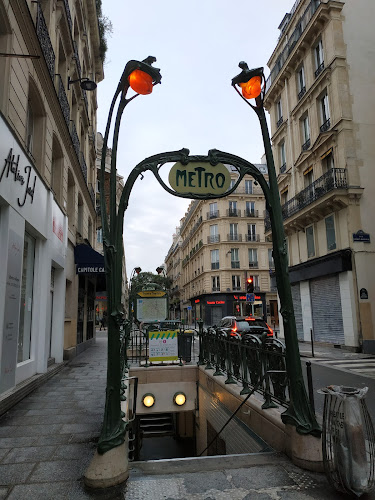
The Édicule Guimard of the Réaumur-Sébastopol station is a unique and stunning monument in the 2nd arrondissement of Paris. This beautiful structure is located at 28 rue de Palestro and 63, 65 rue Réaumur. As a travel writer, I have visited countless museums and les monuments, but the Édicule Guimard is truly one of a kind. Designed by Hector Guimard, this monument is a small but striking example of Art Nouveau architecture. The Édicule Guimard is essentially an entrance to the Réaumur-Sébastopol metro station, but it is so much more than that. The monument’s intricate ironwork and organic shapes are a testament to Guimard’s innovative design style. Visitors to the Édicule Guimard can take in the beauty of the monument’s exterior, but the interior is equally impressive. The small space is filled with natural light, and the ironwork creates a beautiful play of light and shadow. The Édicule Guimard is a true work of art, and it’s easy to see why it has become such a beloved landmark in Paris. If you’re a fan of Art Nouveau architecture or just appreciate beautiful design, the Édicule Guimard is a must-see. This unique monument is a testament to the creativity and innovation of Hector Guimard, and it’s a beautiful example of the Art Nouveau style. Whether you’re a seasoned traveler or a first-time visitor to Paris, the Édicule Guimard is sure to leave a lasting impression.
Principales caractéristiques:
- The Édicule Guimard of the Réaumur – Sébastopol station is a unique and historic transport interchange located in the 2nd arrondissement of Paris.
- This monument is renowned for its architectural significance, featuring the iconic Art Nouveau design by Hector Guimard, adding a distinctive charm to the station.
- Visitors can marvel at the historical and artistic value of the station, making it a must-see for architecture enthusiasts and history lovers.
Accessibilité et commodités :
- Le musée est équipé de fonctionnalités d'accessibilité pour accueillir les visiteurs handicapés, y compris un accès et des installations en fauteuil roulant.
- Amenities available at the station include restrooms, and visitors can explore nearby dining options and gift shops.
- Unique services such as audio guides enhance the visitor experience, providing insightful commentary on the station's historical and architectural significance.
Planifier votre visite :
- To avoid crowds, it's best to visit the station during off-peak hours, typically early mornings or late afternoons.
- Visitors usually spend around 1 to 1.5 hours exploring the station and its unique features, making it an ideal stop during a comprehensive Paris itinerary.
- Recommended itineraries may include visiting nearby attractions within the 2nd arrondissement, creating a well-rounded experience of this vibrant area.
What Makes This Métro Entrance Notable
The Édicule Guimard of the Réaumur–Sébastopol station turns an everyday transport entrance into a small piece of Parisian design history. Designed by Hector Guimard, its Art Nouveau form is an important reminder that the early Métro was conceived not only as infrastructure but also as part of the city’s streetscape. At the intersection of Rue Réaumur and Boulevard de Sébastopol, it rewards a pause even for visitors who are simply passing through central Paris.
This is one of the few remaining Guimard-style édicules still in situ. The word édicule describes a small entrance structure rather than a freestanding museum monument, and that is precisely its appeal: the architecture remains in its intended urban setting. Look at it as a working fragment of the Métro’s original visual language, where decorative design and public movement meet at street level.
Location and Neighborhood Context
The entrance stands in the 2nd arrondissement, at 28 Rue de Palestro and 63–65 Rue Réaumur, close to the meeting point of Rue Réaumur and Boulevard de Sébastopol. This is a dense, central part of Paris defined by broad commercial streets, office activity, historic passages of circulation and a steady flow of pedestrians. The monument is best understood as part of the pavement and boulevard scene, rather than as a destination set apart from the city.
It fits easily into a walk through the Sentier and the wider central-right-bank area. From here, the streets lead naturally towards Les Halles, the Marais edge and the older commercial quarters around Réaumur. Combine it with other architectural details encountered on foot: façades, shopfronts, intersections and the changing scale between major thoroughfares and narrower side streets. The Seine is not the immediate setting, so this stop works better as part of an urban architecture walk than as a riverside stroll.
Points forts des visiteurs
- Art Nouveau in daily use: See a Guimard-designed Métro entrance where it continues to function within the modern city.
- A concise architectural stop: The exterior can be appreciated quickly, making it practical between larger museum visits or while exploring central Paris.
- Street-level context: Its position at a busy intersection shows how public transport design contributes to the character of Parisian boulevards.
- Especially suited to: Art Nouveau enthusiasts, design students, photographers and visitors interested in the history of the Paris Métro.
Practical Planning Tips
Approach this as an exterior architectural sight rather than a lengthy visit. Allow time to view the structure from more than one angle, while remaining aware of pedestrian traffic and the active station entrance. Morning can offer a calmer moment for close observation; later in the day, the surrounding street activity gives a stronger sense of the entrance’s everyday role. If you are photographing it, be patient and keep clear of commuters.
No special monument booking is needed for viewing the édicule from the street. If you plan to enter the station or continue by Métro, check current transport information before setting out, as access arrangements can change. Pair the stop with nearby streets rather than building an entire day around it: its value lies in the quality of a short, focused encounter and in what it reveals about Paris’s public realm.
Questions fréquemment posées
Who designed the Réaumur–Sébastopol édicule?
It was designed by Hector Guimard, the architect closely associated with Paris Métro Art Nouveau entrances.
Is this a museum visit?
No. It is a historic Métro entrance structure visible in the public streetscape.
Where is the Édicule Guimard located?
It is at Rue de Palestro and Rue Réaumur, near Boulevard de Sébastopol, in Paris’s 2nd arrondissement.