<\!-- wp:heading -->
The iron lady that redefined architectural possibility
<\!-- /wp:heading --><\!-- wp:paragraph -->
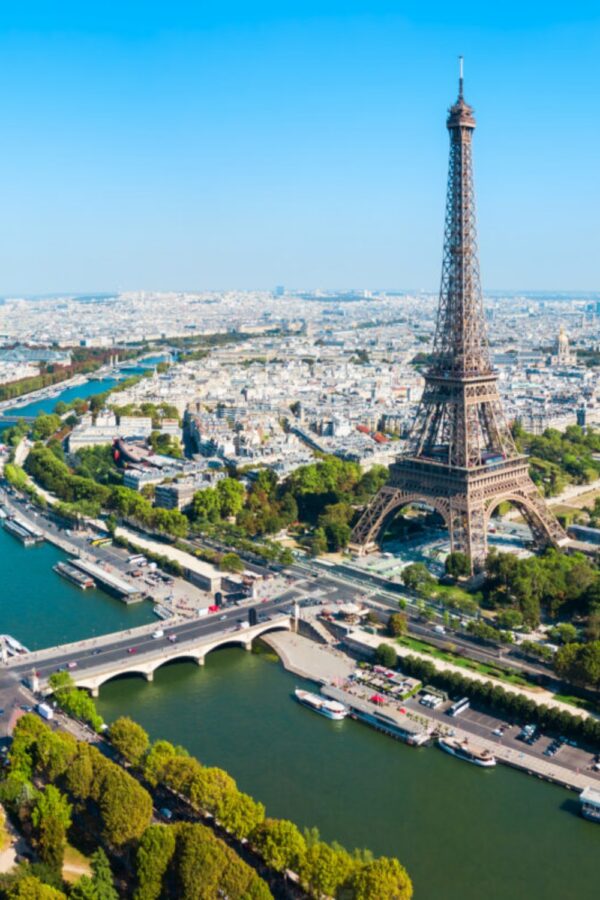
Rising 330 meters above the Champ de Mars in the 7th arrondissement, the Eiffel Tower stands as the ultimate symbol of Parisian ingenuity and the transformative power of industrial engineering. Built between 1887 and 1889 as the centerpiece of the Universal Exhibition commemorating the centennial of the French Revolution, this wrought-iron lattice tower represents one of humanity\u2019s greatest architectural achievements and the defining monument of the modern age.
<\!-- /wp:paragraph --><\!-- wp:paragraph -->
Designed by engineers Maurice Koechlin and Émile Nouguier working for Gustave Eiffel\u2019s company, with architectural refinements by Stephen Sauvestre, the tower emerged victorious from among 107 competing proposals. The selection of this audacious design reflected France\u2019s determination to showcase its technological prowess and artistic vision to the world.
<\!-- /wp:paragraph --><\!-- wp:heading {"level":3} -->
Revolutionary engineering and construction triumph
<\!-- /wp:heading --><\!-- wp:paragraph -->
The Eiffel Tower\u2019s construction represented a revolution in both civil engineering and architectural design. Gustave Eiffel\u2019s advanced understanding of metal arch and truss behavior under loading enabled the creation of a structure that was simultaneously light, airy, and remarkably strong—qualities that seemed impossible to achieve at such unprecedented height.
<\!-- /wp:paragraph --><\!-- wp:parameter --><\!-- wp:paragraph -->
The tower\u2019s open-lattice wrought iron construction used innovative techniques that would influence skyscraper design worldwide. The precise assembly of 18,038 individual iron parts, joined by 2.5 million rivets, demonstrated manufacturing precision and engineering coordination that established new standards for large-scale construction projects.
<\!-- /wp:paragraph --><\!-- wp:heading {"level":3} -->
From controversy to beloved icon
<\!-- /wp:heading --><\!-- wp:paragraph -->
The tower\u2019s initial reception was deeply controversial, with prominent artists and intellectuals protesting its construction as an assault on Parisian architectural harmony. However, once completed, criticism dissolved in the face of public enthusiasm and the tower\u2019s undeniable achievement in pushing architectural boundaries beyond previously imagined limits.
<\!-- /wp:paragraph --><\!-- wp:parameter --><\!-- wp:paragraph -->
The 1889 Universal Exhibition welcomed over 32 million visitors, with 2 million ascending the tower itself. This overwhelming public response transformed initial skepticism into national pride, establishing the tower as a symbol of French innovation and cultural confidence during the Third Republic\u2019s golden age.
<\!-- /wp:paragraph --><\!-- wp:heading {"level":3} -->
Technological milestone and world record
<\!-- /wp:heading --><\!-- wp:paragraph -->
Upon completion, the tour Eiffel claimed the title of worldu2019s tallest structure, a distinction it maintained until 1929 when New Yorku2019s Chrysler Building exceeded its height. This 40-year reign as the world\u2019s tallest man-made structure established Paris as the global center of architectural ambition and engineering excellence.
<\!-- /wp:paragraph --><\!-- wp:paragraph -->
The tower\u2019s achievement extended beyond mere height—it demonstrated that industrial materials and engineering principles could create structures of unprecedented beauty and cultural significance. This synthesis of function and aesthetics would influence architecture throughout the 20th century and beyond.
<\!-- /wp:paragraph --><\!-- wp:heading {"level":3} -->
Gateway to the Universal Exhibition
<\!-- /wp:heading --><\!-- wp:paragraph -->
Serving as the entrance gateway to the 1889 Universal Exhibition, the tower provided visitors with their first encounter with the fair\u2019s celebration of human progress and French cultural achievement. The experience of ascending the tower became an essential ritual that offered unprecedented views of Paris while symbolizing humanity\u2019s conquest of vertical space.
<\!-- /wp:paragraph --><\!-- wp:paragraph -->
The exhibition\u2019s success, largely centered around the tower\u2019s magnetic appeal, demonstrated France\u2019s ability to create cultural events that captured global imagination. The tower thus became both attraction and symbol, representing French capacity for bold vision and flawless execution.
<\!-- /wp:paragraph --><\!-- wp:heading {"level":3} -->
Enduring symbol of Parisian excellence
<\!-- /wp:heading --><\!-- wp:paragraph -->
Today, the Eiffel Tower continues to embody the qualities that made it revolutionary: innovative engineering, aesthetic boldness, and democratic accessibility. The toweru2019s ability to attract millions of visitors annually while maintaining its architectural integrity demonstrates how great les monuments can serve both practical and symbolic functions across generations.
<\!-- /wp:heading --><\!-- wp:parameter --><\!-- wp:paragraph -->
For visitors to Paris, the Eiffel Tower offers more than spectacular views—it provides a tangible connection to the optimistic spirit of the Belle Époque and the enduring French commitment to pushing boundaries in pursuit of beauty and achievement. The tower stands as proof that truly visionary architecture transcends its original purpose to become an eternal symbol of human creativity and cultural aspiration.
<\!-- /wp:paragraph -->