
Description
The Fontaine du Gros-Caillou is a hidden gem located in the heart of the 7th arrondissement of Paris. Built in 1780, it is one of the oldest waterworks in the city and stands as a testament to the ingenuity of the French people. The fountain’s name is derived from the fact that it was built on the site of a former stone quarry, and it stands 2.5 meters tall. Despite its small size, the Fontaine du Gros-Caillou is a popular tourist attraction and a beloved spot for locals and visitors alike. It is located in the Place du Gros-Caillou, a charming square named after the quarry that once stood on the site. Visitors can relax on the benches surrounding the fountain and take in the peaceful atmosphere of this historic spot. What makes the Fontaine du Gros-Caillou so special is its connection to Paris‘ rich history. As one of the oldest waterworks in the city, it is a testament to the ingenuity and resourcefulness of the French people. It also serves as a reminder of the city’s past, when stone quarries dotted the landscape and provided the materials for many of Paris’ most iconic buildings. If you are looking for a unique and off-the-beaten-path attraction in Paris, the Fontaine du Gros-Caillou is definitely worth a visit. It may be small, but it is full of charm and history, and it offers a glimpse into the Paris of centuries past.
Principales caractéristiques
The Fontaine du Gros-Caillou, located in the 7th arrondissement, is a historic monument that dates back to the 18th century. It is renowned for its elegant design and the historical significance it holds as one of the remaining fountains from the reign of Louis XV. Visitors can admire its intricate architectural details and learn about its role in the local history.
Accessibilité et commodités
The museum offers accessibility features to accommodate visitors with disabilities, including wheelchair access and restroom facilities. Additionally, visitors can enjoy dining options at the on-site French restaurant, which provides a convenient and delightful culinary experience. The museum also offers unique services such as audio guides to enhance the visitor's understanding of the monument's significance.
Planifier votre visite
For the best experience, it is recommended to visit the Fontaine du Gros-Caillou during weekdays to avoid large crowds. On average, visitors spend 1-2.5 hours exploring the monument and its surroundings. A suggested itinerary includes admiring the architectural details of the fountain, indulging in a delightful meal at the French restaurant, and exploring the nearby attractions in the 7th arrondissement.
What Makes Fontaine du Gros-Caillou Notable
Fontaine du Gros-Caillou is an 18th-century public fountain in Paris’s 7th arrondissement. Its importance lies less in monumental scale than in its survival as a trace of the old Gros-Caillou village: a reminder that this now central part of Paris once had a more local, village-like identity.
For visitors, it is a short, observant stop rather than a destination requiring a long visit. The fountain rewards an interest in the small details that shape Paris: public water infrastructure, historic street furniture and the layers of neighborhood history that remain within an intensely visited arrondissement. Approach it as part of a walk, pause to look closely, then continue through the surrounding streets.
Location & Neighborhood Context
The fountain is listed at 129, 131 rue Saint-Dominique, in the 7th arrondissement. This is a polished, residential and institutional part of the Left Bank, where broad avenues, embassies, museums and everyday neighborhood addresses sit close together. Rue Saint-Dominique is especially useful for travelers exploring the area on foot, since it runs through a section of the arrondissement shaped by both local life and major Paris landmarks.
The Eiffel Tower is close enough to frame a wider neighborhood walk, while the Seine is also within the 7th arrondissement’s natural orbit. Rather than treating the fountain as an isolated sight, combine it with a slower route through the Gros-Caillou quarter. The contrast is the point: after the large-scale spaces around the tower and river, this small historic element brings attention back to the district’s older fabric.
Points forts des visiteurs
- An 18th-century public fountain that offers a tangible link to the former Gros-Caillou village.
- A concise stop for travelers interested in Parisian urban history beyond headline monuments.
- A practical addition to a self-guided walk through the 7th arrondissement and around the Eiffel Tower area.
- A good fit for architecture, photography and neighborhood-walk enthusiasts who enjoy noticing small-scale historic features.
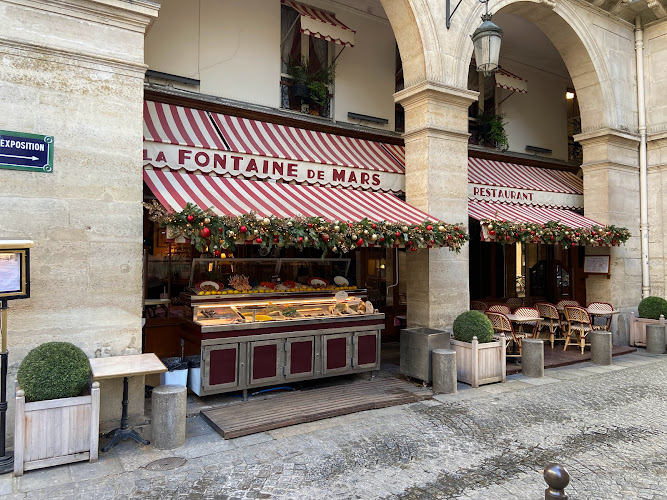
- A setting associated with the nearby La Fontaine de Mars bistrot-brasserie, whose official site describes a small square refreshed by the Fontaine de Mars.
Practical Planning Tips
Visit in daylight if you want to appreciate the fountain’s place in the streetscape and combine it with nearby walking. Early morning can make a neighborhood route feel more measured; later in the day, allow extra time for the busier atmosphere around the Eiffel Tower. Because this is a public-fountain stop rather than a conventional museum visit, keep your itinerary flexible and pair it with other nearby sights.
The website linked with this entry belongs to La Fontaine de Mars, a nearby restaurant, and is useful for restaurant reservations rather than for monument access information. If you intend to dine there, reserve ahead through its official channels. For the fountain itself, check current street conditions before setting out, particularly if you are planning a tightly timed walking route.
Questions fréquemment posées
What is Fontaine du Gros-Caillou?
It is a historic public fountain dating from the 18th century, preserved in Paris’s 7th arrondissement and connected with the old Gros-Caillou village.
Is it close to the Eiffel Tower?
Yes. The official site of the nearby La Fontaine de Mars restaurant describes its location as a short distance from the Eiffel Tower, making the fountain easy to include in that area’s walk.
How long should I allow for a visit?
Plan it as a brief stop within a wider 7th-arrondissement stroll. Its value is in the historic context and the surrounding quarter rather than in a lengthy standalone visit.