
Description
The Hôpital de la Pitié-Salpêtrière is a must-visit destination for anyone interested in the history of medicine. Founded in 1780, the hospital is one of the oldest and largest medical institutions in the world. Located in the 13th arrondissement of Paris, the hospital is renowned for its treatment of neurological and psychiatric disorders. The hospital has a rich history of medical research, teaching and practice. It has a number of departments that treat patients with a wide range of conditions, including neurology, psychiatry, geriatrics, cardiology, ophthalmology, plastic surgery, and paediatrics. The hospital also has a number of specialist departments, including the Department of Infectious Diseases, the Department of Neurology, the Department of Psychiatry, the Department of Neurology and the Department of Neurosurgery. Visitors to the hospital will be struck by its impressive architecture, which reflects the grandeur of its history. The hospital’s buildings are a mix of old and new, with some dating back to the 18th century and others built more recently. The hospital’s beautiful gardens are a peaceful oasis in the midst of the bustling city. But the hospital is not just a historic monument. It is also a thriving medical centre, where patients from all over the world come to receive treatment. The hospital’s doctors and researchers are at the forefront of medical research, and their work has led to many breakthroughs in the treatment of neurological and psychiatric disorders. If you are interested in the history of medicine or simply want to see one of Paris’s most impressive landmarks, the Hôpital de la Pitié-Salpêtrière is not to be missed.
Principales caractéristiques
- The Hôpital de la Pitié-Salpêtrière, located in the 13th arrondissement, is a university hospital with a rich history dating back to its origins as a gunpowder factory and a prison.
- This monumental site offers a unique blend of architectural features and historical significance, attracting visitors interested in its multifaceted past.
Accessibilité et commodités
- The museum strives to provide accessibility for all visitors, offering facilities and services to accommodate individuals with disabilities.
- Amenities include restrooms, dining options, and a gift shop, along with special services such as audio guides to enhance the visitor experience.
Planifier votre visite
- To avoid crowds, it's best to plan your visit during off-peak hours and weekdays.
- Visitors typically spend about 1-2 hours exploring the museum, but the duration may vary based on individual interests and the extent of exploration.
What Makes Hôpital de la Pitié-Salpêtrière Notable
Hôpital de la Pitié-Salpêtrière is a vast university hospital in Paris’s 13th arrondissement whose history reaches back to the 17th century. It is first and foremost an active medical institution, yet its scale and long development make it an important address for readers interested in Paris’s institutional architecture and the city’s medical history.
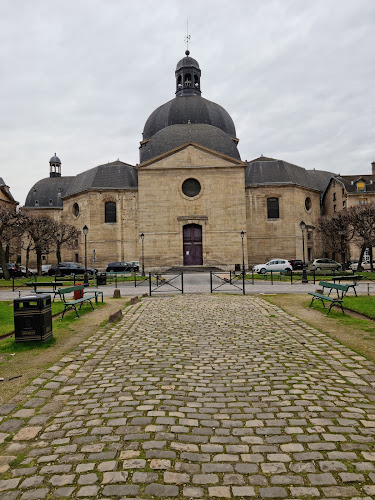
The site’s architectural interest lies in the contrast between its historic fabric and its continuing hospital role. Its chapel and classical buildings are classified as historic monuments, giving the complex a particular place in the capital’s built heritage. Rather than a conventional museum monument, it is best understood as a historic working campus: an imposing piece of Paris that remains tied to everyday care, teaching and research.
Location & Neighborhood Context
The hospital stands at 47 boulevard de l’Hôpital, in the 13th arrondissement, on the eastern side of central Paris. This is a practical, urban part of the Left Bank where major routes, public institutions and residential streets meet. The Seine is close by, and the Jardin des Plantes area is within the wider riverside setting, making this a natural stop when walking between the river, the Austerlitz quarter and the 13th arrondissement.
Do not expect the atmosphere of a purpose-built sightseeing precinct. The surroundings feel functional and lived-in, and the hospital’s large footprint is part of the experience. It rewards visitors who enjoy reading Paris through its civic buildings and street plans, rather than seeking a single isolated façade.
Points forts des visiteurs
- A major Paris university hospital with roots extending to the 17th century.
- Historic architectural interest centred on the chapel and classical buildings classified as historic monuments.
- A revealing stop for architecture, urban-history and history-of-medicine enthusiasts.
- A useful landmark on a Left Bank walk linking the Seine-side area with the 13th arrondissement.
- Best suited to visitors happy to appreciate the site respectfully from publicly accessible areas, rather than those expecting a museum-style visit.
Practical Planning Tips
Plan this as an exterior and neighborhood stop unless you have a medical appointment or have confirmed access for a specific purpose. A morning or early afternoon walk usually makes it easier to take in the boulevard-facing setting before the day becomes busier, but hospital activity continues throughout the day. Allow time to combine it with the nearby riverside and Jardin des Plantes area rather than treating it as a lengthy standalone attraction.
Because this is a functioning hospital, keep routes clear, avoid photographing patients or clinical activity, and follow signs and staff instructions. If you hope to see a particular historic feature, consult the official hospital information before travelling: access can be limited by care operations, security requirements or the use of the buildings.
Questions fréquemment posées
Is Hôpital de la Pitié-Salpêtrière a museum?
No. It is an active university hospital with significant historic architecture, not a conventional museum attraction.
What is historically protected at the site?
The hospital’s chapel and classical buildings are classified as historic monuments.
Can visitors freely enter the hospital buildings?
Access should not be assumed. As a working hospital, it may restrict entry; check official information and respect on-site directions.