
Description
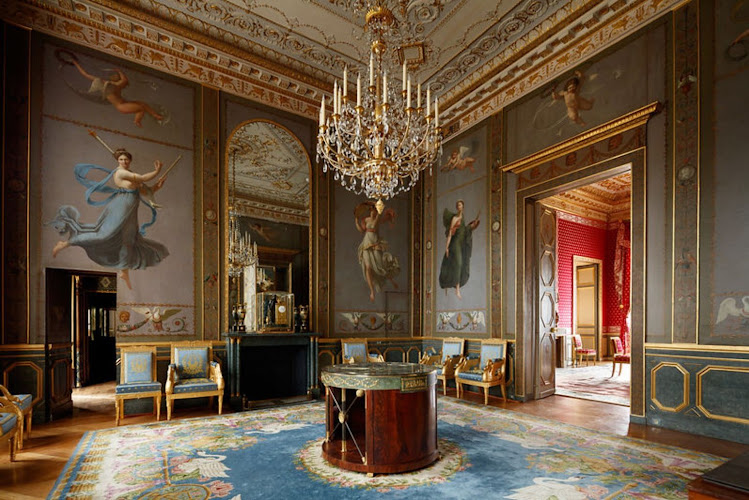
The Hôtel Beauharnais, located in the 7th arrondissement of Paris, is a historic hotel that was built in 1849. This magnificent hotel is situated on the Rive gauche of the Seine River, near the Place de la République and the Place de la Concorde. The hotel is open to the public, and it is one of the most famous hotels in Paris. As you walk through the doors of the Hôtel Beauharnais, you’ll be transported back in time to the 19th century. The hotel’s elegant architecture and decor will leave you in awe. The rooms are spacious and luxurious, with high ceilings, intricate moldings, and beautiful chandeliers. The hotel’s rich history is evident in every detail, from the antique furniture to the original artwork that adorns the walls. One of the most fascinating aspects of the Hôtel Beauharnais is its connection to history. The hotel was built for Eugène de Beauharnais, the stepson of Napoleon Bonaparte. The building served as the headquarters for the German army during World War II, and it was later used by the French government as a diplomatic residence. Today, the hotel is owned by the German government and serves as the German ambassador’s residence. Visiting the Hôtel Beauharnais is a must for anyone interested in history, architecture, or luxury. The hotel’s stunning beauty and rich history make it one of the most unique and interesting places to visit in Paris.
Principales caractéristiques
- The Hôtel Beauharnais, located in the 7th Arrondissement, is a historical monument known for its stunning neoclassical architecture and rich history dating back to the early 19th century.
- Visitors can explore the unique architectural features of the building, including its grand facade and interior design, reflecting the opulence of the Napoleonic era.
Accessibilité et commodités
- The museum is equipped with accessible facilities to ensure a comfortable experience for visitors with disabilities, including wheelchair ramps and elevator access.
- Amenities on-site include restrooms, a charming cafe offering refreshments, and a gift shop where visitors can find unique souvenirs to commemorate their visit.
Planifier votre visite
- The museum tends to be busiest during weekends and holidays, so visiting on weekdays can provide a more serene experience.
- On average, visitors spend around 1-2 hours exploring the museum and its surroundings. For a comprehensive visit, it's recommended to explore the museum's collection, followed by a leisurely stroll in the adjacent gardens.
What Makes Hôtel Beauharnais Notable
Hôtel Beauharnais is an early 19th-century Parisian private mansion associated with Eugène de Beauharnais, the stepson of Napoleon Bonaparte. Its importance lies above all in its Empire-style interiors: a refined decorative language of the Napoleonic period, where ceremonial effect, symmetry and historic reference shape the experience of the house.
This is not a conventional museum monument. The building is owned by the German federal government, and that diplomatic role is central to understanding any visit. For architecture-minded travellers, it is a compelling address to know for the quality of its interiors and its place in the story of post-Revolutionary Paris, even when access is not available.
Location & Neighborhood Context
Hôtel Beauharnais stands at 78 rue de Lille in the 7th arrondissement, on the Left Bank. Rue de Lille runs through a composed, largely residential and institutional stretch of central Paris, where former townhouses, ministries and cultural addresses give the streets a notably formal character. The Seine is close by, making the address easy to place within a broader riverside walk.
The setting works especially well for visitors exploring the western side of Saint-Germain and the 7th arrondissement on foot. Allow time to look beyond the destination itself: the pleasure here is in the urban fabric—quiet side streets, substantial façades and the changing views obtained as you move toward the river. It is a useful stop for readers interested in how aristocratic Paris developed into a district of public institutions and diplomatic residences.
Points forts des visiteurs
- Empire decoration: The mansion is renowned for exceptional interiors in the Empire style, a key reason to follow any authorised opportunity to see inside.
- Napoleonic connection: Eugène de Beauharnais provides a direct historical link to the circle around Napoleon Bonaparte.
- A different kind of monument: Its present ownership by the German federal government gives the building a continuing diplomatic function rather than a purely museum role.
- Architectural context: It suits travellers who enjoy reading façades, streets and private-mansion architecture as carefully as major public landmarks.
- Good for focused itineraries: Pair the exterior and its surroundings with a Left Bank walk rather than treating it as an all-day standalone attraction.
Practical Planning Tips
Start with the official German diplomatic website before building an itinerary around an interior visit. As an occupied government property, Hôtel Beauharnais should not be approached on the assumption of walk-in entry; access, if offered, can be subject to advance arrangements, identification or security procedures. Use only information published by the responsible institution when checking visit possibilities.
For an exterior-oriented visit, daytime is best: the rue de Lille façade and surrounding streets are easier to appreciate in clear light. Keep your stop concise and considerate, avoiding entrances, gates and neighbouring doorways. If you are planning a fuller Left Bank day, leave room for an unhurried riverside walk before or after, rather than rushing between distant districts.
Questions fréquemment posées
Can visitors go inside Hôtel Beauharnais?
It is a German federal government property, not a standard walk-in museum. Check the official German diplomatic website for any authorised access information before visiting.
Why is the building connected with Napoleon?
The mansion was built for Eugène de Beauharnais, who was Napoleon Bonaparte’s stepson. Its Empire-style decoration reinforces that historical association.
Where is Hôtel Beauharnais in Paris?
It is at 78 rue de Lille in the 7th arrondissement, on the Left Bank and close to the Seine.