
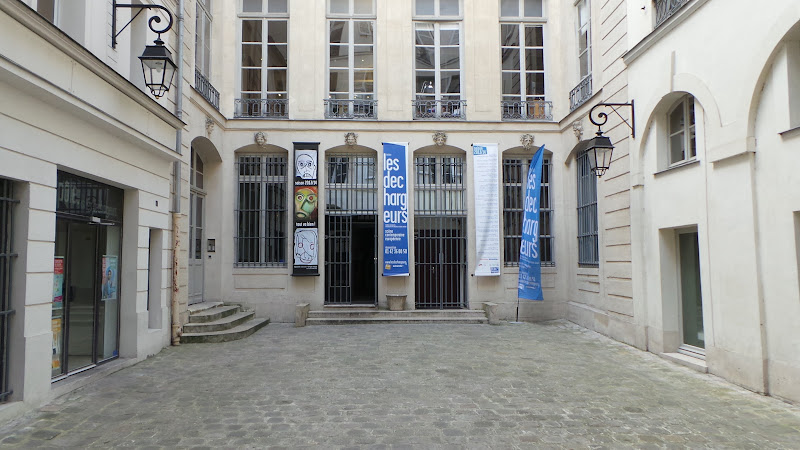
Description
Nestled in the heart of Paris’ 2nd arrondissement, the Hôtel du 101 rue de Richelieu is a true gem of the city. This boutique hotel boasts a rich history, having been built in 1867, and is now a UNESCO World Heritage Site. The hotel’s architecture is a stunning example of the Second Empire style, with its grand façade and intricate details. But it’s not just the exterior that’s impressive – the hotel’s interior is just as breathtaking. From the elegant lobby to the luxurious guest rooms, every inch of the Hôtel du 101 rue de Richelieu exudes sophistication and charm. But what really sets this hotel apart is its unique blend of history and modernity. While the building itself is steeped in history, the hotel’s amenities are thoroughly modern. Guests can enjoy state-of-the-art technology and contemporary design throughout the hotel, while still feeling like they’re stepping back in time. Whether you’re a history buff or simply looking for a luxurious place to stay in Paris, the Hôtel du 101 rue de Richelieu is a must-visit destination. With its prime location, stunning architecture, and modern amenities, it’s the perfect place to experience the best of both worlds.
Principales caractéristiques:
- The Hôtel du 101 rue de Richelieu, located in the 2nd arrondissement, boasts a rich history dating back to the 17th century, offering visitors a glimpse into Parisian heritage and culture.
- Notable for its stunning architectural features, the monument showcases a blend of historical and modern design elements, making it a must-see for architecture enthusiasts.
- Visitors can explore the unique collection of artifacts and exhibits that offer insights into the hotel's evolution over the centuries, providing a captivating experience for history enthusiasts.
Accessibilité et commodités :
- Le musée est équipé de fonctionnalités d'accessibilité pour accueillir les visiteurs handicapés, y compris un accès et des installations en fauteuil roulant.
- Amenities at the Hôtel du 101 rue de Richelieu include restrooms, a relaxed lounge area, and complimentary Wi-Fi, ensuring a comfortable and convenient visit for all guests.
- Additionally, the museum offers unique services such as audio guides, enhancing the overall visitor experience with insightful commentary and information.
Planifier votre visite :
- To avoid crowds, it's advisable to plan the visit during weekdays and in the morning hours, allowing for a more leisurely exploration of the museum.
- On average, visitors spend approximately 1-2 hours exploring the museum, making it an ideal stop for a cultural excursion in Paris.
- Recommended itineraries include exploring nearby attractions in the 2nd arrondissement, such as historic landmarks, charming cafes, and boutique shops, to make the most of the visit to this culturally rich area.
What Makes Hôtel du 101 rue de Richelieu Notable
Hôtel du 101 rue de Richelieu is a historic private mansion at 101 rue de Richelieu in Paris’s 2nd arrondissement. It is protected as a listed historic monument for its architectural significance. The name can be misleading to English-speaking visitors: in this context, hôtel refers to a substantial urban residence, rather than automatically indicating a sightseeing attraction or a building open for independent visits.
Its interest lies in the Parisian streetscape as much as in the individual address. Rue de Richelieu is one of central Paris’s long-established routes, where institutional, commercial and residential buildings sit close together. Look at the property as part of the city’s layered built fabric: a protected former private residence on a busy central street, rather than a monument designed around a conventional visitor circuit.
Location & Neighborhood Context
The address is in the 2nd arrondissement, on the Right Bank in a compact, intensely walkable part of Paris. This is a practical base for exploring the Opéra and Grands Boulevards side of the centre, with the Palais Royal and Louvre-side cultural quarter reached by continuing south along the surrounding street network. The Seine is farther south, but remains an easy onward walk for visitors building a longer central-Paris itinerary.
The immediate setting is urban rather than park-like: expect pavements, traffic, shops, offices and neighbouring façades in close succession. That makes this a useful stop while walking between larger landmarks, galleries, restaurants or shopping streets, not a destination that needs a dedicated half-day. Pause across the street where possible to understand the elevation in relation to its neighbours, while respecting entrances and the everyday use of the building.
Points forts des visiteurs
- Protected architectural presence: the listed status identifies the building as an important element of Paris’s architectural heritage.
- A useful lesson in terminology: it illustrates how the French word hôtel can describe a historic private mansion.
- Central walking location: it suits travellers already exploring the 2nd arrondissement, the Opéra area or the streets leading toward Palais Royal.
- Best for observant walkers: architecture-minded visitors can appreciate the address from the public street without treating it as a museum visit.
- Easy to combine: it works well as a brief point of interest between larger cultural stops, rather than as the sole focus of a day.
Practical Planning Tips
Plan this as an exterior stop unless access has been confirmed directly in advance. A protected building is not necessarily open to the public, and historic private-mansion addresses may have controlled entrances or be used for accommodation or other private purposes. Do not assume that listing status includes interior tours, exhibitions or a ticket desk.
Daylight is the most practical time to examine the façade and its relationship to the street. Allow a short pause, then continue on foot through the district. If your interest is architectural rather than purely photographic, pair the visit with a slower walk along rue de Richelieu and the adjacent central streets; the contrast between grander avenues and narrower commercial blocks gives useful context. For any access, stays or services connected with the address, verify current arrangements with the relevant operator before making plans.
Questions fréquemment posées
Is Hôtel du 101 rue de Richelieu a museum?
No museum function is established here. It is identified as a historic private mansion protected as a listed historic monument.
Can visitors go inside?
Public interior access is not confirmed. Treat it as an exterior architectural stop unless you verify access in advance.
How long should I allow?
A brief street-side stop is usually sufficient, with extra time if you are exploring the surrounding 2nd-arrondissement streets on foot.