
Description
The Passage du Bourg-l’Abbé, located in the 2nd arrondissement of Paris, is a hidden gem that many visitors overlook. Tucked away between bustling streets, this covered passageway offers a glimpse into Parisian history and culture. Walking through the Passage du Bourg-l’Abbé is like stepping back in time. The cobblestone path and elegant architecture of the 19th century create a charming atmosphere that transports visitors to a different era. The passageway is lined with quaint shops and boutiques, selling everything from handmade jewelry to vintage clothing. One of the highlights of the Passage du Bourg-l’Abbé is its unique blend of old and new. Traditional French bakeries and cheese shops sit alongside trendy cafes and art galleries. This juxtaposition of the past and present is a testament to the enduring spirit of Parisian culture. Visitors to the Passage du Bourg-l’Abbé can also admire the stunning murals that adorn the walls. These murals, created by local artists, depict scenes from Parisian life and add a touch of whimsy to the passageway. Overall, the Passage du Bourg-l’Abbé is a must-see for anyone visiter Paris. Its charming atmosphere, unique blend of old and new, and beautiful murals make it a true hidden gem in the heart of the city.
Principales caractéristiques
The Passage du Bourg-l'Abbé is a historical landmark located in the 2nd arrondissement of Paris. It is known for its architectural significance, featuring a blend of historical and modern elements. The passage offers visitors a unique glimpse into the architectural evolution of the area and showcases notable design features that have stood the test of time.
Accessibilité et commodités
The museum is equipped with accessibility features to accommodate visitors with disabilities, including wheelchair access and facilities. Additionally, visitors can benefit from amenities such as restrooms, a gift shop, and the option to purchase audio guides for a more immersive experience.
Planifier votre visite
To avoid crowds, it's best to visit the Passage du Bourg-l'Abbé during weekdays and early mornings. Visitors typically spend around 1-2 hours exploring the landmark and its surroundings. For a comprehensive experience, consider combining the visit with nearby attractions such as cafes and other historical landmarks within the 2nd arrondissement.
What Makes Passage du Bourg-l’Abbé Notable
Passage du Bourg-l’Abbé is a compact surviving example of Paris’s nineteenth-century covered-passage tradition. Built in 1828, it is a 47-metre private passage between 120 rue Saint-Denis and 3 rue de Palestro in the 2nd arrondissement. Its modest scale is part of its appeal: this is a short architectural stop rather than a destination requiring a long visit.
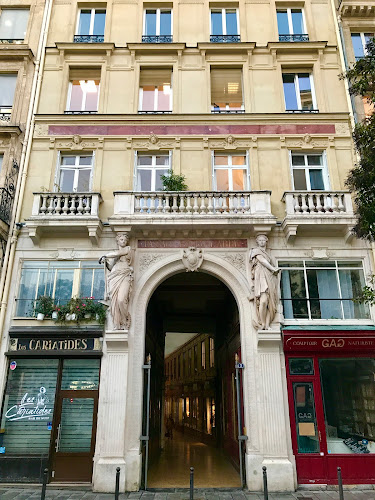
The passage was originally part of a longer sheltered promenade, designed to let pedestrians move away from bad weather and street traffic. Changes associated with the creation of boulevard de Sébastopol and rue de Palestro shortened it. Look closely at the rue de Palestro entrance, designed by architect Henri Blondel: the two caryatids represent Industry and Commerce. Inside, the restored décor includes frescoes, friezes, mirrors in the tympana at each end, and a semicircular glass roof with its ventilation system.
Location & Neighborhood Context
The passage sits on the edge of the 2nd arrondissement’s former commercial quarter, close to the busy north–south route of rue Saint-Denis and the broad line of boulevard de Sébastopol. It makes a useful link in a walk through central Paris rather than a detour in itself. The surrounding streets shift quickly between historic lanes and larger nineteenth-century thoroughfares, making the passage’s covered interior feel notably enclosed.
For an architecture-focused stroll, pair it with the nearby Passage du Grand-Cerf and Passage de l’Ancre, both referenced in the passage’s history. The area is also walkable from the older streets around Les Halles and the Marais edge. Allow time to approach from both entrances: the contrast between the street façades and the glazed interior helps explain how covered passages created a more protected pedestrian route through the city.
Points forts des visiteurs
- The Henri Blondel portal: seek out the rue de Palestro entrance and its paired allegorical caryatids of Industry and Commerce.
- The glass roof: the full-arch verrière brings daylight into the narrow passage and retains a visible ventilation system.
- Restored decorative details: frescoes, friezes and mirrors at the ends reward a slow look upward and along the façades.
- A concise architectural stop: its 47-metre length suits walkers building a self-guided route around historic passages.
- Context over shopping: this is best for visitors interested in urban history, nineteenth-century design and Paris’s changing street plan.
Practical Planning Tips
Passage du Bourg-l’Abbé is open Monday to Saturday from 7.30am to 7.30pm, and is closed on Sundays and public holidays. As it is a private passage, treat it as a thoroughfare: keep your visit quiet, avoid blocking the narrow route, and do not assume that photography or group activity is appropriate in every circumstance.
Go in daylight if the architectural details are your priority; the glass roof, interior façades and restored ornament are easier to read then. The passage is short, so a measured ten-minute stop is generally enough, with extra time for photographs or sketching. It works especially well when combined with neighbouring passages on foot. There is no need to build a full day around it, but it adds a precise historical note to an exploration of central Paris.
Questions fréquemment posées
Where is Passage du Bourg-l’Abbé?
It runs between 120 rue Saint-Denis and 3 rue de Palestro, in Paris’s 2nd arrondissement.
What should I look for inside?
Focus on the semicircular glass roof, the restored frescoes and friezes, and the mirrors set in the tympana at either end.
Is it open every day?
No. It is open Monday to Saturday from 7.30am to 7.30pm and closed on Sundays and public holidays.