
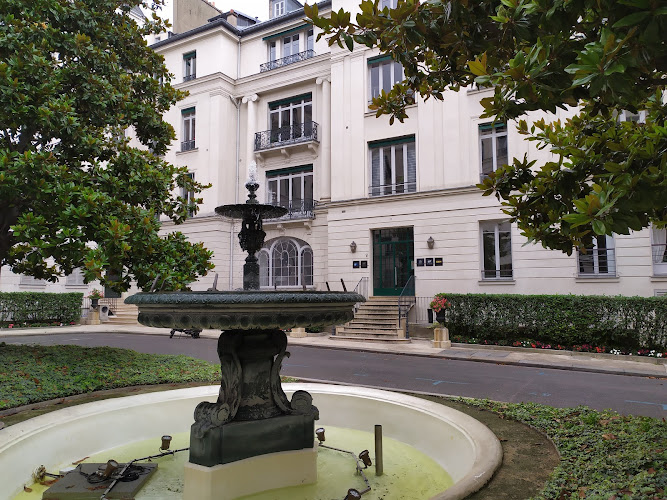
Description
The Square d’Orléans, located in the 9th arrondissement at 80 rue Taitbout, is a must-visit destination for anyone traveling to Paris. This popular tourist attraction is home to the world’s largest building, which has been open to the public as a museum since 1843. The museum is a treasure trove of art and history, with an extensive collection of paintings, sculptures, and artifacts from around the world. Visitors can explore the vast halls and galleries, each one filled with stunning works of art that showcase the beauty and diversity of human creativity. One of the most impressive features of the Square d’Orléans is its sheer size. The building is a marvel of engineering and architecture, with grand halls and soaring ceilings that will leave you in awe. But it’s not just the size of the building that’s impressive; it’s the attention to detail and the care that went into every aspect of its design. As you wander through the museum, you’ll be transported back in time to different eras and cultures. From ancient Egypt to medieval Europe, from the Renaissance to the modern day, the Square d’Orléans has something for everyone. Whether you are a history buff, an art lover, or simply someone who appreciates beauty and craftsmanship, this museum is sure to leave a lasting impression. So if you’re planning a voyage à Paris, be sure to add the Square d’Orléans to your itinerary. It’s a truly unique and unforgettable experience that will leave you with a newfound appreciation for the beauty and creativity of the human spirit.
Principales caractéristiques
The Square d'Orléans is a historical landmark located in the 9th arrondissement of Paris. It is renowned for its architectural significance and historical charm, attracting visitors with its unique blend of history and aesthetics.
Accessibilité et commodités
The museum offers accessibility features to accommodate visitors with disabilities, including wheelchair access and restroom facilities. Additionally, visitors can enjoy amenities such as dining options and gift shops, along with unique services like audio guides for a more immersive experience.
Planifier votre visite
To make the most of your visit, it's recommended to plan your trip during off-peak hours to avoid crowds and fully appreciate the monument's beauty. Visitors typically spend around 1-2 hours exploring the landmark and its surroundings. For a comprehensive experience, consider exploring nearby attractions in the vibrant 9th arrondissement.
Square d’Orléans: an intimate 19th-century Paris enclave
Square d’Orléans is a private residential complex at 80 rue Taitbout in Paris’s 9th arrondissement. Built in the 1820s, it stands apart from the capital’s large public squares and headline monuments: its appeal lies in the scale of its architecture and the unusually composed atmosphere of a residential address. The complex is classified as a historic monument.
Its design draws on the neoclassical English garden-square model, bringing a sense of ordered domestic architecture to a dense central Paris setting. Look for the relationship between the buildings, the internal garden-square idea and the restrained classical character rather than expecting exhibition rooms or a museum circuit. Square d’Orléans rewards visitors interested in Parisian urban form, 19th-century housing and quieter architectural details.
Location and neighbourhood context
The address sits on rue Taitbout in the 9th arrondissement, an area where commercial streets, apartment buildings and cultural destinations sit close together. This is a central, built-up part of Paris best explored on foot, particularly by travellers who enjoy noticing changes in façade style and street rhythm between major sights. Square d’Orléans makes a useful architectural pause during a walk through the arrondissement rather than a destination requiring a full day.
The setting is urban rather than park-like in the public-square sense. Its English garden-square inspiration is part of the complex’s own conception, while the surrounding experience is that of the 9th: streets, shops, residences and the compact layout typical of this side of central Paris. Allow time to orient yourself from the street and to appreciate the contrast between the address and its busier surroundings.
Visitor highlights
- A rare residential composition: an 1820s private complex rather than a conventional museum or monumental public square.
- Neoclassical character: the English garden-square style gives the site a distinctive architectural identity.
- Historic status: its classification as a historic monument adds significance for architecture and heritage-minded visitors.
- A focused stop: well suited to independent walkers, photographers working from public space and travellers interested in the texture of everyday Paris.
- A respectful encounter: it is most appropriate for visitors who understand that this remains a residential environment.
Practical planning tips
Plan Square d’Orléans as a short stop within a wider 9th-arrondissement walk. Morning can be a comfortable time for looking closely at façades and the street approach, while a daytime visit generally makes architectural details easier to read. Give yourself flexibility: the experience is about observation and context, not rushing through a fixed programme.
Because this is a private residential complex, do not assume that internal spaces are freely accessible. Respect entrances, residents and any signs on site; enjoy what can appropriately be seen from public areas. There is no need to treat it like a ticketed museum visit, but check current access conditions independently before making a special journey. Pair it with nearby streets in the 9th for a more satisfying walk.
Frequently asked questions
What is Square d’Orléans?
It is a private residential complex in the 9th arrondissement, built in the 1820s in a neoclassical English garden-square style and classified as a historic monument.
Is Square d’Orléans a museum?
No. It is a residential architectural site, so visitors should approach it as a place to observe respectfully rather than as a museum with galleries.
How long should I allow for a visit?
A brief architectural stop is usually the right pace. It works particularly well as part of a self-guided walk through the surrounding 9th arrondissement.