
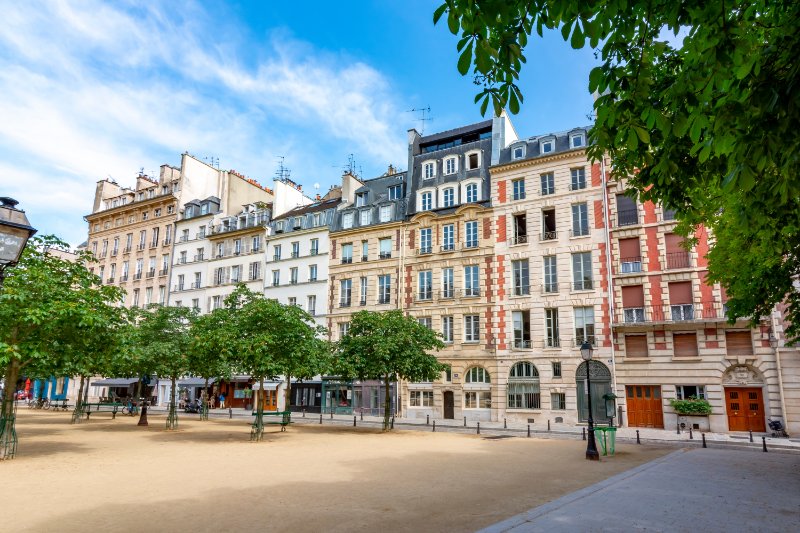
Paris is shaped by its public squares. From intimate 17th-century royal enclosures framed by symmetrical brick façades to monumental civic plazas where world history was written, the city’s more than 400 squares (places) serve as the living rooms of Parisian life. Whether you are searching for a quiet corner to read under leafy chestnut trees or standing beneath monumental landmarks, these ten iconic squares showcase the finest urban design, architecture, and history in the French capital.
Planning your route through the city? Pair these public spaces with our curated guides to les meilleures choses à faire à Paris et le meilleur moment pour visiter Paris for ideal weather and walking conditions.
Top 10 des plus belles places de Paris
1. Place des Vosges (4th Arrondissement — Le Marais)
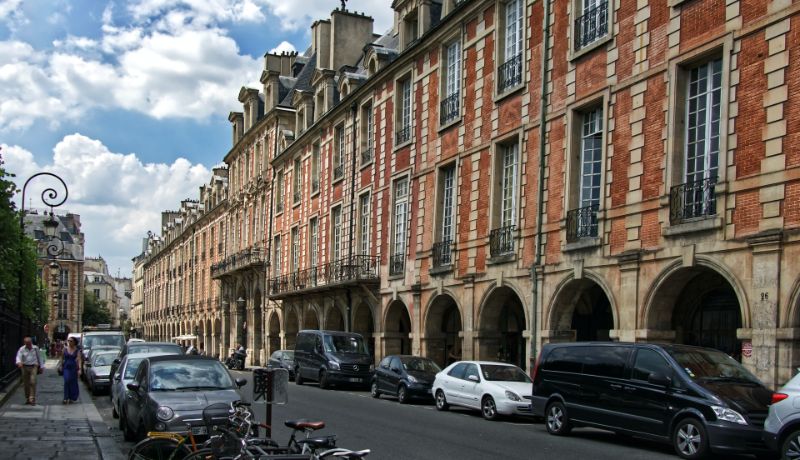
Commissioned by King Henri IV in 1605 and inaugurated in 1612 as Place Royale for the engagement of Louis XIII to Anne of Austria, Place des Vosges is widely celebrated as Paris’s most harmonious square. Located in the heart of the Quartier du Marais, its layout features 36 residential pavilions constructed with strict architectural uniformity: red-brick façades, vaulted limestone arcades, and steep slate roofs.
At its center lies the lush Square Louis XIII garden, featuring four central fountains and an equestrian statue of the king. Under the shaded ground-floor arcades, you will discover art galleries, historic tea rooms, and the Maison de Victor Hugo (at No. 6), where the author lived while writing a large portion of Les Misérables.
2. Place de la Concorde (8th Arrondissement)
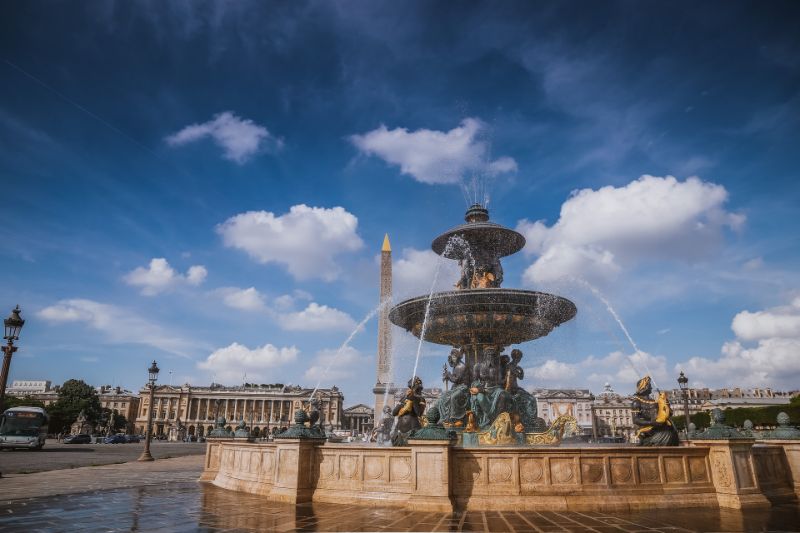
Covering over 21 acres at the eastern end of the Champs-Élysées, Place de la Concorde is the largest public square in Paris. Designed in 1755 by royal architect Ange-Jacques Gabriel as Place Louis XV, it became the dramatic epicenter of the French Revolution when renamed Place de la Révolution—the site where the guillotine executed King Louis XVI, Marie Antoinette, Georges Danton, and Maximilien Robespierre.
The square’s centerpiece is the 3,300-year-old Luxor Obelisk, gifted to France by Egypt in the 1830s and erected under King Louis-Philippe in 1836. Flanking the obelisk are two magnificent Neoclassical fountains designed by Jacques Ignace Hittorff—the Fontaine des Mers et Fontaine des Fleuves. On the square’s northern boundary stand the historic twin palaces: the luxury Hôtel de Crillon and the restored Hôtel de la Marine, which is now open to the public for immersive historical tours.
3. Place Vendôme (1st Arrondissement)
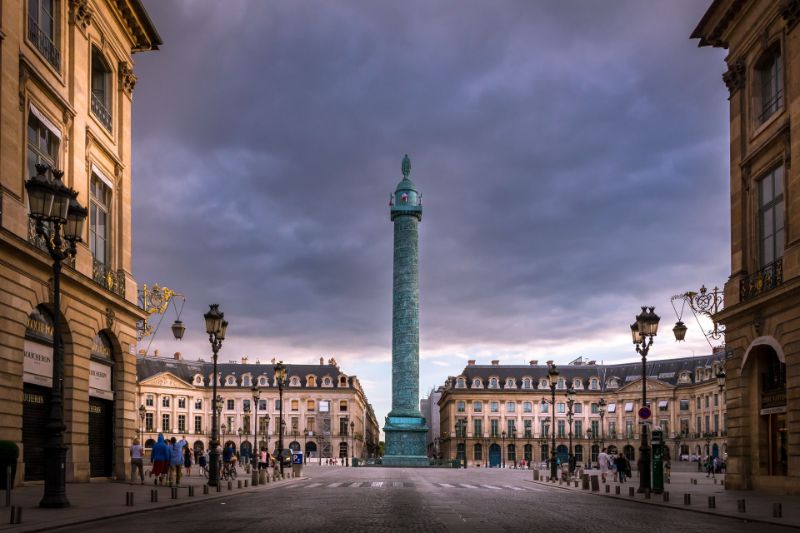
Designed by master architect Jules Hardouin-Mansart under King Louis XIV in 1699, Place Vendôme is the global benchmark for classical French elegance and luxury jewelry (Haute Joaillerie). Its octagonal footprint is framed by majestic Corinthian pilasters and uniform pedimented hôtels particuliers.
In the center rises the 44-meter-tall Vendôme Column (Colonne Vendôme), commissioned by Napoleon Bonaparte in 1806 and erected in 1810. Modeled after Trajan’s Column in Rome, its bronze spiral relief was cast from 1,200 cannons captured during the Battle of Austerlitz and is crowned with a statue of Napoleon dressed as a Roman emperor. The square is home to legendary jewelry houses such as Boucheron, Chaumet, and Cartier, as well as the historic Ritz Paris at No. 15.
4. Place Dauphine (1st Arrondissement — Île de la Cité)
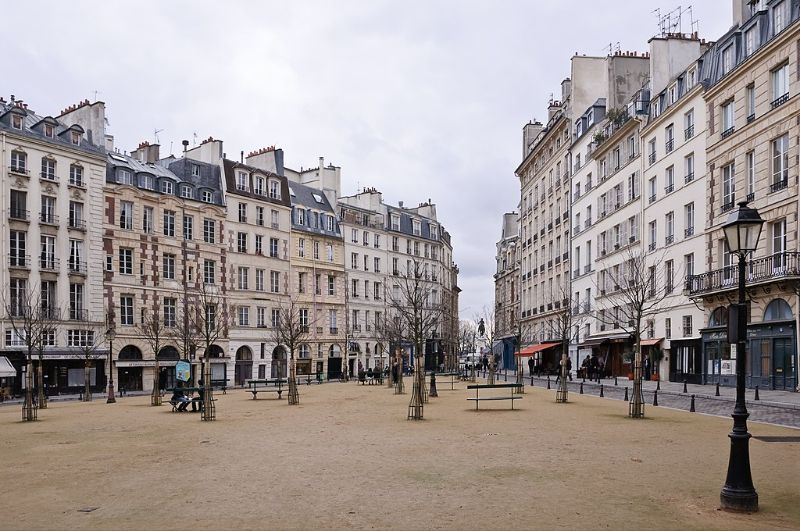
Tucked discreetly behind the Palais de Justice on the western tip of Île de la Cité, Place Dauphine is one of Paris’s most romantic and peaceful public spaces. Laid out by Henri IV in 1607 and named in honor of his son the Dauphin (the future Louis XIII), the square forms a triangular haven sheltered from the traffic of Pont Neuf.
Gravel walking paths shaded by mature horse chestnut trees make this square a favorite local gathering spot for casual games of pétanque. Quaint wine bars, bistros, and outdoor café terraces line the historic brick-and-limestone townhouses, offering a serene village ambiance right in the historic center of Paris.
5. Place de la Bastille (4th, 11th & 12th Arrondissements)
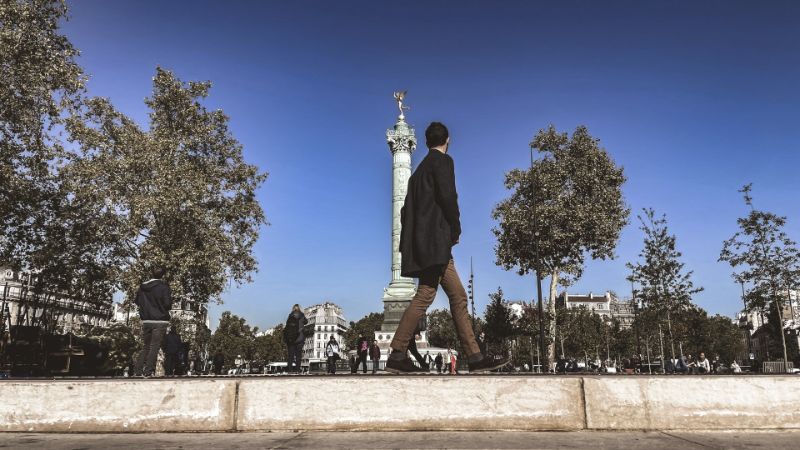
Place de la Bastille stands as a paramount symbol of freedom and revolution. On July 14, 1789, revolutionary citizens stormed and subsequently dismantled the medieval fortress-prison that once stood on this ground.
The square’s dominant landmark is the 50-meter-tall July Column (Colonne de Juillet), erected between 1835 and 1840 to commemorate the July Revolution of 1830 (the “Three Glorious Days”). The monument is crowned by the gleaming gilded bronze sculpture Le Génie de la Liberté (The Spirit of Freedom) by Augustin Dumont. Modern Bastille is anchored by the contemporary Opéra Bastille (designed by Carlos Ott and inaugurated in 1989) and connects directly to the tranquil boats of the Port de l’Arsenal marina.
6. Place Saint-Michel (5th & 6th Arrondissements — Latin Quarter)
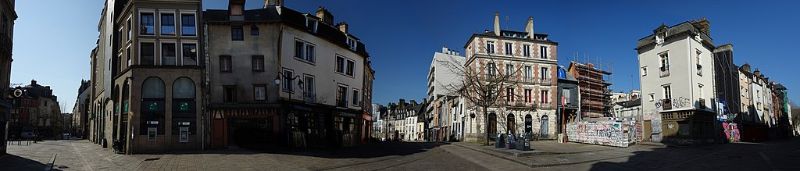
Situated on the Left Bank overlooking the Seine and Île de la Cité, Place Saint-Michel is the vibrant crossroads of the Latin Quarter. Created in 1855 during Baron Georges-Eugène Haussmann’s urban modernization, it has served for generations as a popular meeting point for university students, book lovers, and travelers.
The square is dominated by the monumental Fontaine Saint-Michel, engineered by architect Gabriel Davioud in 1860. The massive wall fountain features a dramatic bronze statue by Francisque Duret depicting Archangel Michael subduing the Devil, flanked by winged chimera water spouts and red Languedoc marble columns.
7. Place de la République (3rd, 10th & 11th Arrondissements)
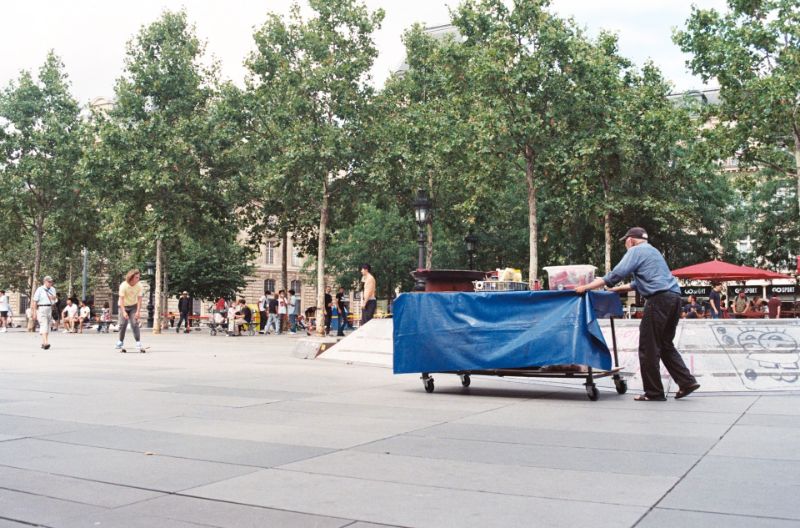
Spanning 3.4 hectares at the intersection of three arrondissements, Place de la République is one of the largest pedestrianized plazas in Europe. Originally laid out during the Second Empire by Baron Haussmann, the square underwent an extensive modern redevelopment in 2013, reclaiming over 70% of the surface from motor vehicles to create an expansive civic esplanade with reflective water mirrors and outdoor cafés.
In the center stands the monumental bronze Monument à la République, created in 1883 by brothers Léopold and Charles Morice. The 9.5-meter statue of Marianne holds an olive branch in her right hand and the Tablet of the Rights of Man in her left, resting upon a high stone pedestal adorned with bronze allegories of Liberty, Equality, and Fraternity.
8. Place des Victoires (1st & 2nd Arrondissements)
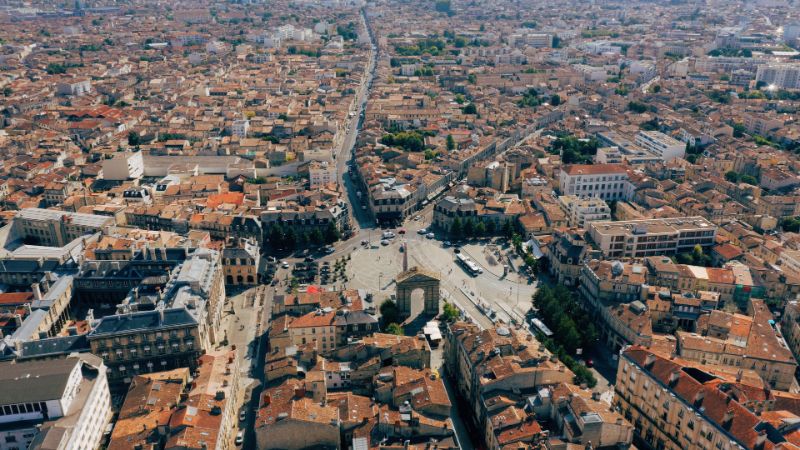
Commissioned in 1686 by Marshal de La Feuillade and designed by Jules Hardouin-Mansart, Place des Victoires is one of Paris’s five historical royal squares. Built to honor the military triumphs of King Louis XIV in the Franco-Dutch War, its circular layout was an innovative architectural concept in 17th-century city planning.
The centerpiece is a magnificent equestrian statue of Louis XIV, sculpted in 1822 by François Joseph Bosio to replace the original royal monument destroyed during the French Revolution. Today, the square is an epicenter for avant-garde fashion boutiques, design showrooms, and upscale dining located just north of the Palais-Royal.
9. Place de la Madeleine (8th Arrondissement)
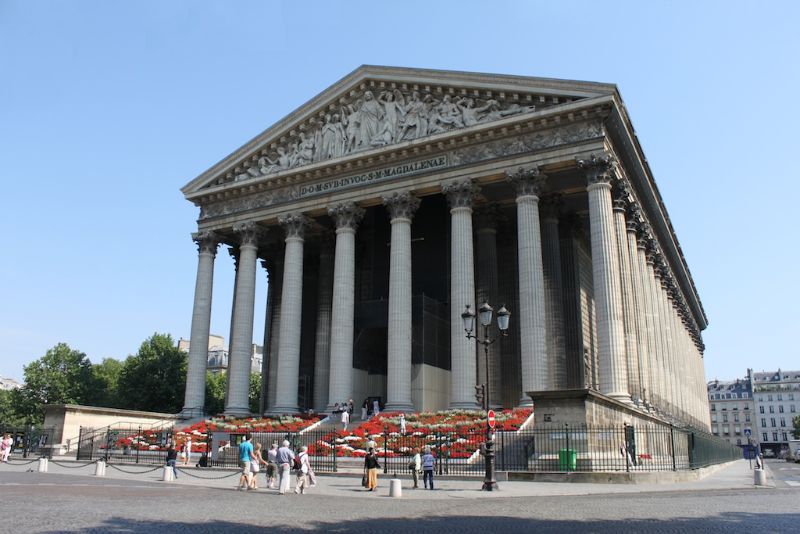
Place de la Madeleine is framed by the colossal Église de la Madeleine, an imposing Neoclassical monument designed in the style of an ancient Greek temple with 52 monumental Corinthian columns. Conceived by Napoleon I as a temple to the glory of his Grande Armée, the structure was completed as a church in 1842.
The square has long been recognized as a world-famous gastronomic hub, historically surrounded by luxury gourmet purveyors, caviar houses, and fine tea salons, with direct sightlines south down Rue Royale toward Place de la Concorde.
10. Place Charles de Gaulle / Place de l’Étoile (8th, 16th & 17th Arrondissements)
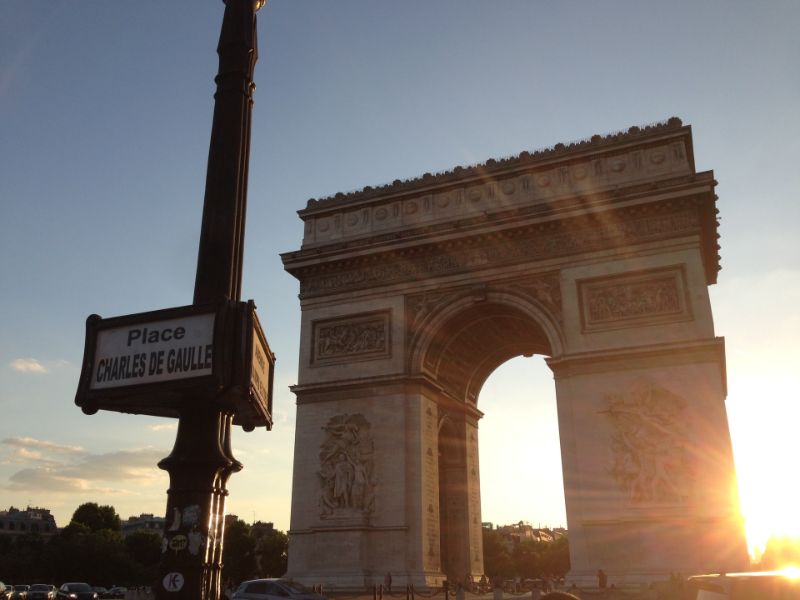
Formerly known as Place de l’Étoile due to its star-shaped geometric plan, Place Charles de Gaulle is the crowning achievement of Haussmann’s grand boulevard network. Twelve tree-lined avenues radiate outward from the central plaza, including Avenue des Champs-Élysées, Avenue Kléber, and Avenue Foch.
At its center stands the majestic Arc de Triomphe, commissioned by Napoleon in 1806 and completed in 1836. Beneath the arch lies the Tomb of the Unknown Soldier, where the eternal flame has burned unbroken since 1923 and is solemnly rekindled each evening at 6:30 PM. Pedestrians can access the central monument via the underground pedestrian passage from the Champs-Élysées.
Comparison of Paris’s Most Beautiful Squares
Square Name | Arrondissement | Nearest Metro | Architectural Style / Era | Primary Highlight | Best Experience |
|---|---|---|---|---|---|
Place des Vosges | 4th (Marais) | Saint-Paul / Bastille | Renaissance / Early 17th C. | Uniform brick & stone arcades | Picnicking & gallery browsing |
Place de la Concorde | 8th | Concorde | Neoclassical / 18th C. | Luxor Obelisk & Hittorff Fountains | Monumental sunset photography |
Place Vendôme | 1er | Tuileries / Opéra | French Classical / Late 17th C. | Vendôme Column & Haute Joaillerie | Luxury window shopping & architecture |
Place Dauphine | 1st (Île de la Cité) | Pont Neuf / Cité | Early 17th Century | Triangular garden square | Quiet wine bars & pétanque |
Place de la Bastille | 4th, 11th, 12th | Bastille | 19th & 20th Century | July Column & Opéra Bastille | Nightlife, dining & boat marina |
Place Saint-Michel | 5th & 6th | Saint Michel | Haussmannian / 1860 | Fontaine Saint-Michel | Latin Quarter meeting point |
Place de la République | 3rd, 10th, 11th | République | Civic Esplanade / 2013 Pedestrian | Marianne Bronze Monument | People-watching & community events |
Place des Victoires | 1st & 2nd | Bourse / Palais Royal | French Classical / 1686 | Louis XIV Equestrian Statue | Designer fashion & quiet elegance |
Place de la Madeleine | 8th | Madeleine | Neoclassical / 19th C. | Temple-style Madeleine Church | Gourmet gastronomy & food boutiques |
Place Charles de Gaulle | 8th, 16th, 17th | Charles de Gaulle-Étoile | Haussmannian / 19th C. | Arc de Triomphe & 12 Avenues | Panoramic rooftop views |
Types of Historic Squares in Paris
1. Royal Squares (Places Royales)
Paris features five designated royal squares conceived between the 17th and 18th centuries to celebrate the monarchy: Place des Vosges, Place Dauphine, Place des Victoires, Place Vendôme, and Place de la Concorde. Each was designed with strict geometric harmony, uniform façade regulations, and a central monument dedicated to a reigning French monarch.
2. Church and Fountain Plazas
Many Parisian squares developed organically around historic parish churches or monumental civic fountains. Notable examples include Place Saint-Sulpice with its monumental Visconti fountain, Place Sainte-Geneviève in front of the Panthéon, Place Saint-Germain-des-Prés, and the charming Place de Furstenberg in Saint-Germain-des-Prés.
3. Village and Artist Squares
In hilltop Montmartre and Belleville, squares preserve the charm of formerly independent rural villages. Place du Tertre remains world-famous for its open-air portrait artists steps from the Sacré-Cœur, while Place des Abbesses features the city’s iconic Guimard Art Nouveau glass metro canopy and the romantic “I Love You” wall (Le Mur des Je t’aime).
Questions fréquemment posées
What is the oldest planned square in Paris?
Place des Vosges in the Marais (4th arrondissement) is the oldest planned square in Paris. Commissioned by King Henri IV in 1605 and inaugurated in 1612 as Place Royale, it established the concept of unified urban residential architecture in France.
What is the largest square in Paris?
Place de la Concorde (8th arrondissement) is the largest square in Paris, covering over 21 acres (8.6 hectares) between the Tuileries Garden and the Champs-Élysées. Place de la République is the largest continuous pedestrianized civic plaza.
Which Paris squares are best for relaxing or picnics?
Place des Vosges (Marais) and Place Dauphine (Île de la Cité) are the premier squares for relaxation and picnics, offering shaded benches, green lawns or gravel paths, and protection from heavy vehicular traffic.
How do I safely access the center of Place Charles de Gaulle?
Never attempt to cross the multi-lane roundabout above ground on foot. Use the underground pedestrian tunnel (Passage du Souvenir) accessed from the top of Avenue des Champs-Élysées or Avenue de la Grande-Armée to safely reach the Arc de Triomphe in the center.
Find Things to Do in Paris
Find Accommodation

Continue Planning Your Paris Trip
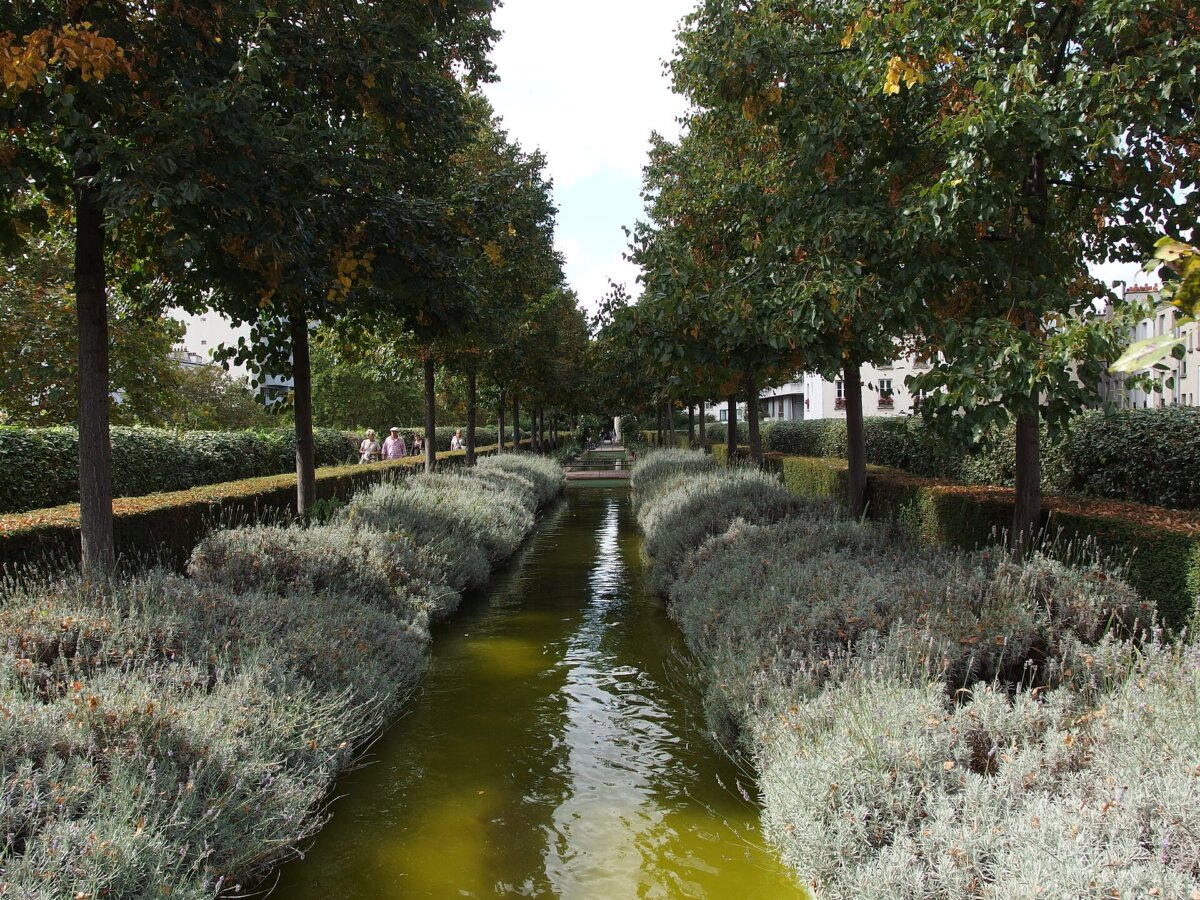
Promenade Plantée Walk: Paris’ Unique Elevated Garden Adventure
Paris has a ton of famous walks, but the Promenade Plantée still feels like one of the city’s…
Read Guide →
Exploring Libertine Saunas: A Beginner’s Guide
New to Paris's libertine saunas and going on your own? A beginner's guide to which venues welcome single…
Read Guide →
Visiting the Louvre with Family: To Upgrade or Not to Upgrade?
Is the 15-euro Amis du Louvre family upgrade worth it when kids under 12 enter free? Why the…
Read Guide →