
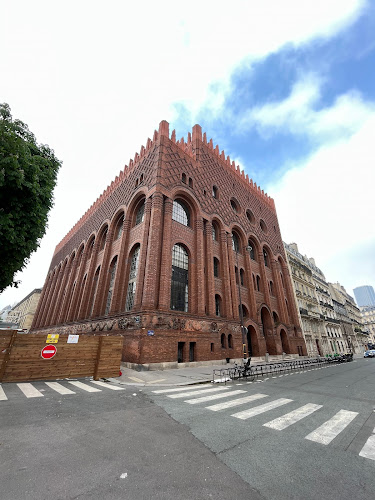
Description
The Institut d’Art et d’Archéologie, located in the 6th arrondissement of Paris, is a museum and art gallery that was established in 1877 by the French Government and the Institut de France. Its mission is to collect, preserve and showcase art and archeology from the past. The museum boasts an impressive collection of Greco-Roman art, including sculpture, ceramics, pottery and coins. In fact, it holds the world’s largest collection of Greco-Roman art. In addition to its Greco-Roman collection, the museum also houses a significant collection of sculpture from the Mediterranean, featuring notable works such as the bronze statues of the Laocoon and the Venus de Milo. The museum’s collection also spans from the Renaissance to the modern day, including works by Leonardo da Vinci, Titian and Michelangelo. The Institut d’Art et d’Archéologie is a must-visit for art enthusiasts and history buffs alike. The museum offers a unique opportunity to explore and appreciate the art and archeology of the past.
Principales caractéristiques
- The Institut d'Art et d'Archéologie is renowned for its extensive collection of art and archaeological artifacts, spanning various periods and civilizations.
- This historical monument is housed in a stunning Beaux-Arts style building, showcasing exquisite architectural details and ornate decorations.
- Visitors can explore the museum's rich history, including its origins as a university and its transformation into a prominent center for art and archaeology studies.
Accessibilité et commodités
- The museum is equipped with accessibility features, including ramps and elevators, to ensure a comfortable experience for visitors with disabilities.
- Amenities at the Institut d'Art et d'Archéologie include restrooms, a charming café offering refreshments, and a well-stocked gift shop featuring unique art and archaeology-themed souvenirs.
- Additionally, the museum provides audio guides in multiple languages, allowing visitors to delve deeper into the exhibits at their own pace.
Planifier votre visite
- To avoid crowds, it's best to plan your visit during the early morning or late afternoon, especially on weekends when the museum tends to be busiest.
- Visitors typically spend around 1.5 to 2 hours exploring the museum's diverse collection and historical displays. For a comprehensive experience, consider following the recommended itinerary to ensure you don't miss any of the museum's highlights.
What Makes the Institut d’Art et d’Archéologie Notable
The Institut d’Art et d’Archéologie at 3 rue Michelet is one of the 6th arrondissement’s most distinctive university buildings. Its importance lies as much in its purpose as in its appearance: it houses art-history and archaeology teaching and research, giving this quiet street an academic identity close to the Luxembourg Gardens and the Latin Quarter.
Look up before passing by. The façade brings together Neo-Romanesque forms and Moorish influence, with carved reliefs that reward a slow street-level look. Rather than a conventional Paris landmark designed around a grand square or viewpoint, this is an architectural discovery: an expressive institutional frontage whose details stand apart from the restrained stone façades around it.
Location and Neighborhood Context
The institute stands on rue Michelet in the 6th arrondissement, on the Left Bank. This is a scholarly, residential corner of central Paris, shaped by university life, bookshops and the streets leading toward the Luxembourg Gardens. It works especially well as a stop while walking between the garden, the Latin Quarter and the wider Saint-Germain-des-Prés area.
The setting is more intimate than the monumental riverfront districts. Approach on foot and allow time to view the building from across the street, where the composition of the façade is easier to take in. The surrounding pavements also make it a natural addition to a self-guided Left Bank architecture walk rather than a destination requiring a long standalone visit.
Points forts des visiteurs
- An unusual façade: Neo-Romanesque and Moorish-inspired elements create a markedly different profile from nearby apartment buildings.
- Carved reliefs: The exterior decoration gives observant visitors a reason to pause and examine the entrance and upper levels.
- Academic Paris: The building offers a glimpse of the city’s continuing role in art-history and archaeology education.
- A rewarding walking stop: It suits architecture enthusiasts, students, photographers and visitors exploring the Luxembourg and Latin Quarter area on foot.
- A calm alternative: Choose it for a brief cultural detour away from Paris’s largest visitor sites.
Practical Planning Tips
Treat the Institut d’Art et d’Archéologie primarily as a building to appreciate from the public street. It is a working university site, so visitors should not assume that interior access, exhibitions or facilities are available without confirmation. Check the university’s official channels before making a special journey, particularly if you hope to attend a public event or enter the building.
Morning light or the quieter parts of the afternoon can make it easier to study and photograph the façade without lingering foot traffic. Pair the stop with the Luxembourg Gardens, then continue through the nearby Left Bank streets at an unhurried pace. Keep the visit short and focused: a few minutes spent viewing the reliefs and overall composition can be more satisfying than trying to fit it into a rushed landmark circuit.
Questions fréquemment posées
Is the Institut d’Art et d’Archéologie a museum?
It is a university building associated with art history and archaeology. Plan to admire its architecture from outside unless official information confirms public access or a specific event.
Where is it in Paris?
It is at 3 rue Michelet in the 6th arrondissement, near the Luxembourg Gardens and within easy walking range of the Latin Quarter.
What should I look for on the exterior?
Focus on the carved reliefs and the combination of Neo-Romanesque structure with Moorish-influenced decoration, which gives the façade its singular character.