
Abbaye de Port-Royal
Former chapel of the abbey of Port Royal is a Paris Attractions landmark located in the 14 arrondissement. Table of ContentsThe Jansenist stronghold that challenged royal and papal authorityArchitectural transformation from private mansionCenter of Jansenist intellectual lifePersecution and dissolutionRevolutionary transformation and modern functionPreserved heritage within modern hospitalNearby in 14 The Jansenist stronghold that challenged royal […]
Former chapel of the abbey of Port Royal is a Paris Attractions landmark located in the 14 arrondissement.
<\!-- wp:heading -->
Table des matières
<\!-- /wp:heading --><\!-- wp:paragraph -->
In the 14th arrondissement, the former Abbaye de Port-Royal occupies a central place in French religious and intellectual history as the epicenter of Jansenism, a theological movement that profoundly influenced 17th-century thought and literature. Founded when Cistercian nuns moved from their original abbey in the Chevreuse valley to Paris in 1626, this urban monastery became a symbol of religious resistance that challenged both royal power and papal authority.
<\!-- /wp:paragraph --><\!-- wp:paragraph -->
The abbey\u2019s influence extended far beyond its religious function, serving as an intellectual center that shaped French literature, philosophy, and education. Its association with figures like Blaise Pascal, Jean Racine, and the Pascal family made it a crucial institution in the development of French classical culture and religious thought.
<\!-- /wp:paragraph --><\!-- wp:heading {"level":3} -->
Architectural transformation from private mansion
<\!-- /wp:heading --><\!-- wp:paragraph -->
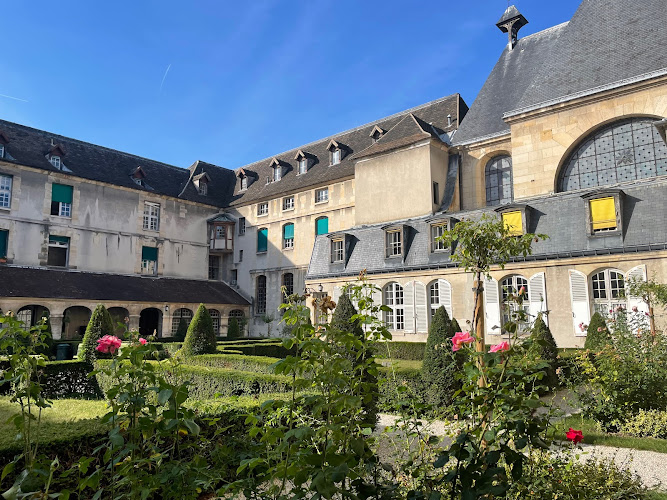
The abbey began its existence as the Hôtel de Clagny, a private mansion built by Pierre Lescot between 1566 and 1569 in the Faubourg Saint-Jacques. This Renaissance structure was carefully remodeled around 1626 to accommodate the Cistercian convent, creating specialized spaces for religious life while preserving the building\u2019s essential character.
<\!-- /wp:paragraph --><\!-- wp:parameter --><\!-- wp:paragraph -->
The architectural development continued with the construction of the Chapel of the Très Saint Sacrement between 1646 and 1648, designed by architect Antoine Lepautre. The cloister, completed between 1652 and 1655, created the essential monastic spaces needed for contemplative religious life in an urban setting.
<\!-- /wp:paragraph --><\!-- wp:heading {"level":3} -->
Center of Jansenist intellectual life
<\!-- /wp:heading --><\!-- wp:paragraph -->
Port-Royal Paris became the main center of Jansenism in France, embodying religious and political beliefs that the monarchy and Catholic hierarchy viewed as threatening. The abbey stood as a symbol of resistance to royal power that Louis XIV was unable to overcome throughout his long reign, despite persistent pressure from both political and ecclesiastical authorities.
<\!-- /wp:paragraph --><\!-- wp:paragraph -->
The Jansenist emphasis on divine grace, predestination, and moral rigor attracted some of France\u2019s greatest minds, creating an intellectual community that produced influential works in theology, literature, and education. This scholarly atmosphere made Port-Royal a center of learning that rivaled the great universities of the period.
<\!-- /wp:paragraph --><\!-- wp:heading {"level":3} -->
Persecution and dissolution
<\!-- /wp:heading --><\!-- wp:paragraph -->
The abbey\u2019s independence and intellectual influence eventually proved incompatible with absolute monarchy and orthodox Catholicism. In August 1664, nuns who refused to renounce their Jansenist beliefs were expelled and replaced by the Visitandines, marking the end of Port-Royal\u2019s role as a center of religious dissent.
<\!-- /wp:paragraph --><\!-- wp:paragraph -->
The final blow came in 1709 when Pope Clement XI dissolved both Port-Royal communities entirely. This suppression represented more than religious discipline—it symbolized the triumph of centralized authority over intellectual independence and religious conscience.
<\!-- /wp:paragraph --><\!-- wp:heading {"level":3} -->
Revolutionary transformation and modern function
<\!-- /wp:heading --><\!-- wp:paragraph -->
The French Revolution brought dramatic changes to the former abbey. Closed in 1790, it served as a prison from 1790 to 1795 under the names Port-libre and La Bourbe prison, reflecting the revolutionary transformation of religious institutions into secular facilities.
<\!-- /wp:paragraph --><\!-- wp:paragraph -->
On October 17, 1795, the Maternity Hospital took possession of Port-Royal, with the first pregnant women arriving on August 1, 1796. This transformation from religious contemplation to medical care represents the practical republicanism that characterized post-revolutionary France, adapting religious buildings to serve urgent social needs.
<\!-- /wp:paragraph --><\!-- wp:heading {"level":3} -->
Preserved heritage within modern hospital
<\!-- /wp:heading --><\!-- wp:paragraph -->
Today, the former abbey site operates as part of Hôpital Cochin, with the cloister, chapel, and chapter house integrated into the hospital complex. The facades of the buildings are inscribed as Historical Les monuments, while the chapel, nunsu2019 choir, administration pavilion facades and roofs, cloister and its area, and former chapter house hold full classification status.
<\!-- /wp:paragraph --><\!-- wp:paragraph -->
This preservation within a functioning hospital demonstrates how religious architectural heritage can be maintained while serving contemporary healthcare needs. For visitors interested in French religious history, Jansenist intellectual tradition, or the evolution of Parisian institutions, the former Port-Royal site offers a compelling example of how historical significance can transcend changes in function and ownership.
<\!-- /wp:paragraph -->