
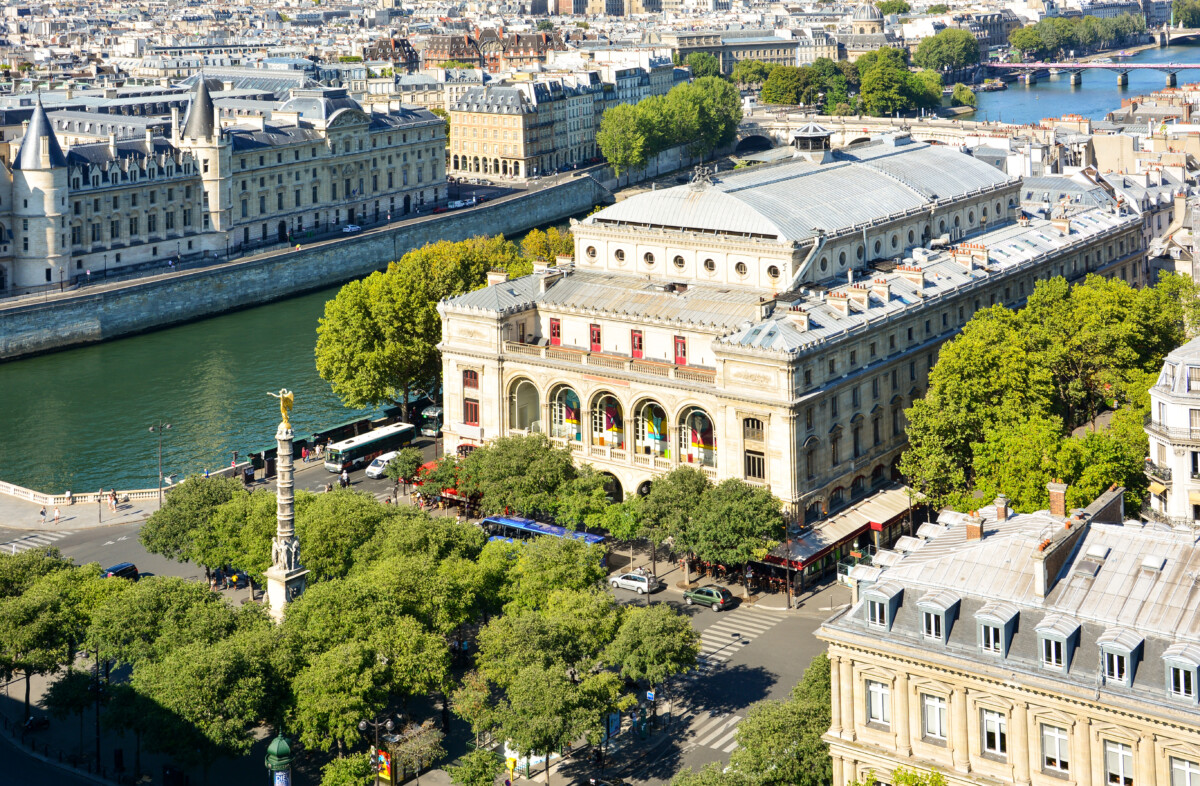
Five Paris theatres reward the detour: Théâtre du Soleil in a former munitions factory at the Cartoucherie, Maison de la Poésie hidden in the Passage Molière, Théâtre des Bouffes du Nord with its famously unrestored sienna walls, Théâtre de Belleville for new political writing, and Petit Bain, a concert barge moored on the Seine. None sits on a tourist route, all are reachable by Metro, and the cheapest way into any of them is a same-day half-price ticket from a Kiosque Théâtre. Full prices at these venues run roughly €6 to €25 rather than the €50-plus of the grand boulevard houses.
Hidden Theaters in Paris at a Glance
Venue | Adresse | What it actually is | Nearest Metro |
|---|---|---|---|
Théâtre du Soleil | La Cartoucherie, Bois de Vincennes | Ensemble company in a former arms factory | Château de Vincennes (1) + free shuttle |
Maison de la Poésie | 1 Passage Molière, 157 rue Saint-Martin, 75003 | Literary stage: readings, concerts, debates | Rambuteau (11) |
Théâtre des Bouffes du Nord | 37 bis boulevard de la Chapelle, 75010 | 503-seat historic house, theatre and opera | La Chapelle (2) |
Théâtre de Belleville | 16 Passage Piver, 75011 | Small contemporary-writing theatre | Belleville (2, 11), Goncourt (11) |
Petit Bain | 7 Port de la Gare, 75013 | Floating concert hall, not a playhouse | Bibliothèque François Mitterrand (14) |
What Makes a Paris Theater "Hidden"?
A hidden theatre in Paris is one that sits outside the commercial circuit: no boulevard frontage, no listing in the hotel-lobby brochure, and usually no English-language marketing. The Paris tourist board counts more than 130 theatres and performance venues in the city, yet the handful visitors reliably find are the same few near the Opéra and the Grands Boulevards. The five below are all genuinely obscure to outsiders while being well known to Parisians, which is the useful definition. Two are protected buildings, one is a converted factory, one is a barge, and one hides behind a covered passage door. For a stage that has become a museum piece in its own right, the Théâtre-Musée des Capucines is a separate curiosity worth an hour.
If you want the wider version of this exercise, the same logic applies across the city in our guide to off the beaten path things to do in Paris.
Why Is Théâtre du Soleil Worth the Trip to Vincennes?
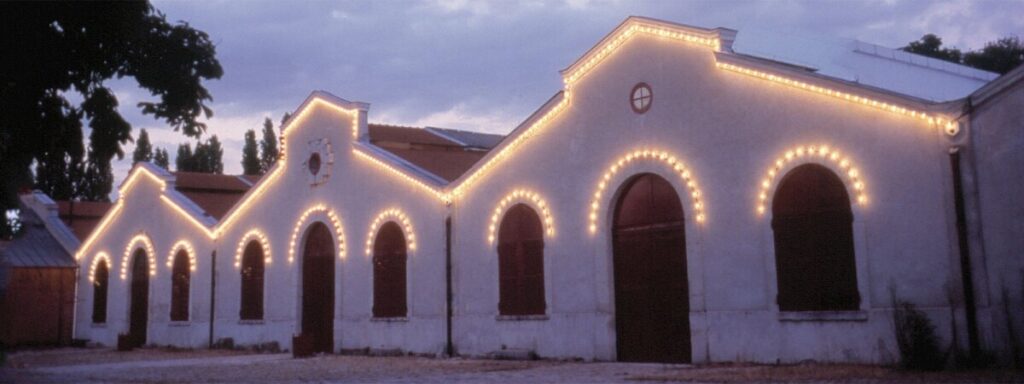
Théâtre du Soleil is worth the trip because the company works as a commune and the building is a former munitions factory, so an evening there looks and runs unlike any commercial Paris theatre. Ariane Mnouchkine founded the troupe in 1964 with fellow students; everyone from actors to technicians has historically been paid the same rate. Mnouchkine is 87 and still directing.
The company occupies La Cartoucherie, a disused arms works on the eastern edge of the Bois de Vincennes shared with several other independent stages. Audiences typically arrive well before curtain, because the foyer is part of the show: the hall is decorated for the production and company members serve food to the people who have come to watch them.
Through 2026 the company is performing Ici sont les dragons, made with Hélène Cixous, in two epochs covering 1917 and the 1918 to 1933 interwar years. Runs are long but infrequent, and this is not a venue with a nightly programme, so check the calendar before you build a trip around it. Book through the company’s own site.
Getting to La Cartoucherie
Take Metro line 1 to Château de Vincennes and leave by exit 4. A free Cartoucherie shuttle waits in the bus terminal: it starts one hour before the performance, runs roughly every 15 minutes, and makes its last outbound departure 15 minutes before curtain. It runs back for an hour after the show ends. Bus 112 also stops at Cartoucherie, about every 20 minutes. On foot it is around 20 minutes from the metro. Missing the last shuttle is the single most common mistake here, so if you plan to linger, check the return times before the interval. For wider transport context, see how to get around Paris.
Where Is Maison de la Poésie and What Is On There?
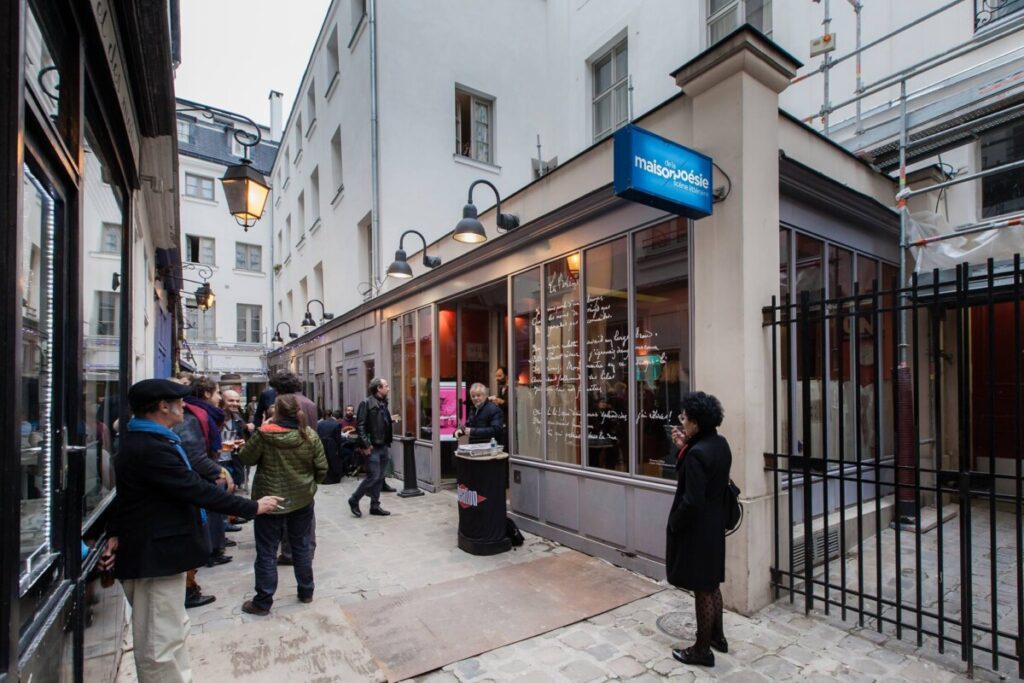
Maison de la Poésie is at 1 Passage Molière, 157 rue Saint-Martin, in the 3rd arrondissement, a few minutes from Les Halles. The entrance is inside a narrow covered passage, which is why people walk past it. Reception is open Tuesday to Saturday from 3pm to 6pm; outside those hours a technician opens the door at the agreed performance time. The box office can be reached on +33 1 44 54 53 00.
Despite the name, the programme is not confined to poetry readings. The venue stages literary concerts, dramatic readings and multidisciplinary work, and it books both established writers and newer names. Ticket prices vary by event rather than following a fixed grid, so check the individual listing. It is one of the more reliable places in central Paris to hear an author read, and it sits close to plenty of other lieux à visiter à Paris if you are building an afternoon around it.
One practical note: because performances are often talk-led and in French, this is the venue on this list where language matters most. If your French is limited, the concerts and music-led evenings travel better than the readings. You may also find other things to do in Paris a better fit for a first visit.
Voir connexe : The Emily in Paris Effect: How TV Shows are Reshaping Paris Travel
What Makes Théâtre des Bouffes du Nord Look So Unfinished?
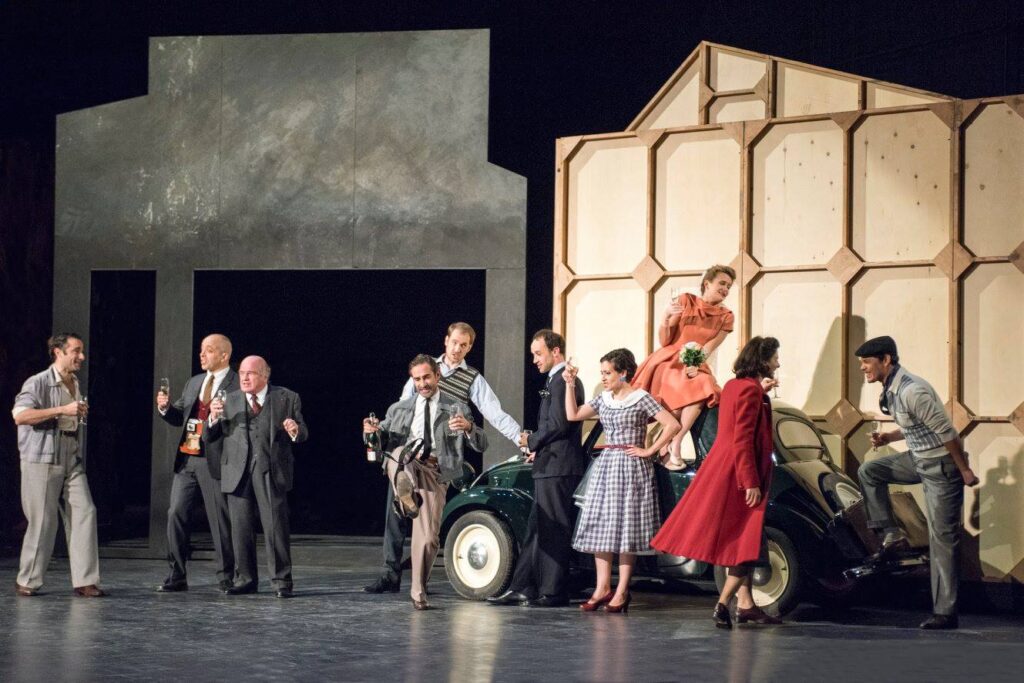
The bare, blotched sienna walls at the Bouffes du Nord are deliberate. When Peter Brook and Micheline Rozan reopened the derelict building in 1974, they spent about six months making it safe and usable while leaving the decayed surfaces visible rather than restoring them. That decision became the theatre’s signature and has been widely imitated since.
The house itself is older than the Brook era: it was built in 1876 to designs by Émile Leménil and seats 503. It stands at 37 bis boulevard de la Chapelle in the 10th arrondissement, a short walk from Gare du Nord. France registered it as a monument historique by decree on 30 April 1993. Brook, who ran the theatre for decades, died in 2022; the venue continues to programme theatre, music and opera.
Sightlines are generally good because the auditorium is a shallow horseshoe rather than a deep stalls-and-balcony arrangement. Prices sit well below the grand houses. If you want to compare it with a conventional Paris stage, the Théâtre du Palais-Royal is the obvious contrast.
Is Théâtre de Belleville Worth Booking?
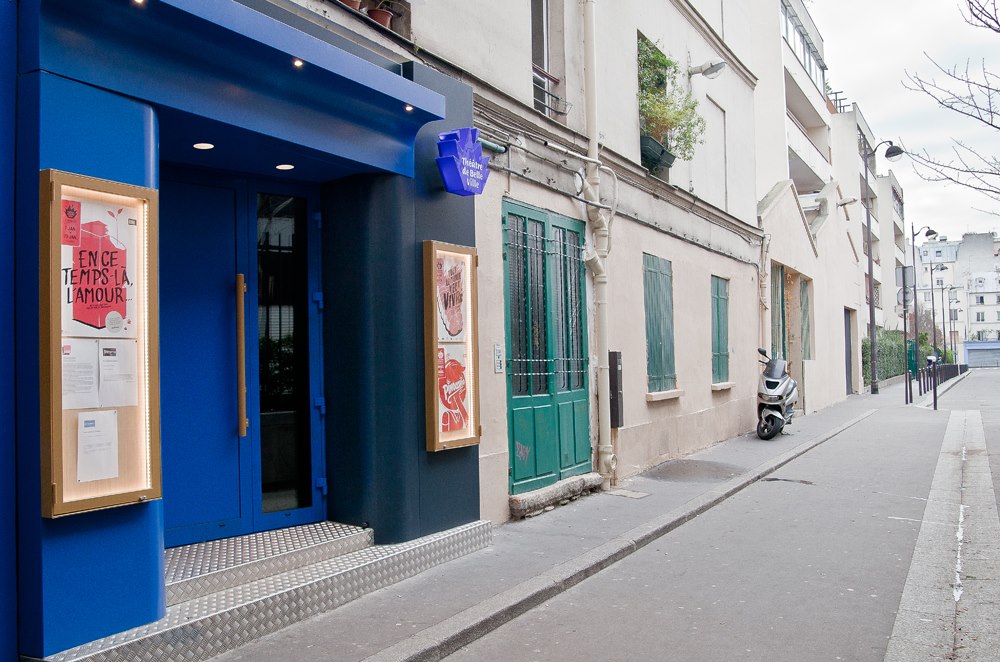
Théâtre de Belleville is worth booking if you read French and want new writing rather than revivals. It opened in 2011 at 16 Passage Piver in the 11th arrondissement, and its stated aim is political and poetic theatre engaged with contemporary questions and with the Belleville neighbourhood around it. The house is small, so popular runs sell out.
The address matters: it is Passage Piver, a quiet lane off the rue du Faubourg du Temple, and the frontage is easy to miss. Doors open at 6pm and the building stays open until the last show finishes. Metro Belleville serves it on lines 2 and 11, and Goncourt on line 11. The box office number is 01 48 06 72 34, and you can book through the theatre’s own site.
The surrounding streets are part of the appeal, and a show pairs naturally with dinner beforehand. For another small independent stage in the same spirit further north, see L’Étoile du Nord Theatre.
Voir connexe : 48 Hours in Paris: The Ultimate Last-Minute Weekend Guide
Is Petit Bain a Theater or a Music Venue?
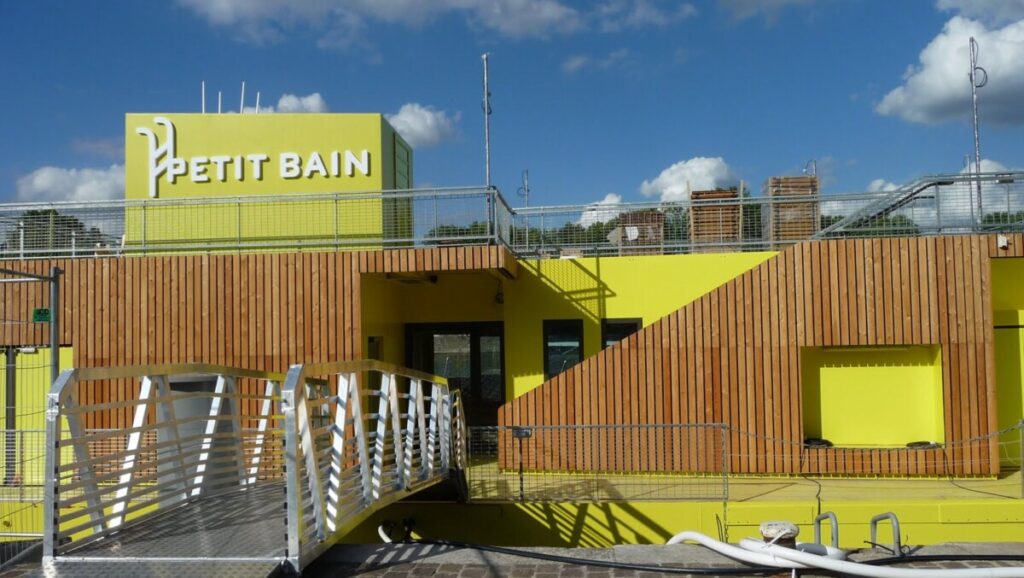
Petit Bain is a music venue rather than a playhouse, and it belongs on this list as a caveat as much as a recommendation. It is a barge at 7 Port de la Gare in the 13th arrondissement, moored at the foot of the Bibliothèque François Mitterrand. Expect concerts, club nights and one-off performance events; do not expect a play.
The boat is arranged over three levels: a concert hall holding up to 450 standing, a bar and canteen, and a rooftop terrace, with the bar and roof together taking about 200. The restaurant and terrace open Tuesday and Wednesday 6pm to midnight, Thursday to Saturday 4pm to 2am, and Sunday 4pm to midnight. It is closed on Mondays, so the widely repeated claim that it opens seven days a week is wrong.
The terrace is the draw in warm weather and fills quickly. If the river setting is the appeal rather than the programme, a Seine dinner cruise ou un lunch cruise with live music gives you the water without a standing-room gig, and there are quieter options among Paris night attractions. For a full evening on the river, the sightseeing and dinner cruise covers both.
How Do You Get Cheap Theater Tickets in Paris?
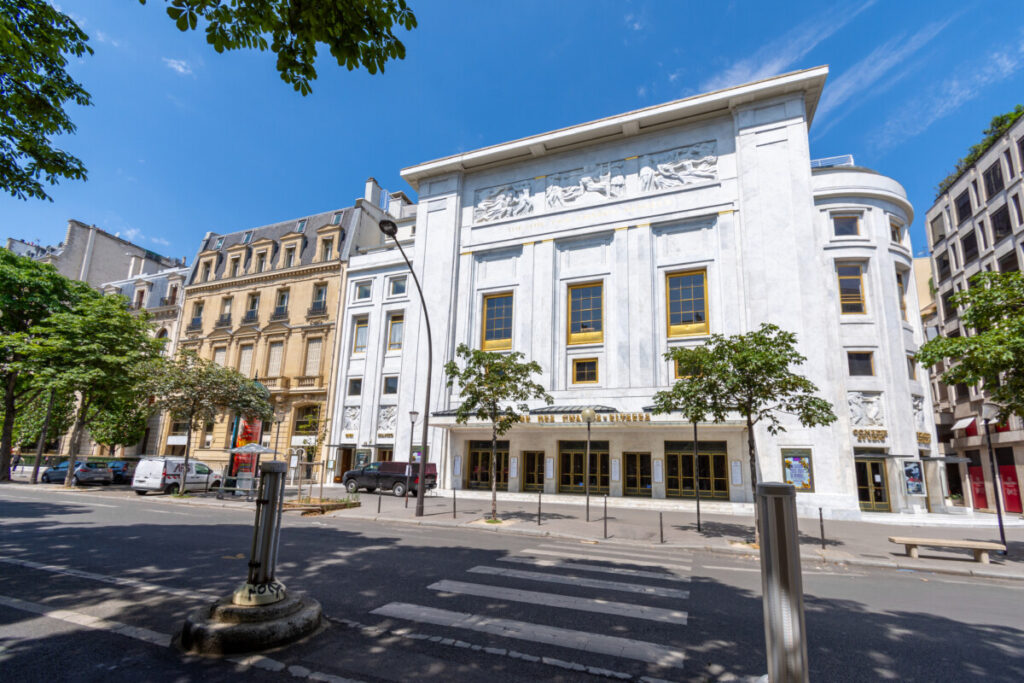
The most reliable discount available to a visitor is the Kiosque Théâtre: two walk-up booths selling top-category seats at half price for that day’s performances only, typically €15 to €24, across roughly 70 shows a night. You cannot book ahead and you cannot choose from the full listings, which is the trade-off.
Discount route | What you pay | Où | Who qualifies |
|---|---|---|---|
Kiosque Théâtre Madeleine | Half price, about €15-€24, same day only | 15 Place de la Madeleine, Tue-Sat 12:30-14:30 and 15:00-19:30 | Anyone |
Kiosque Théâtre Montparnasse | Half price, same day only | Place Raoul Dautry, 75014, Tue-Sat 12:30-20:00, Sun 12:30-16:00 | Anyone |
Kiosque Jeunes | Free or reduced, up to 2 places a day | Online via a Mon Paris account, then validated in person | Ages 13-30 who live, work or study in Paris |
€100 for 10 shows, or €55 for 5 | Gennevilliers, outside Paris; Metro 13 | Anyone | |
Maison des Métallos, Carte Métallos rate | €8 a show against a €15 full price | Paris 11th | Cardholders |
The Kiosque Jeunes scheme is the one most often misreported in English-language guides. It is open to 13 to 30 year olds who live, work or study in Paris, which excludes most visitors. Registration is free but requires online pre-registration through a Mon Paris account followed by in-person validation; once registered you can reserve up to two places a day for two years, with free invitations appearing seven days before the date and reduced-price offers a month ahead.
Two further points worth knowing. The T2G pass is good value, but Gennevilliers is a separate commune north-west of Paris rather than a city venue, so factor the journey in. And many houses hold back student and under-30 rates that are never advertised at the door: at T2G, for instance, the standard €22 seat drops to €14 for under-30s, students and jobseekers, with a €6 solidarity rate below that. Asking at the box office costs nothing. More money-saving ground is covered in our Conseils parisiens et travel tips for Paris.
Voir connexe : How to Get Around Paris: Effortless Navigation Tips
When Should You Go to the Theater in Paris?

Autumn is the strongest month-for-month window, because the French theatrical season opens in September and most houses launch new productions then. Spring is the second-best stretch. August is the month to avoid: much of the profession takes its holiday, and a number of Paris stages simply close, though some run festivals instead.
Midweek performances are quieter and easier to get into than Friday and Saturday nights, and they also improve your odds at the Kiosque, where the day’s unsold stock is what you are buying. Previews are cheaper than opening nights. School holidays and public holidays push demand up across the board. For seasonal planning beyond theatre, see our guide to the meilleur moment pour visiter Paris, and for the monuments, when to visit Paris landmarks. If you are still at the outline stage, start with planifier un voyage à Paris.
What Should You Wear to a Small Paris Theater?
None of the five venues on this list publishes a dress code, and at the independent houses smart-casual is more than enough. The formality gradient in Paris runs the other way from what visitors expect: the grander the building, the dressier the room. Palais Garnier on a gala night is a different proposition from a studio theatre in the 11th.
- Théâtre du Soleil and Théâtre de Belleville: everyday clothes are normal; nobody dresses up
- Bouffes du Nord and Maison de la Poésie: smart-casual, no jacket required
- Petit Bain: a standing gig on a boat, so dress for that and for the walk along the quay
- Shoes you can walk in matter more than anything else, particularly for the Cartoucherie
Bring a layer regardless of season. Older houses are draughty and the Cartoucherie sits in open parkland. For the general question, see what to wear in Paris, our note on how to blend in while travelling in Paris, and the stricter case of what to wear to the Moulin Rouge, which does enforce a code.
Mistakes to Avoid
- Assuming you qualify for Kiosque Jeunes. It requires a Paris address, workplace or school. Visitors do not qualify.
- Turning up at Petit Bain on a Monday. It is closed, despite the seven-days-a-week claim that circulates widely.
- Missing the last Cartoucherie shuttle. The outbound service stops 15 minutes before curtain and the return runs for only an hour after the show.
- Booking Gennevilliers as a Paris venue. The T2G pass is good value but the theatre is outside the city.
- Expecting English surtitles. Almost nothing at these five venues is surtitled. Music-led evenings travel better than text-led ones.
Questions fréquemment posées
Théâtre des Bouffes du Nord. It is central, easy to reach from Gare du Nord, architecturally remarkable in its own right, and it programmes music and opera alongside theatre, so a non-French-speaking visitor still has something to watch.
Do these theaters offer English surtitles?
Rarely. Surtitling in Paris is concentrated in the large subsidised houses and occasional festival runs. At the five venues here, assume the performance is in French unless a specific listing says otherwise.
How much does a ticket cost at a small Paris theater?
Independent and subsidised stages generally run from about €6 on a solidarity rate to around €25 full price. T2G Gennevilliers publishes €22 full, €14 reduced and €6 solidarity, which is representative. Kiosque Théâtre same-day seats fall around €15 to €24.
Can tourists use the Kiosque Jeunes discount?
No. Kiosque Jeunes is limited to 13 to 30 year olds who live, work or study in Paris, and registration is validated in person. Visitors should use the Kiosque Théâtre booths at Madeleine or Montparnasse instead, which are open to everyone.
Is Petit Bain actually a theater?
No. Petit Bain is a floating concert hall and bar with a 450-capacity standing room, a canteen and a roof terrace. It hosts concerts, club nights and performance events rather than plays, and it is included here for the setting rather than the repertoire.
Sources and Method
Addresses, opening hours, transport and prices were checked in August 2026 against the venues’ own practical-information pages (Théâtre du Soleil, Maison de la Poésie, Bouffes du Nord, Théâtre de Belleville, Petit Bain, T2G Théâtre de Gennevilliers, Maison des Métallos), the City of Paris Kiosque Jeunes service, and the Kiosque Théâtre operator. The monument historique registration date for the Bouffes du Nord comes from the French Ministry of Culture’s Mérimée database.
Corrections made in this update: the Théâtre de Belleville address is Passage Piver, not Impasse Piver; Petit Bain closes on Mondays and is a concert venue rather than a theatre; the Kiosque Jeunes scheme is restricted to 13 to 30 year olds with a Paris address, workplace or school, not simply to anyone under 30; the Montparnasse kiosk stands on Place Raoul Dautry rather than inside the station; and an unverified subscription card fee for the Maison des Métallos has been replaced with its published €8 cardholder rate. Programme details change, so confirm with the venue before travelling.
Last updated 20 August 2026.
Find Things to Do in Paris
Find Accommodation

Continue Planning Your Paris Trip
Sacre Coeur Climb: Your Guide to Conquering Montmartre’s 300 Steps
Climb 280 steps to the dome of Sacre-Coeur for a 360-degree view of Paris most visitors miss. Dome…
Read Guide →
Paris Nights: A Love Affair Under the Stars
Paris after dark is a different city. A love letter to its golden-lit bridges, quiet Seine walks, and…
Read Guide →
A First Timer’s Week in Paris: A Dream Come True
One first-timer's week in Paris, Saturday to Friday: what filled the days, why the shoulder-season weather was perfect,…
Read Guide →