
Spanish cultural sanctuary where Nobel laureate’s legacy celebrates Hispanic literary heritage
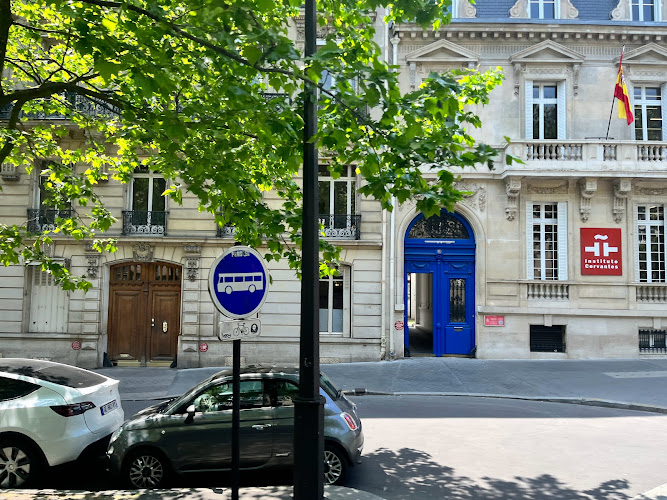
At 11 avenue Marceau in the 16th arrondissement, the Bibliothèque Octavio Paz stands as the Instituto Cervantes’ cultural crown jewel, housed within Paul Déchard’s 1883 mansion that transformed from wealthy private residence into Spain’s premier Parisian cultural institution serving Spanish and Latin American literary heritage since 1952. Named in 2005 for Mexican Nobel Prize winner Octavio Paz (1914-1998), this extraordinary library demonstrates how diplomatic cultural programming can serve both international literary promotion and local community education through institutions that celebrate Hispanic literary achievement while providing public access to Spanish-language resources that serve both educational mission and cultural bridge-building between France and Spanish-speaking nations worldwide.
Instituto Cervantes mission and cultural diplomacy
The 1991 establishment of Instituto Cervantes by Spain to “spread the Spanish language and culture of Spanish-speaking countries” created international cultural network with Paris as the oldest center, demonstrating how national cultural institutions can serve both domestic heritage preservation and international cultural influence through programming that maintains both linguistic authenticity and educational accessibility. This institutional approach proved that successful cultural diplomacy requires both governmental commitment and local community integration through cultural centers that serve both specialist audiences and general public seeking encounter with diverse literary traditions worthy of ongoing institutional support and public programming.
The integration of the 1952 Spanish Library collections into the Instituto Cervantes framework illustrates how cultural institution evolution can enhance rather than diminish original mission through organizational development that serves both historical collection preservation and contemporary cultural programming requirements that honor both established literary heritage and evolving international cultural collaboration serving Spanish-speaking communities and French audiences interested in Hispanic cultural appreciation through comprehensive library services and cultural educational programming.
Octavio Paz legacy and Nobel literature excellence
The 2005 naming honoring Octavio Paz—1990 Nobel Prize in Literature and 1981 Cervantes Prize winner—connects this library to one of the 20th century’s most influential Hispanic writers whose poetry and essays achieved international recognition while maintaining cultural authenticity that served both Mexican literary tradition and universal human themes. This naming choice demonstrates how cultural institutions can honor literary excellence that transcends national boundaries while maintaining connection to specific cultural heritage through writers whose achievement serves both immediate literary appreciation and ongoing cultural education about Hispanic literary achievement worthy of international recognition and institutional commemoration.
Paz’s dual prize recognition—Nobel for universal literary achievement and Cervantes for Spanish-language excellence—provides perfect patronage for a library serving both specialist Hispanic literary research and general public cultural education through collections that demonstrate how exceptional literature can achieve both cultural specificity and universal relevance within institutional contexts that honor both linguistic heritage and international literary appreciation serving diverse audiences seeking authentic encounter with Hispanic literary tradition and contemporary cultural expression.
Architectural heritage and institutional adaptation
Paul Déchard’s 1883 mansion design, featuring “several elements classified in the catalogue of les monuments,” provides appropriate architectural dignity for housing Spanish cultural programming while maintaining 19th-century residential elegance that enhances rather than competes with library mission through settings that honor both architectural heritage and cultural educational function. The recent seven-year renovation and 2022 reopening demonstrates how successful cultural institution preservation requires both building conservation and contemporary institutional standards that serve both heritage protection and modern library service requirements.
The temporary relocation to rue Quentin-Bauchart during renovation illustrates how committed cultural institutions can maintain programming continuity despite building challenges through adaptive service delivery that prioritizes cultural mission over facility convenience, proving that exceptional cultural institutions achieve lasting community value through programming dedication that transcends architectural constraints to serve ongoing cultural education and Spanish-language literary promotion through institutional flexibility that honors both historical collection preservation and contemporary cultural access requirements serving diverse community educational needs.
Contemporary cultural programming and Hispanic heritage
Today’s role as cultural center promoting Spanish language and Hispanic cultural understanding demonstrates how exceptional diplomatic cultural institutions can serve both bilateral cultural relations and local community education through programming that maintains both linguistic authenticity and cultural accessibility for French audiences seeking authentic encounter with Spanish and Latin American literary heritage. This ongoing mission proves that successful cultural centers achieve lasting significance through programming that honors both specific cultural heritage and universal literary appreciation within institutional contexts that serve both specialist research needs and general public cultural curiosity.
The library’s integration within Instituto Cervantes’ global network while maintaining distinctive Parisian cultural programming illustrates how local cultural institutions can serve both international cultural mission and specific community educational needs through collections and programming that honor both global Hispanic literary heritage and local French cultural context, creating cultural des ponts that serve both immediate educational programming and long-term international cultural understanding through institutions that prove exceptional cultural centers achieve lasting influence through ongoing literary service rather than mere collection preservation within architectural settings that honor both cultural heritage and contemporary educational mission requirements.
Essential information
- Namesake: Octavio Paz (Mexican Nobel Prize winner, 1914-1998)
- Institutional parent: Instituto Cervantes (Spain, founded 1991)
- Original foundation: Spanish Library 1952 (integrated 1991)
- Emplacement: 11 avenue Marceau, 16th arrondissement
- Building: Paul Déchard mansion (1883)
- Recent renovation: 7-year closure, reopened October 2022
- Temporary location: 7 rue Quentin-Bauchart during renovation
- Network status: Oldest Instituto Cervantes center worldwide
Cultural and literary significance
- Mission: Spanish language and Hispanic culture promotion
- Collection focus: Spanish and co-official Spanish language literature
- Cultural diplomacy: Bridge between France and Spanish-speaking nations
- Educational programming: Literary resources and cultural activities
- Heritage integration: Historic mansion serving contemporary cultural mission
Nobel literary excellence creates cultural diplomacy sanctuary
Bibliothèque Octavio Paz embodies the transformative power of literary excellence channeled into cultural diplomacy, where the Instituto Cervantes created a Parisian sanctuary for Spanish and Latin American literature that honors Nobel Prize winner Octavio Paz’s universal literary achievement while serving ongoing cultural bridge-building between France and Hispanic nations through literary programming that demonstrates how exceptional writing can transcend national boundaries to serve international cultural understanding and educational enrichment. This remarkable library proves that successful cultural institutions emerge when literary heritage meets institutional commitment to public education, creating cultural centers that serve both specialist research needs and general community appreciation for diverse literary traditions worthy of both diplomatic support and local cultural programming. For Hispanic literature enthusiasts, cultural diplomacy admirers, or anyone interested in how Nobel literary excellence can inspire institutional cultural mission, this avenue Marceau sanctuary offers an extraordinary encounter with international literary cooperation, where Paul Déchard’s 19th-century mansion provides dignified settings for Spanish-language collections that demonstrate how preserved architectural heritage can serve contemporary cultural diplomacy through institutions that honor both specific literary heritage and universal human appreciation for poetic and philosophical achievement that transcends linguistic boundaries to serve ongoing cultural education and international understanding through literary excellence that proves authentic cultural centers achieve lasting significance through programming that maintains both linguistic authenticity and cultural accessibility serving diverse community educational needs and international cultural collaboration requirements.