
<\!-- wp:heading -->
The oldest café in Paris and the birthplace of the Enlightenment
<\!-- /wp:heading --><\!-- wp:paragraph -->
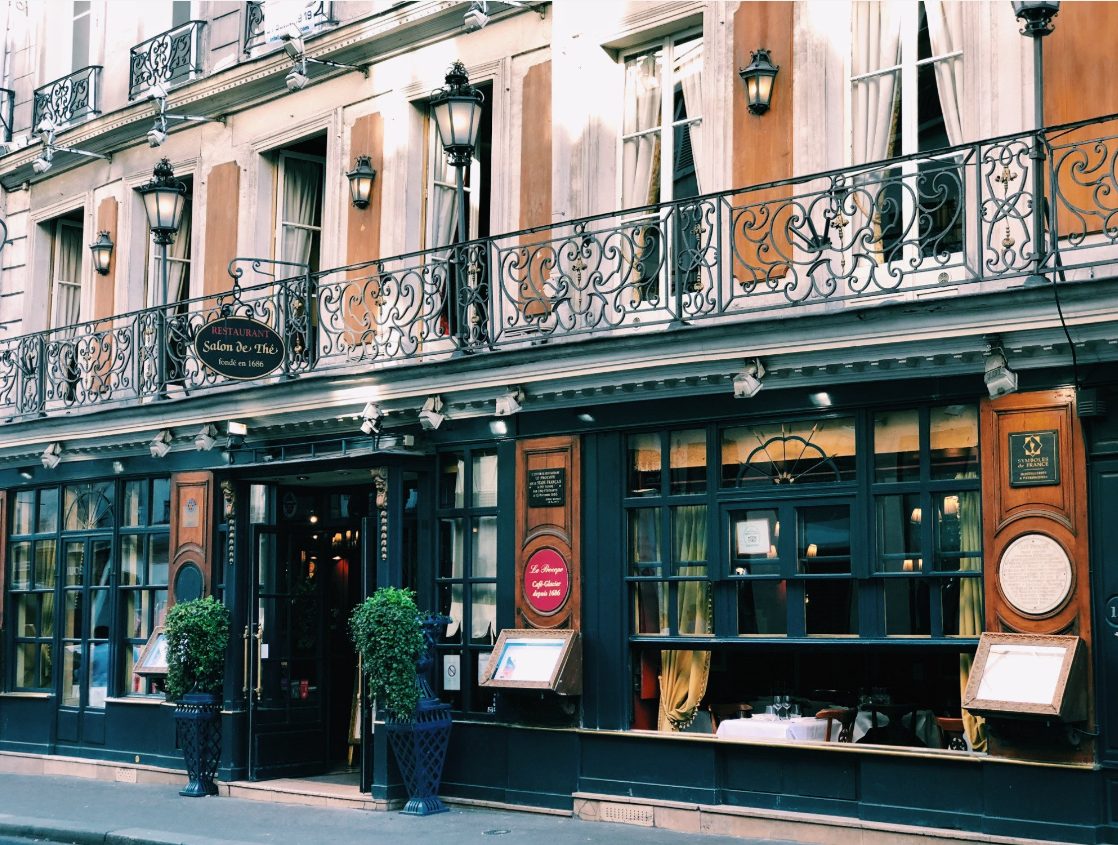
At 13 rue de l\u2019Ancienne-Comédie in the 6th arrondissement, Café Procope stands as Paris\u2019s oldest café and one of the most historically significant cultural institutions in the city. Founded in 1686 by Sicilian chef Procopio Cutò (Francesco Procopio dei Coltelli), this legendary establishment served as the intellectual epicenter of the Enlightenment and the meeting place where revolutionary ideas that would reshape European civilization were conceived, debated, and refined.
<\!-- /wp:paragraph --><\!-- wp:paragraph -->
For over three centuries, the café has witnessed the transformation of French intellectual and political life, hosting conversations that produced the Encyclopédie, inspired the French Revolution, and established coffee house culture as an essential element of Parisian social and intellectual life. This remarkable longevity makes it not just a restaurant but a living monument to the power of ideas and public discourse.
<\!-- /wp:paragraph --><\!-- wp:heading {"level":3} -->
Enlightenment luminaries and intellectual revolution
<\!-- /wp:heading --><\!-- wp:paragraph -->
The café\u2019s most profound historical significance lies in its role as the meeting place for the greatest minds of the 18th century. Voltaire, who famously consumed forty cups of coffee daily mixed with chocolate, first tasted ice cream here, declaring it “exquisite” and adding “What a pity it isn\u2019t illegal\!” This quip exemplifies the wit and irreverence that characterized Enlightenment discourse within the café\u2019s walls.
<\!-- /wp:paragraph --><\!-- wp:paragraph -->
Denis Diderot and Jean le Rond d\u2019Alembert conceived their groundbreaking Encyclopédie at Café Procope in 1751, launching a project that aimed to “change the way people think” through systematic compilation of human knowledge. The lively discussions and debates within the café\u2019s intimate spaces directly shaped this monumental work that challenged traditional authority and promoted rational inquiry.
<\!-- /wp:paragraph --><\!-- wp:heading {"level":3} -->
Revolutionary nerve center and political transformation
<\!-- /wp:heading --><\!-- wp:paragraph -->
During the French Revolution, Café Procope earned recognition as the “nerve center for the Revolution,” hosting the Cordeliers and serving as a meeting place for Robespierre, Danton, and Marat. The café\u2019s role in revolutionary politics demonstrated how intellectual gathering places could become centers of political action, transforming philosophical discourse into revolutionary practice.
<\!-- /wp:paragraph --><\!-- wp:paragraph -->
The first display of the Phrygian cap—soon to become the symbol of Liberty—occurred at the Procope, making the café not just a witness to revolutionary change but an active participant in creating the symbols and ideas that would define the new republican order. This political significance reflects the café\u2019s broader role in translating intellectual concepts into practical political movements.
<\!-- /wp:paragraph --><\!-- wp:heading {"level":3} -->
International intellectual exchange
<\!-- /wp:heading --><\!-- wp:paragraph -->
The café\u2019s influence extended beyond French intellectual circles to encompass international figures including Benjamin Franklin, John Paul Jones, and Thomas Jefferson, who found in this Parisian institution a model for how public spaces could foster democratic discourse and cultural exchange. These American visitors carried café culture concepts back to the New World, influencing the development of similar institutions in American cities.
<\!-- /wp:paragraph --><\!-- wp:paragraph -->
The café\u2019s role in hosting both French philosophes and American revolutionaries demonstrates how cultural institutions can serve diplomatic and intellectual exchange functions while maintaining their essential character as places where ideas are created, tested, and refined through public conversation.
<\!-- /wp:paragraph --><\!-- wp:heading {"level":3} -->
Literary and artistic community hub
<\!-- /wp:heading --><\!-- wp:paragraph -->
Throughout the 18th and 19th centuries, Café Procope attracted actors, writers, musicians, poets, philosophers, scientists, dramatists, and literary critics, creating an intellectual ecosystem that fostered artistic collaboration and cultural innovation. This diverse community demonstrates how great cultural institutions can serve multiple artistic disciplines while maintaining coherent intellectual atmosphere.
<\!-- /wp:paragraph --><\!-- wp:paragraph -->
The café\u2019s survival through multiple historical periods—from Ancien Régime through Revolution to Republic—shows how institutions dedicated to intellectual discourse can adapt to changing political circumstances while preserving their essential mission of fostering cultural and intellectual life.
<\!-- /wp:paragraph --><\!-- wp:heading {"level":3} -->
Contemporary legacy and cultural continuity
<\!-- /wp:heading --><\!-- wp:paragraph -->
Today, officially classified as a monument historique, Café Procope continues to honor its intellectual legacy through the Prix Procope des Lumières, an award celebrating contemporary works that reflect Enlightenment values. This ongoing cultural programming demonstrates how historic institutions can maintain relevance by adapting their traditional missions to serve contemporary cultural needs.
<\!-- /wp:paragraph --><\!-- wp:paragraph -->
For visitors to Paris interested in Enlightenment history, French intellectual tradition, or the evolution of café culture, Café Procope offers an unparalleled encounter with the spaces where modern intellectual discourse was invented and revolutionary ideas were born. The café proves that great cultural institutions achieve lasting significance by creating environments where human creativity and social discourse can flourish, generating ideas that influence civilization far beyond their original geographical and temporal boundaries.
<\!-- /wp:paragraph -->