
<\!-- wp:heading -->
Napoleon\u2019s visionary waterway transformed into Paris\u2019s most romantic promenade
<\!-- /wp:heading --><\!-- wp:paragraph -->
Flowing through the heart of the 10th and 11th arrondissements, the Canal Saint-Martin represents one of Napoleon Bonaparte\u2019s most enduring urban planning achievements and one of Paris\u2019s most beloved romantic destinations. Commissioned in 1802 as part of Napoleon\u2019s comprehensive plan to supply Paris with food, fresh water, and goods through navigable waterways, this 4.5-kilometer canal has evolved from practical infrastructure into one of the city\u2019s most charming cultural and recreational spaces.
<\!-- /wp:paragraph --><\!-- wp:paragraph -->
Construction continued until 1825, funded by a new wine tax, with the canal finally inaugurated after Napoleon\u2019s death. This delayed completion demonstrates how visionary urban projects can transcend their original political context to serve broader civic purposes, creating lasting benefits that extend far beyond their creators\u2019 lifetimes.
<\!-- /wp:paragraph --><\!-- wp:heading {"level":3} -->
Engineering marvel with nine locks and swing bridges
<\!-- /wp:heading --><\!-- wp:paragraph -->
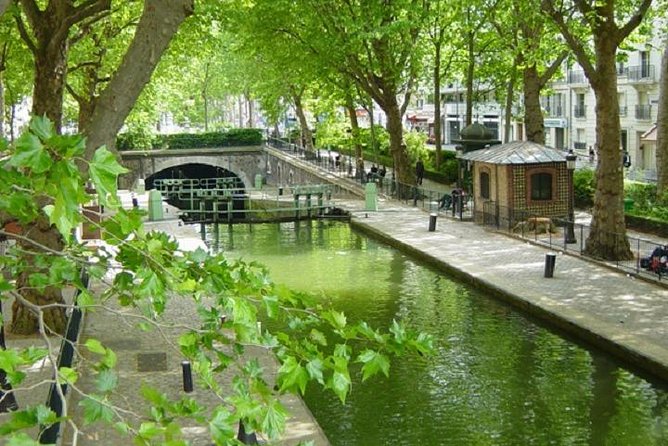
The canal\u2019s 25-meter descent from the Rotonde de la Villette to the Seine is navigated through nine ingeniously designed locks that demonstrate early 19th-century hydraulic engineering excellence. These Marne-sized locks, measuring 41.70 by 7.80 meters, include double staircase configurations that efficiently manage water flow while creating the distinctive stepped waterway that defines the canal\u2019s character.
<\!-- /wp:paragraph --><\!-- wp:paragraph -->
The canalu2019s two swing des ponts, including pedestrian footbridges like Pont Maria-Pacôme, Pont Maria-Casarès, and Passerelle Michèle-Morgan, create dramatic moments when vehicular and pedestrian traffic stops as bridges pivot 90 degrees to allow boat passage. These engineering features transform everyday urban infrastructure into theatrical events that delight residents and visitors alike.
<\!-- /wp:paragraph --><\!-- wp:heading {"level":3} -->
Underground sections and Haussmann\u2019s urban planning
<\!-- /wp:heading --><\!-- wp:paragraph -->
From Rue du Faubourg-du-Temple, the canal continues underground for approximately 2 kilometers, passing beneath Boulevard Jules Ferry before emerging at Port de l\u2019Arsenal near Place de la Bastille. This underground section, created during Napoleon III\u2019s modernization when Baron Haussmann developed boulevards Voltaire, Jules Ferry, and Richard-Lenoir, demonstrates how infrastructure can be adapted to serve evolving urban needs.
<\!-- /wp:paragraph --><\!-- wp:paragraph -->
The decision to underground portions of the canal while preserving open sections reflects sophisticated urban planning that balanced practical transportation needs with aesthetic and recreational considerations. This approach created the varied canal experience that visitors enjoy today.
<\!-- /wp:paragraph --><\!-- wp:heading {"level":3} -->
Romantic transformation and cultural renaissance
<\!-- /wp:heading --><\!-- wp:paragraph -->
Through comprehensive rehabilitation programs, the canal\u2019s formerly industrialized banks have been transformed into one of Paris\u2019s most charming promenades, lined with chestnut trees and featuring converted towpaths that provide peaceful walking routes through the urban landscape. The picturesque metal footbridges and tree-lined embankments create romantic scenery that is particularly spectacular in autumn when colored foliage reflects in the calm water.
<\!-- /wp:paragraph --><\!-- wp:paragraph -->
This transformation from industrial waterway to romantic destination demonstrates how thoughtful urban renewal can preserve historical infrastructure while creating new cultural and recreational value. The canal now serves as a beloved gathering place where Parisians enjoy picnics, pétanque games, and leisurely boat tours.
<\!-- /wp:paragraph --><\!-- wp:heading {"level":3} -->
Contemporary cultural hub and neighborhood character
<\!-- /wp:heading --><\!-- wp:paragraph -->
The Canal Saint-Martin area has evolved into one of Paris\u2019s most vibrant cultural districts, where trendy restaurants, hipster cafés, and cozy bistros create a dynamic food and entertainment scene that attracts both locals and visitors. This cultural renaissance demonstrates how preserved historical infrastructure can serve as catalysts for neighborhood revitalization and cultural innovation.
<\!-- /wp:paragraph --><\!-- wp:paragraph -->
For visitors to Paris seeking authentic Parisian experiences away from major tourist crowds, the Canal Saint-Martin offers a perfect synthesis of historical significance, engineering achievement, and contemporary cultural vitality. The waterway proves that Napoleon\u2019s practical urban planning vision could create infrastructure that serves both utilitarian and poetic purposes, providing Parisians with functional transportation routes that also nurture the soul through natural beauty and peaceful urban respite.
<\!-- /wp:paragraph -->