
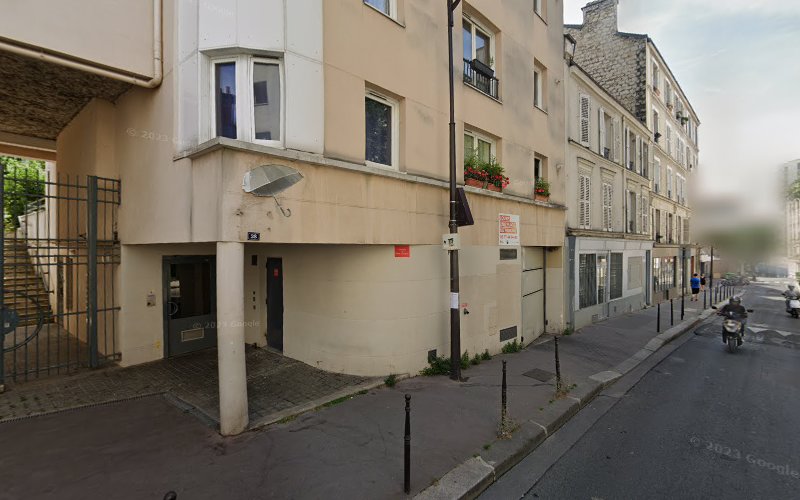
Couvent Saint-François
Couvent Saint-François is a Paris historic landmark located in the 14 arrondissement. A 1930s Franciscan revival in modern Paris At 7 rue Marie-Rose in the 14th arrondissement, the Couvent Saint-François stands as a remarkable example of 20th-century religious architecture and Franciscan resilience. Built between 1930 and 1938, this brick complex represents the return of the […]
Couvent Saint-François is a Paris historic landmark located in the 14 arrondissement.
<\!-- wp:heading -->
A 1930s Franciscan revival in modern Paris
<\!-- /wp:heading --><\!-- wp:paragraph -->
At 7 rue Marie-Rose in the 14th arrondissement, the Couvent Saint-François stands as a remarkable example of 20th-century religious architecture and Franciscan resilience. Built between 1930 and 1938, this brick complex represents the return of the Minor Brothers (Franciscans) to Paris after their expulsion following the 1905 Law of Separation of Church and State.
<\!-- /wp:paragraph --><\!-- wp:paragraph -->
The convent\u2019s story reflects the broader narrative of French religious communities adapting to republican ideals while maintaining their spiritual mission. After the devastation of World War I, the Franciscans were permitted to return, first establishing temporary quarters on rue des Fourneaux and rue Beaunier before acquiring this permanent site in the Petit-Montrouge area.
<\!-- /wp:paragraph --><\!-- wp:heading {"level":3} -->
Architectural harmony of tradition and modernity
<\!-- /wp:heading --><\!-- wp:paragraph -->
Designed by architects Blavette and Gélis (later Hulot after Blavette\u2019s death), the convent demonstrates how contemporary building techniques could serve ancient religious traditions. The project, approved in 1933 and inaugurated in 1936, combines functional monastic requirements with aesthetic sensitivity to its urban surroundings.
<\!-- /wp:paragraph --><\!-- wp:paragraph -->
The brick buildings surround a central garden courtyard on three sides, with galleries forming a traditional cloister that provides spaces for contemplation and community life. This arrangement preserves the essential elements of Franciscan architecture while adapting to the constraints and opportunities of 1930s Paris.
<\!-- /wp:paragraph --><\!-- wp:heading {"level":3} -->
The chapel: Gothic inspiration in pink brick
<\!-- /wp:heading --><\!-- wp:paragraph -->
The convent\u2019s spiritual heart lies in its chapel, constructed from pink Burgundy brick and red Préty stone with deliberate references to Gothic architecture. The single nave flanked by seven lateral chapels creates an intimate yet dignified space that honors both Franciscan simplicity and French ecclesiastical tradition.
<\!-- /wp:parameter --><\!-- wp:paragraph -->
The chapel\u2019s stained glass windows, created between 1936 and 1947 by renowned artists André Pierre and Pierre Villette, flood the interior with colored light that enhances the warm tones of the brick construction. These windows represent some of the finest religious art of the interwar period, combining traditional iconography with contemporary artistic sensibility.
<\!-- /wp:paragraph --><\!-- wp:heading {"level":3} -->
Franciscan community life in urban setting
<\!-- /wp:heading --><\!-- wp:paragraph -->
The convent\u2019s design thoughtfully separates public and private spaces, with areas open to visitors including the chapel and parlors, while the convent proper contains cells and collective living spaces reserved for the religious community. This arrangement allows the Franciscans to maintain their contemplative life while engaging with the surrounding neighborhood.
<\!-- /wp:paragraph --><\!-- wp:paragraph -->
The integration of traditional monastic elements—cloisters, gardens, and community spaces—with modern urban context demonstrates how religious architecture can adapt to contemporary needs while preserving essential spiritual functions. The result is a living monastery that serves both its residents and the broader Parisian community.
<\!-- /wp:paragraph --><\!-- wp:heading {"level":3} -->
Protected heritage and architectural significance
<\!-- /wp:heading --><\!-- wp:paragraph -->
Recognition of the convent\u2019s architectural and historical importance came in 2007 when it was partially inscribed as a historic monument. The protection covers the chapel and its decoration, the entrance vestibule and monumental staircase, the cloister, and the building\u2019s facades and roofs.
<\!-- /wp:paragraph --><\!-- wp:paragraph -->
This designation acknowledges the convent\u2019s significance as both a religious monument and an example of interwar architectural innovation. The building represents a successful synthesis of traditional Franciscan values with modern construction techniques and urban integration.
<\!-- /wp:paragraph --><\!-- wp:heading {"level":3} -->
A testament to religious continuity
<\!-- /wp:heading --><\!-- wp:paragraph -->
Today, the Couvent Saint-François continues to serve its original purpose while standing as a monument to the adaptability of religious communities in modern France. The convent demonstrates how traditional religious architecture can find new expression in contemporary materials and urban contexts without losing its essential spiritual character.
<\!-- /wp:paragraph --><\!-- wp:paragraph -->
For visitors interested in religious architecture, French social history, or the evolution of monastic life, the Couvent Saint-François offers a unique glimpse into how ancient traditions can thrive in modern urban environments. The combination of architectural innovation, artistic excellence, and living religious practice makes this one of the 14th arrondissement\u2019s most significant yet understated cultural treasures.
<\!-- /wp:paragraph -->