
Description
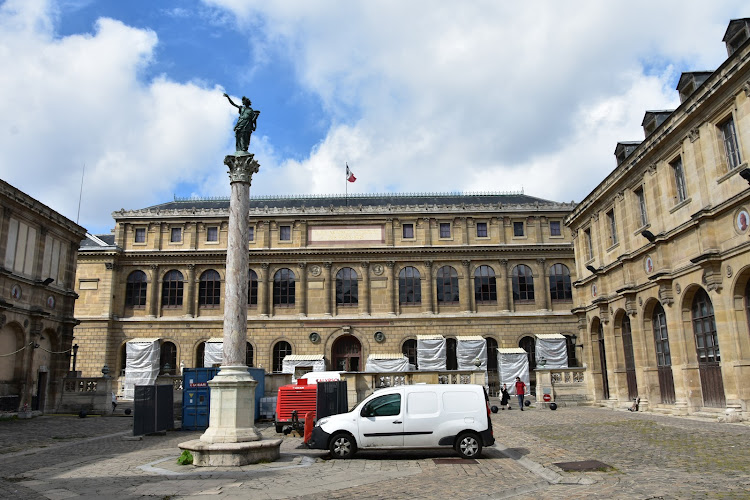
Located in the heart of the 6th arrondissement, the École des Beaux-Arts is a must-visit for any art lover. Established in 1871, the École is one of the oldest institutions of higher learning in France and is home to a number of important art collections. As the oldest art school in Europe, having been founded in 1623 by Louis XIII, the École des Beaux-Arts has played a significant role in shaping the artistic landscape of France. The École’s impressive collection includes works by renowned artists such as Jean-Baptiste Carpeaux, François Boucher, and Jean-Baptiste Greuze. Visitors can marvel at the intricate details of each piece, gaining a deeper understanding of France’s artistic heritage. The École’s location just south of the River Seine provides a picturesque backdrop for a day of cultural exploration. In addition to its impressive collection, the École des Beaux-Arts is also home to a number of exhibitions throughout the year, showcasing contemporary artists and their work. These exhibitions provide a unique opportunity to experience the latest trends in the art world, while also appreciating the timeless beauty of the École’s permanent collection. Overall, the École des Beaux-Arts is a must-visit for anyone interested in the rich artistic history of France. With its impressive collection and stunning location, the École is a true gem in the heart of Paris.
Principales caractéristiques
- The École maternelle, located in the 6th arrondissement, is a historic preschool with a rich cultural heritage dating back to [year].
- Visitors can explore the unique architectural features of the building, which showcase [specific architectural style or design].
- The museum's collection includes [highlighted items or themes], providing insight into the history and evolution of preschool education.
Accessibilité et commodités
- The museum is equipped with wheelchair-accessible entrances and facilities to ensure a comfortable experience for visitors with disabilities.
- Amenities on-site include restrooms, a cafeteria offering light refreshments, and a gift shop with educational materials and souvenirs.
- Visitors can take advantage of audio guides available in multiple languages, enhancing the understanding of the museum's exhibits.
Planifier votre visite
- To avoid crowds, it is recommended to visit the museum during weekdays in the morning or late afternoon.
- On average, visitors spend approximately [average time] exploring the museum and its exhibits.
- A suggested itinerary includes starting with the historical exhibits, followed by a guided tour of the architectural highlights, and concluding with a visit to the gift shop for unique souvenirs.
What Makes École Notable
École at 85 rue de Vaugirard is identified as an école maternelle, or nursery school, in Paris’s 6th arrondissement. It is best understood as part of the everyday civic fabric of the Left Bank rather than as a conventional sightseeing monument. For travellers interested in how Paris functions beyond its headline museums and landmarks, it offers a useful point of reference: the school building is one element in a dense, lived-in quarter of homes, shops, public institutions and streets shaped by daily routines.
The entry also points to a wider Parisian architectural and social history. Numerous school buildings in the city date from the late 19th century, when the Jules Ferry education reforms expanded public education. That context makes local schools worth noticing on a walk: their presence reflects the planning of neighbourhood life as much as formal architectural display. This is not the École des Beaux-Arts, nor should it be approached as an art museum or collection.
Location & Neighborhood Context
Rue de Vaugirard runs through the 6th arrondissement on the Left Bank. Around this address, the atmosphere is residential and institutional, with the Luxembourg quarter within easy walking distance. The nearby Jardin du Luxembourg gives the area a particularly Parisian sense of scale: school runs, cafés and local commerce meet one of the city’s major formal public gardens.
This is a good area for an unhurried walk rather than a destination requiring a separate visit. Combine the street with the garden and the surrounding 6th-arrondissement lanes, then continue towards Saint-Germain-des-Prés or the Seine if your itinerary allows. Keep in mind that the school remains a place for children and families; the most appropriate way to experience it is from the public street, without treating an active educational setting as an attraction.
Points forts des visiteurs
- Everyday Paris: a useful stop for readers curious about civic buildings and neighbourhood life beyond major monuments.
- Education-history context: an occasion to consider the legacy of late-19th-century school building and the Jules Ferry reforms across Paris.
- Left Bank walkability: well suited to a route through the Luxembourg area and the residential streets of the 6th arrondissement.
- Street-level observation: most appropriate for architecture-minded walkers who are content to view a functioning school respectfully from outside.
Practical Planning Tips
Plan to see the building as a brief exterior stop during a broader Luxembourg-area walk. Mid-morning or early afternoon generally makes it easier to appreciate surrounding streets at a relaxed pace, but avoid gathering near entrances at busy school arrival and departure periods. Do not assume public access, tours, exhibitions or visitor facilities: a nursery school has a different purpose from a museum or heritage site.
There is no reason to build a full day around this address. Instead, allow time for the Jardin du Luxembourg and the wider 6th arrondissement, and check the school’s official website directly if you have a legitimate school-related reason to contact or visit it. Travellers seeking a formal cultural visit should choose an institution that explicitly welcomes the public.
Questions fréquemment posées
Is École a museum or art school?
No. The listing identifies it as an école maternelle, a nursery school. It should not be confused with the École des Beaux-Arts.
Can visitors go inside?
Do not presume interior access. As an active educational setting, it is best viewed respectfully from the public street unless the school confirms otherwise.
What should I see nearby?
The Luxembourg quarter and Jardin du Luxembourg provide the most natural context for a walk from rue de Vaugirard.