
Byzantine grandeur in the heart of elegant Paris
At 7 rue Georges Bizet in the sophisticated 16th arrondissement, the Église orthodoxe grecque (Saint-Étienne Cathedral) stands as a magnificent testament to Greek Orthodox faith and neo-Byzantine architectural achievement. Built between 1890 and 1895 and designed by Émile Vaudremer, this extraordinary cathedral demonstrates how immigrant religious communities could create monumental architecture that honored their spiritual traditions while contributing to Paris’s diverse cultural landscape.
Demetrius Schilizzi’s philanthropic vision
The cathedral was commissioned by Demetrius Stefanovich Schilizzi, a wealthy Greek benefactor who recognized the need for a worthy Orthodox worship space in Paris. The first stone was laid in 1890, beginning construction of what would become the seat of Greek Orthodox Christianity in France and a architectural jewel worthy of the prestigious neighborhood surrounding it.
Schilizzi’s generous funding enabled architect Émile Vaudremer to create a cathedral that honored both Greek Orthodox liturgical requirements and French architectural excellence, demonstrating how philanthropic vision could bridge cultural traditions while creating lasting religious les monuments.
Émile Vaudremer’s neo-Byzantine masterpiece
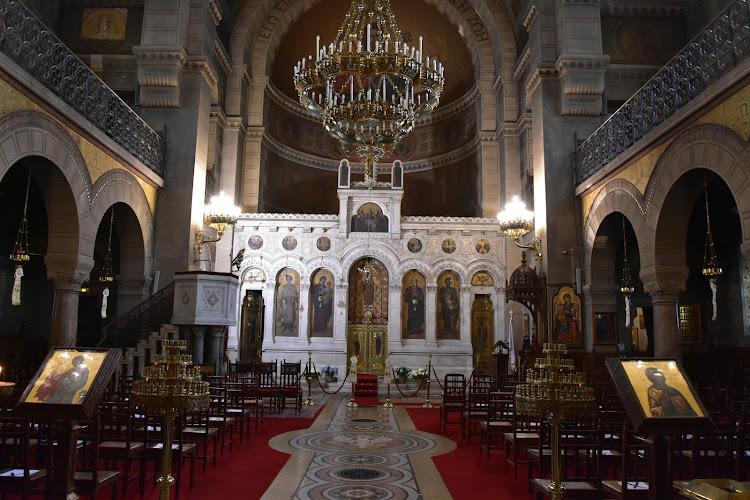
Vaudremer’s design brilliantly adapts Byzantine architectural principles to Parisian urban context, featuring a neo-Romanesque Lombard-inspired façade with pink stones and bricks that create distinctive visual identity. The central plan includes a magnificent dome on pendentives with four barrel vaults, while the triforium features small columns and elaborately crafted stained glass windows with round arches.
The architectural program balances Byzantine authenticity with French construction techniques, creating sacred space that feels authentically Orthodox while integrating successfully into the sophisticated architectural landscape of the 16th arrondissement.
Cultural significance and celebrity connections
As the seat of the Greek Orthodox Metropolis of France since 1953, the cathedral has hosted significant cultural events including the 1962 wedding of Édith Piaf and Théo Sarapo, and the 1977 funeral of Maria Callas. These celebrity connections demonstrate the cathedral’s role in French cultural life and its significance beyond the Greek Orthodox community.
The cathedral’s 1995 historic monument designation during its liturgical centenary recognizes both its architectural merit and its contribution to Parisian religious diversity, ensuring preservation of this remarkable example of immigrant community achievement.
Essential information
- Construction: 1890-1895
- Architect: Émile Vaudremer
- Commissioner: Demetrius Stefanovich Schilizzi
- Consecration: 1895
- Cathedral status: 1963
- Emplacement: 7 rue Georges Bizet, 16th arrondissement
- Heritage status: Historic monument (1995)
- Religious significance: Seat of Greek Orthodox Metropolis of France
Byzantine heritage in the City of Light
The Église orthodoxe grecque embodies the successful integration of Orthodox Christian tradition into Parisian cultural life, where Émile Vaudremer’s neo-Byzantine architecture created authentic sacred space for Greek Orthodox worship while contributing to the city’s architectural and religious diversity. This remarkable cathedral demonstrates how immigrant communities can preserve their spiritual heritage while creating lasting cultural contributions to their adopted cities.