
Description
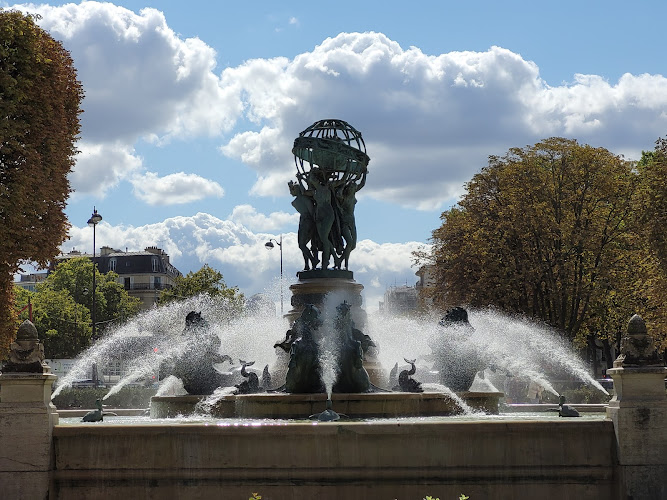
The Fontaine des Quatre-Parties-du-Monde, located in the 6th arrondissement of Paris, is a magnificent fountain that stands as a testament to French architectural excellence. Designed by the legendary architect Jules Hardouin-Mansart in 1681, the Fontaine des Quatre-Parties-du-Monde is the largest fountain in the world. The fountain’s name translates to “Fountain of the Four Parts of the World,” and it is a stunning representation of the four corners of the globe. The fountain features four sculptures, each representing a different continent: Asia, Africa, Europe, and the Americas. The sculptures are intricately designed, and each one is a masterpiece in its own right. The Fontaine des Quatre-Parties-du-Monde is located in the heart of Paris, on Avenue de l’Observatoire. It is a popular attraction for tourists and locals alike, and it is easy to see why. The fountain’s sheer size and intricate design are truly awe-inspiring. Visitors to the Fontaine des Quatre-Parties-du-Monde can take in the beauty of the sculptures and the fountain’s impressive water features. The fountain is especially beautiful at night when it is illuminated, giving it a magical quality that is not to be missed. In conclusion, the Fontaine des Quatre-Parties-du-Monde is a must-see attraction for anyone visiter Paris. Its size, beauty, and historical significance make it a true gem of the city.
Principales caractéristiques
The Fontaine des Quatre-Parties-du-Monde, located in the 6th arrondissement, features bronze female figures representing the "4 corners of the world." This 19th-century fountain is a must-see for its unique representation and historical significance.
Accessibilité et commodités
The museum offers accessibility features to accommodate visitors with disabilities. Amenities include restrooms, and a gift shop. Visitors can also enjoy the convenience of audio guides during their visit.
Planifier votre visite
The best times to visit are during the early morning or late afternoon to avoid crowds. Visitors typically spend up to 1 hour exploring the fountain and its surroundings. It's recommended to combine a visit to the fountain with nearby attractions in the 6th arrondissement for a well-rounded experience.
What Makes the Fontaine des Quatre-Parties-du-Monde Notable
The Fontaine des Quatre-Parties-du-Monde, also called the Fontaine de l’Observatoire, is an ornate 19th-century fountain at the southern end of Avenue de l’Observatoire in Paris’s 6th arrondissement. Its title translates as the Fountain of the Four Parts of the World, giving this landmark a clear geographical theme as well as a strong sculptural identity.
Four bronze female figures represent the world’s four parts—Asia, Africa, Europe and the Americas. Rather than functioning as an interior attraction with a prescribed route, the fountain rewards close looking from the surrounding paths: pause to take in the figures, the decorative structure and the changing views along the avenue. It is a satisfying stop for visitors interested in Parisian public sculpture and the city’s 19th-century streetscape.
Location and Neighborhood Context
The fountain stands on Avenue de l’Observatoire in the 6th arrondissement, on the southern side of the Luxembourg Gardens area. This is a more residential, measured part of the Left Bank than the busiest central sightseeing corridors, yet it fits naturally into a walk through Saint-Germain-des-Prés, the Luxembourg quarter or the garden’s southern approaches.
Avenue de l’Observatoire provides a formal urban perspective, so approach on foot rather than treating the fountain as a quick photograph from a vehicle. The site works particularly well as a pause between the Luxembourg Gardens and destinations farther south. Allow time to circle the fountain and notice how its scale changes against the avenue and surrounding greenery.
Points forts des visiteurs
- A distinctive four-continent theme: the fountain’s name and four bronze figures give visitors a clear subject to explore.
- A free-to-view outdoor landmark: ideal for travellers building a self-guided Left Bank walk around public spaces and architecture.
- Strong photographic viewpoints: the avenue’s axial setting gives context as well as close-up sculptural details.
- A quieter cultural stop: especially suited to architecture enthusiasts, art-focused walkers and visitors looking beyond major museum interiors.
- Easy pairing with the Luxembourg area: use it as a short stop before or after time in the nearby gardens and quarter.
Practical Planning Tips
Visit in daylight if you want to examine the bronze figures and ornamental details clearly. Morning can be useful for a more unhurried look, while later in the day may suit travellers combining the fountain with a longer stroll around the Luxembourg Gardens. Because this is an outdoor monument, build in flexibility for rain, strong sun or changing light.
There is no need to make the fountain the sole focus of a long itinerary. Plan it as a focused stop, then continue on foot through the surrounding streets and gardens. Keep to the public paths around the monument, and be considerate of local pedestrian movement when setting up photographs. Check current local conditions before travelling, particularly if your visit depends on a specific route through the gardens or avenue.
Questions fréquemment posées
Where is the Fontaine des Quatre-Parties-du-Monde?
It is on Avenue de l’Observatoire, at the southern end of the avenue in Paris’s 6th arrondissement.
Is the fountain known by another name?
Yes. It is also known as the Fontaine de l’Observatoire.
What do the four figures represent?
The bronze female figures represent Asia, Africa, Europe and the Americas—the four parts of the world named by the fountain.