
Description
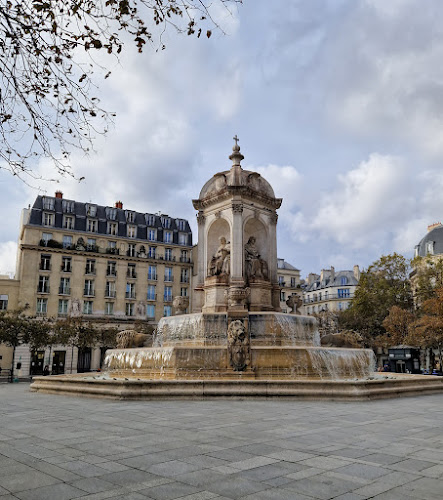
The Fontaine Saint-Sulpice, located in the sixth arrondissement on the Place Saint-Sulpice, is a stunning fountain that commemorates the death of Cardinal Richelieu, the Archbishop of Paris, in 1671. Created in 1701 by Pierre-Charles Toutain, who also designed the Fontaine Saint-Sulpice, the fountain features a bronze statue of the Virgin Mary. The Fontaine Saint-Sulpice is a beautiful example of French Baroque architecture and is a must-see for anyone visiter Paris. The intricate details of the fountain, from the delicate carvings to the flowing water, make it a true work of art. As you stand in front of the Fontaine Saint-Sulpice, take a moment to appreciate the history and significance of this monument. It serves as a reminder of the importance of Cardinal Richelieu and his impact on Parisian society. Whether you are a history buff or simply appreciate beautiful architecture, the Fontaine Saint-Sulpice is a must-visit destination in Paris. So, take a stroll to the sixth arrondissement and experience the beauty and history of this stunning fountain for yourself.
Principales caractéristiques:
The Fontaine Saint-Sulpice is a historic fountain located in the 6th arrondissement of Paris. It is known for its impressive size and intricate design, featuring statues and ornate details. The fountain has a rich history and is a must-see for visitors interested in Parisian architecture and landmarks.
Accessibilité et commodités :
The museum offers accessibility features to accommodate visitors with disabilities, including ramps and designated parking spaces. Restrooms are available on-site, and visitors can also enjoy dining options and souvenir shopping at the museum's gift shop. Additionally, audio guides are available to provide detailed insights into the fountain's history and significance.
Planifier votre visite :
The best times to visit the Fontaine Saint-Sulpice are during the morning hours to avoid larger crowds. Visitors typically spend around 30-45 minutes exploring the fountain and its surroundings. It is recommended to combine the visit with nearby attractions, such as the Saint-Sulpice Church, for a comprehensive experience of the area.
What Makes Fontaine Saint-Sulpice Notable
Fontaine Saint-Sulpice is the monumental fountain at the centre of Place Saint-Sulpice in Paris’s 6th arrondissement. Completed in 1847, it brings a strongly ordered neoclassical presence to the square: a substantial architectural composition rather than a small decorative fountain. Its scale makes it an immediate landmark when approaching the church and a useful point of orientation in this part of the Left Bank.
The fountain is distinguished by statues of four famous French bishops. Those figures give the monument its particular historical character and reward a slower look at the façades and sculptural detail. It works especially well as an open-air architectural stop: visitors can take in the overall symmetry from across the square, then move closer to notice how the figures are set within the design. The experience is brief if you are passing through, but it can also anchor a more considered walk through the neighbourhood.
Location & Neighborhood Context
The fountain stands on Place Saint-Sulpice, in the 6th arrondissement. This is a central Left Bank setting with the measured, residential-and-cultural feel associated with the Saint-Germain-des-Prés quarter. The square is a natural pause between local streets, cafés and the major church frontage, making the monument easy to include without treating it as a separate, time-consuming destination.
Use Fontaine Saint-Sulpice as a visual waypoint while walking around Saint-Sulpice and Saint-Germain-des-Prés. The Seine is within walking distance, so the stop can fit into a wider riverside or Left Bank itinerary. Leave time to view it from more than one side of the square: the open setting helps explain its civic scale, while closer views make the bishop statues easier to read.
Points forts des visiteurs
- A 19th-century landmark: completed in 1847, it offers a clear neoclassical counterpoint to the surrounding streetscape.
- Four sculptural figures: the statues of famous French bishops are the fountain’s defining feature and its best reason to pause for detail.
- A straightforward walk-by stop: its position on Place Saint-Sulpice makes it easy to combine with a church visit, a neighbourhood stroll or time in Saint-Germain-des-Prés.
- Good for architecture-minded visitors: the fountain suits travellers interested in urban squares, public sculpture and the planning of the Left Bank.
- Useful for unhurried itineraries: photographers, sketchers and walkers can appreciate the monument without needing to build an entire day around it.
Practical Planning Tips
Visit in the morning for a quieter first look, or return later when the changing light makes the fountain’s relief and depth more legible. As it is part of a public square, approach it as an exterior viewing stop and allow enough time to cross the space rather than seeing it only in passing. A short pause is sufficient for many visitors; architecture and sculpture enthusiasts may prefer to linger.
No separate visit needs to dominate your schedule. Pair the fountain with a walk around Place Saint-Sulpice, then continue through the 6th arrondissement or towards the Seine. Keep your plan flexible around activity in the square, and check current local conditions before setting out if you are relying on a particular route or taking photographs.
Questions fréquemment posées
Where is Fontaine Saint-Sulpice?
It is on Place Saint-Sulpice in Paris’s 6th arrondissement, in the Left Bank area near Saint-Germain-des-Prés.
What is Fontaine Saint-Sulpice known for?
It is a large neoclassical fountain completed in 1847 and decorated with statues of four famous French bishops.
How long should I allow for a visit?
Allow a short stop to view the overall composition and sculpture, or longer if you are exploring the square and the surrounding 6th arrondissement on foot.