
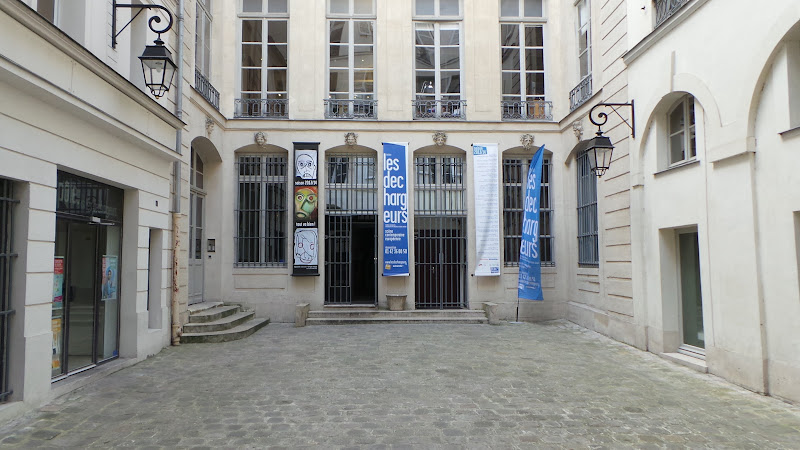
Description
The Grand Hôtel d’Entragues is a luxurious hotel located in the heart of Paris. Designed by the renowned architect Gustave Eiffel, the hotel was built in 1907 and is situated in the 6th arrondissement, within walking distance of some of Paris’s most iconic landmarks, including the Louvre, the Arc de Triomphe, the Champs-Elysées and the tour Eiffel. One of the hotel’s standout features is its grand staircase, which is a true work of art. The staircase is made of marble and is adorned with intricate carvings and sculptures. It is a stunning sight to behold and is a testament to the hotel’s commitment to luxury and elegance. Another highlight of the Grand Hôtel d’Entragues is its ballroom, which is the perfect venue for weddings, conferences, and other special events. The ballroom is spacious and beautifully decorated, with high ceilings, sparkling chandeliers, and ornate moldings. It is a truly magical setting that will leave a lasting impression on all who visit. For those looking to relax and unwind, the hotel’s spa is the perfect place to do so. The spa offers a range of treatments and services, including massages, facials, and body wraps. Guests can also take advantage of the hotel’s indoor pool, sauna, and steam room. Perhaps the most unique feature of the Grand Hôtel d’Entragues is its collection of Louis Vuitton bags. The hotel is home to the world’s largest collection of these iconic bags, which are displayed throughout the hotel’s public spaces. This is a must-see for fashion lovers and anyone interested in the history of this iconic brand. Overall, the Grand Hôtel d’Entragues is a true gem in the heart of Paris. Its luxurious amenities, stunning architecture, and unique features make it a must-visit for anyone traveling to this beautiful city.
Principales caractéristiques
- The Grand Hôtel d'Entragues, located in the 6th arrondissement of Paris, is renowned for its historical significance and architectural beauty, making it a must-see attraction for visitors.
- This iconic landmark is steeped in history, with its elegant design and rich heritage dating back to its origins as a grand hotel.
Accessibilité et commodités
- Le musée est équipé de fonctionnalités d'accessibilité pour accueillir les visiteurs handicapés, y compris un accès et des installations en fauteuil roulant.
- Visitors can take advantage of amenities such as restrooms, a French fine-dining restaurant, and a cozy hotel, providing a convenient and comfortable experience. Additionally, the availability of audio guides enhances the visitor experience.
Planifier votre visite
- The best times to visit the Grand Hôtel d'Entragues are during the early morning or late afternoon to avoid peak visitor traffic.
- On average, visitors spend approximately 1-2 hours exploring the museum. For a comprehensive experience, it is recommended to explore nearby attractions such as the surrounding historic landmarks and picturesque streets.
What Makes the Grand Hôtel d’Entragues Notable
The Grand Hôtel d’Entragues is a historic aristocratic mansion at 12 rue de Tournon in Paris’s 6th arrondissement. Dating from the 17th or 18th century, it is classified as a historical monument. Its interest lies less in spectacle than in the survival of a private architectural presence within one of the Left Bank’s most established streets.
Despite the word “Hôtel” in its name, this is understood in the French architectural sense of an hôtel particulier: an urban residence associated with aristocratic life, rather than automatically a visitor hotel. It offers a useful point of reference for travellers looking beyond Paris’s major landmarks and toward the city’s historic residential fabric. The building’s protected status makes it part of the architectural story of the Saint-Germain area.
Location and Neighbourhood Context
Rue de Tournon sits in the 6th arrondissement, between the Luxembourg Garden side of the district and the Odéon area. This is a compact, walkable part of the Left Bank, where formal garden edges, civic buildings, bookshops, cafés and older streets sit close together. The Grand Hôtel d’Entragues works particularly well as a detail to notice while exploring rather than as a stand-alone stop.
From here, the Luxembourg Garden is close to the south, while Saint-Germain-des-Prés and the Seine are reached on foot to the north. Pair the address with an unhurried walk through the surrounding streets: the reward is an understanding of scale and urban continuity, from quieter residential façades to busier cultural and shopping streets nearby.
Points forts des visiteurs
- A protected historic address: suited to visitors interested in Parisian heritage and the city’s aristocratic residential architecture.
- Left Bank setting: easy to incorporate into a walk between the Luxembourg Garden, Odéon and Saint-Germain-des-Prés.
- An exterior-focused discovery: a worthwhile pause for those who enjoy reading façades, street proportions and the character of older quarters.
- A quieter alternative: best for architecture-minded walkers and repeat visitors who want context beyond headline monuments.
Practical Planning Tips
Plan to see the Grand Hôtel d’Entragues as part of a wider 6th-arrondissement walk. Morning is often the most comfortable time for studying a street frontage before the surrounding area becomes busier; late afternoon also works well when combined with the Luxembourg Garden or the Odéon quarter. Allow a short stop at the address, then leave time for the streets around it rather than trying to turn the visit into a lengthy attraction.
Do not assume that a classified building has public interior access. Private historic properties may not admit visitors, and access conditions can change. Check current arrangements directly before making a special journey, respect residents and businesses, and keep photographs and viewing to the public street unless permission is clearly given.
Questions fréquemment posées
Is the Grand Hôtel d’Entragues a conventional hotel?
The name uses the French tradition of an aristocratic town residence. It should not be taken as confirmation of accommodation or visitor services.
Can visitors go inside?
Public interior access is not established here. Treat it as an exterior architectural stop unless current access information confirms otherwise.
What should I combine with a visit?
Combine it with a walk around the Luxembourg Garden, Odéon and Saint-Germain-des-Prés, then continue north toward the Seine if time allows.