
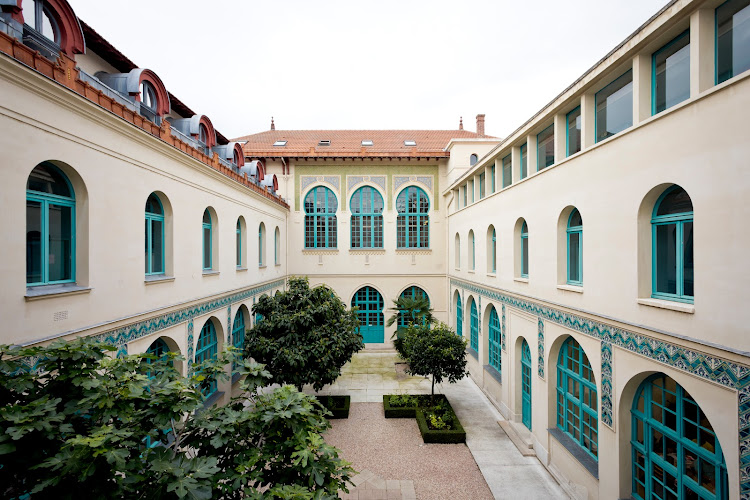
Description
The Institut international d’administration publique (IIAP) in Paris’s 6th arrondissement is a must-visit for anyone interested in public administration and policy. This public institution offers top-quality education and research opportunities in these fields, making it a hub for students, scholars, and policymakers alike. Located at 2 avenue de l’Observatoire, the IIAP has been a partner of the European Union’s Erasmus programme since 2001. This partnership has enabled the institution to attract a diverse range of students and scholars from all over Europe, creating a vibrant and dynamic community of thinkers and doers. What sets the IIAP apart from other institutions of its kind is its commitment to excellence and innovation. The IIAP is constantly pushing the boundaries of what is possible in the field of public administration and policy, exploring new ideas and approaches that have the potential to transform the way we think about governance and public service. Whether you are a student looking to further your education in public administration, a scholar seeking to conduct research in this field, or a policymaker looking for new ideas and inspiration, the IIAP is the perfect place to be. With its world-class faculty, state-of-the-art facilities, and vibrant community of learners and thinkers, the IIAP is a true gem in the heart of Paris.
Principales caractéristiques:
The Institut international d'administration publique, also known as the Centre de formation, is home to the following unique attractions and features:
- The Institut national du service public (INSP) is the new French public operator responsible for recruiting, providing initial training, and offering continuous education for senior executives and leaders of the state, established on January 1, 2022.
- The museum showcases the history and evolution of public administration and offers insights into the training of government officials, making it a must-see for those interested in public service and governance.
Accessibilité et commodités :
- Le musée est équipé de fonctionnalités d'accessibilité pour accueillir les visiteurs handicapés, y compris un accès et des installations en fauteuil roulant.
- Amenities include restrooms, a learning center, and a collection of educational resources. Visitors can also benefit from audio guides for a more immersive experience.
Planifier votre visite :
- The best times to visit are during weekdays to avoid the weekend crowds.
- Visitors typically spend between 1.5 to 4 hours exploring the museum. It's recommended to plan for a minimum of 2 hours to fully appreciate the exhibits and resources on offer.
What Makes the Institut international d’administration publique Notable
The Institut international d’administration publique (IIAP) is an important address in the history of French public-service training and international administrative cooperation. Founded in 1966, it trained officials from developing countries while encouraging exchanges between administrations. Its story is less about a visitor attraction in the conventional sense than about the institutions and ideas that shaped public action beyond France.
The IIAP was merged into the École nationale d’administration (ENA) in 2002. Today, the official site associated with this address is that of the Institut national du service public (INSP), which presents training for public-sector professionals in France and internationally. For travellers interested in civic history, government, education or contemporary French institutions, the site offers a useful point of reference rather than a museum-style stop.
Location and Neighborhood Context
The address is 2 avenue de l’Observatoire in the 6th arrondissement, on the Left Bank. This is a composed, institutional part of Paris, close to the Luxembourg Gardens and within easy walking distance of the Latin Quarter. The setting is well suited to a pause during a broader walk through the area: gardens and formal avenues provide a contrast to the denser streets of nearby Saint-Germain-des-Prés and the student-oriented quarters around the Sorbonne.
Approach it as an exterior and neighborhood landmark unless you have a professional reason to attend an announced activity. The avenue’s name also places the address in the wider Observatory district, where Parisian planning feels more spacious and axial than in many older Left Bank streets.
Points forts des visiteurs
- A meaningful stop for readers of French political, administrative and educational history.
- The former IIAP’s international mission gives the address relevance beyond a solely national institutional story.
- Its 6th-arrondissement position works naturally with a walk around the Luxembourg Gardens and the Latin Quarter.
- The current INSP connection is useful for those following how France trains senior public servants and welcomes international public-sector professionals.
- Best suited to curious independent walkers, students of public policy and visitors building a themed Left Bank itinerary.
Practical Planning Tips
Plan this as a short, self-guided architectural and institutional waypoint, not as a guaranteed interior visit. Allow time to read up on the IIAP before arriving, then continue into the surrounding gardens or toward the Latin Quarter. Morning is often the most comfortable moment for an unhurried neighborhood walk; later in the day, combine the address with the parks and streets nearby rather than treating it as a stand-alone destination.
If you are seeking training, documentation or an official event, consult the INSP website directly before travelling. Access arrangements can depend on professional programmes and scheduled activities. Do not assume that administrative premises offer casual public entry, guided tours or exhibition access.
Questions fréquemment posées
Can visitors tour the former IIAP?
The address should be treated primarily as an institutional site. Check with INSP in advance if you hope to attend a specific public activity.
What happened to the IIAP?
The IIAP was founded in 1966 and merged into the École nationale d’administration in 2002.
What is nearby?
The Luxembourg Gardens are close by, and the Latin Quarter is an easy continuation for a Left Bank walk.