<\!-- wp:heading -->
Auguste Rodin\u2019s artistic sanctuary in an 18th-century rococo mansion
<\!-- /wp:heading --><\!-- wp:paragraph -->
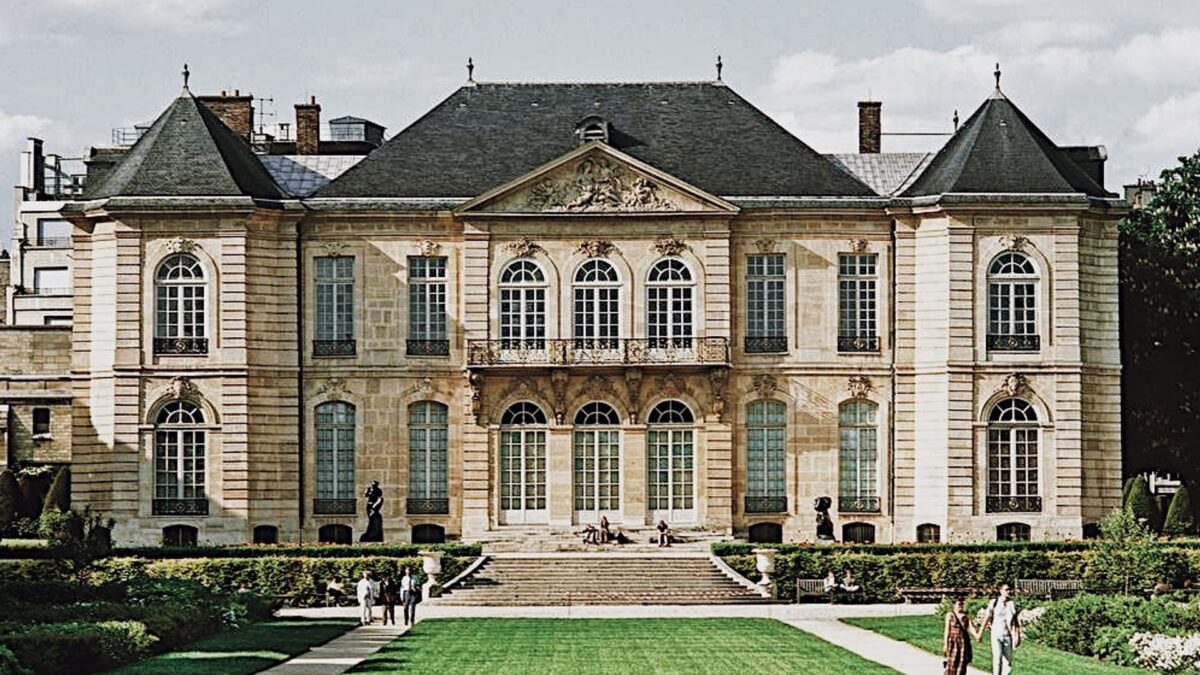
At 77 rue de Varenne in the 7th arrondissement, the Musée Rodin occupies the exquisite Hôtel Biron, where France\u2019s greatest sculptor spent his final years creating masterpieces within a delightful rococo mansion and its spectacular seven-hectare garden. Built in 1732 by architect Jean Aubert, this elegant private residence became Auguste Rodin\u2019s workshop in 1908, ultimately transforming into the world\u2019s most comprehensive repository of his artistic legacy.
<\!-- /wp:paragraph --><\!-- wp:paragraph -->
Rodin\u2019s decision to donate his entire collection—including sculptures alongside paintings by Vincent van Gogh, Claude Monet, and Pierre-Auguste Renoir—to the French State ensured the mansion\u2019s transformation into a museum dedicated to his works. Though Rodin died in 1917, two years before the museum\u2019s 1919 opening, his vision of creating an accessible space for artistic education and inspiration continues to guide this remarkable institution.
<\!-- /wp:paragraph --><\!-- wp:heading {"level":3} -->
The sculpture garden: a masterpiece of artistic landscape design
<\!-- /wp:heading --><\!-- wp:paragraph -->
The museum\u2019s seven-acre garden represents one of Paris\u2019s finest examples of how sculpture and landscape design can work together to create transcendent artistic experiences. Designed in 1920 according to Rodin\u2019s wishes by his will\u2019s executor, the garden provides carefully orchestrated encounters with thirty bronze masterpieces including The Burghers of Calais, The Gates of Hell, The Thinker, and Balzac.
<\!-- /wp:paragraph --><\!-- wp:paragraph -->
The strategic placement of The Thinker atop its pillar among box trees, facing The Gates of Hell across the garden, creates a stunning 360-degree visual journey that demonstrates Rodin\u2019s understanding of how sculpture interacts with space and environment. This thoughtful arrangement transforms garden visits into sculptural pilgrimages where each work gains meaning through its relationship to both natural setting and companion pieces.
<\!-- /wp:paragraph --><\!-- wp:heading {"level":3} -->
Comprehensive artistic legacy within rococo elegance
<\!-- /wp:heading --><\!-- wp:paragraph -->
The museum houses an extraordinary collection of 6,600 sculptures, 8,000 photographs, 8,000 drawings, and 7,000 art objects, providing visitors with comprehensive access to Rodin\u2019s creative process and artistic development. The integration of this vast collection within the Hôtel Biron\u2019s elegant 18th-century rooms creates intimate encounters with masterpieces that might feel overwhelming in larger, more impersonal museum settings.
<\!-- /wp:paragraph --><\!-- wp:parameter --><\!-- wp:paragraph -->
The mansion\u2019s rococo architecture provides perfect counterpoint to Rodin\u2019s dynamic, emotionally charged sculptures, demonstrating how classical French architectural elegance can enhance rather than compete with revolutionary artistic expression. This synthesis creates viewing experiences where visitors appreciate both individual works and their relationship to French artistic tradition.
<\!-- /wp:paragraph --><\!-- wp:heading {"level":3} -->
International artistic destination
<\!-- /wp:heading --><\!-- wp:parameter --><\!-- wp:paragraph -->
Attracting 700,000 visitors annually, the Musée Rodin ranks among Paris\u2019s most beloved cultural destinations, offering experiences that combine artistic education with garden tranquility in the heart of the sophisticated 7th arrondissement. The museumu2019s location between Les Invalides and the tour Eiffel makes it an essential stop for understanding French artistic achievement within its historical urban context.
<\!-- /wp:paragraph --><\!-- wp:paragraph -->
The museum\u2019s success in presenting Rodin\u2019s works within their original creative environment—the spaces where the artist lived, worked, and imagined his greatest achievements—provides visitors with unparalleled insight into artistic genius and the conditions that foster creative excellence.
<\!-- /wp:paragraph --><\!-- wp:heading {"level":3} -->
Artistic pilgrimage and cultural inspiration
<\!-- /wp:heading --><\!-- wp:parameter --><\!-- wp:paragraph -->
The Musée Rodin demonstrates how great artists can transform architectural spaces to serve their creative vision while preserving historical character. Rodin\u2019s use of the Hôtel Biron as both residence and workshop created an integrated environment where art and life merged, establishing a model for how museums can present artistic achievement within authentic historical contexts.
<\!-- /wp:paragraph --><\!-- wp:parameter --><\!-- wp:paragraph -->
For visitors to Paris seeking to understand the relationship between artistic genius and architectural heritage, the Musée Rodin offers an exceptional experience where Jean Aubert\u2019s rococo elegance enhances Auguste Rodin\u2019s revolutionary sculptures. The museum proves that the finest cultural institutions emerge when great architecture provides worthy settings for great art, creating destinations that inspire both aesthetic appreciation and deeper understanding of human creative potential.
<\!-- /wp:paragraph -->