
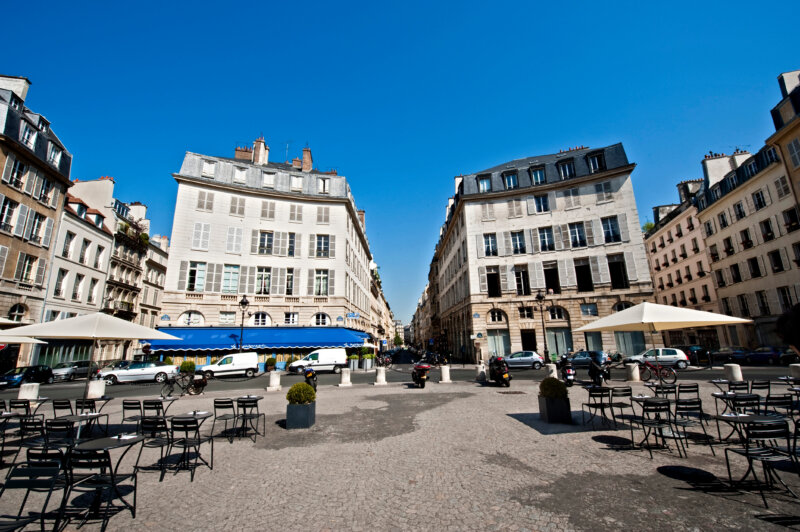
Description
Place de l’Odéon, located in the 6th arrondissement of Paris, is a hidden gem that is often overlooked by tourists. This charming square is surrounded by cafes, theaters, and bookstores, making it the perfect spot for a relaxing afternoon. The centerpiece of Place de l’Odéon is the Théâtre de l’Odéon, a historic theater that has been entertaining Parisians since the 18th century. The theater has hosted many famous plays and performances over the years, and its ornate architecture is a sight to behold. In addition to the theater, Place de l’Odéon is home to several cafes and restaurants that offer delicious French cuisine. Whether you’re in the mood for a croissant and coffee or a full meal, you’ll find something to suit your taste here. One of the unique features of Place de l’Odéon is its proximity to the Luxembourg Gardens, a sprawling parc that is a favorite among locals. After exploring the square, take a stroll through the gardens and enjoy the beautiful scenery. Overall, Place de l’Odéon is a must-visit destination for anyone looking to experience the authentic Parisian lifestyle. From the historic theater to the charming cafes, this square has something for everyone.
Principales caractéristiques:
- Place de l'Odéon is a historical landmark located in the 6th arrondissement of Paris, known for its rich history and association with drama theater.
- The monument holds significance as a drama theater, contributing to the cultural heritage of Paris.
- Visitors can explore the architectural features of the monument, which reflect its historical and cultural importance.
Accessibilité et commodités :
- The museum provides accessibility features to accommodate visitors with disabilities, including wheelchair access and facilities.
- Amenities on-site include restrooms, dining options, and gift shops, offering a range of services to enhance the visitor experience.
- Unique services such as audio guides and coat check are available to enrich the visit and provide insightful information about the monument.
Planifier votre visite :
- The best times to visit Place de l'Odéon are during weekdays, particularly in the morning, to avoid peak visitor traffic.
- On average, visitors spend up to 3 hours exploring the monument, allowing ample time to appreciate its historical and cultural significance.
- Recommended itineraries include exploring the drama theater, admiring the architectural features, and immersing oneself in the rich history of the landmark.
Place de l’Odéon: a theatrical urban set piece
Place de l’Odéon is a semicircular public square in Paris’s 6th arrondissement, formed as part of the development around the Théâtre de l’Odéon in 1779. Its significance lies in the relationship between public space and performance: the square creates a formal forecourt for the theatre rather than functioning as an isolated monument. The curve of the plan gives the setting an immediately legible shape and a sense of arrival.
This is a rewarding stop for travellers interested in the way Paris is planned as much as in individual landmarks. Stand back from the theatre to read the semicircular composition, then notice how streets lead into and away from the square. Place de l’Odéon works particularly well as a short architectural pause during a Left Bank walk, or as the starting point for an evening centred on the theatre.
Location and neighbourhood context
The square sits in the 6th arrondissement, on the Left Bank, at a useful meeting point between the Saint-Germain-des-Prés and Latin Quarter sides of central Paris. It is an urban, lived-in area where cultural institutions, streets of small-scale shops and places to pause are close together. The square itself is compact, so it is best approached as one part of a wider walk rather than a destination requiring a long visit.
Luxembourg Garden is within easy walking distance, making Place de l’Odéon a natural link between a formal public garden and the denser streets around the theatre. From here, continue on foot through the 6th arrondissement or towards the Latin Quarter. The Seine is also reachable on foot through the central Left Bank, although the most satisfying route depends on how much time you allow for the surrounding streets.
Visitor highlights
- A clear 18th-century urban plan: the semicircular square, laid out in 1779, is the feature to look for.
- The Théâtre de l’Odéon: the theatre gives the space its purpose and visual focus.
- A useful walking stop: combine it with Luxembourg Garden, Saint-Germain-des-Prés or the Latin Quarter.
- Good for architecture-minded visitors: it suits those who enjoy streets, sightlines and civic design as much as museum interiors.
- An easy cultural pairing: check the theatre’s own programme if you would like to build a performance into your visit.
Practical planning tips
Visit in the morning for a quieter look at the geometry of the square, or later in the day when the theatre setting feels most relevant. Allow time to approach from more than one street: the changing angles help explain why the square’s curved layout matters. A short stop is enough for the square itself, but leave additional time if you plan to continue to Luxembourg Garden or explore nearby Left Bank streets.
As a public square, Place de l’Odéon is straightforward to include in a self-guided route. Theatre-going can bring more movement to the area, so arrive with margin if you have a performance planned. For current performance information, access arrangements or booking conditions, consult the Théâtre de l’Odéon directly before setting out.
Frequently asked questions
What is Place de l’Odéon?
It is a semicircular public square in the 6th arrondissement, situated in front of the Théâtre de l’Odéon and laid out in 1779.
How long should I spend there?
Plan a brief stop to take in the square and theatre, then extend the visit by walking towards Luxembourg Garden or the surrounding Left Bank neighbourhoods.
Can I visit Place de l’Odéon without attending a show?
Yes. The square is worth seeing for its public-space design and its relationship with the theatre; a performance is an optional addition to the visit.