
Deep within the urban landscape of the 19th arrondissement, the Regard du Bernage represents one of Paris’s most elusive historical treasures. This medieval water inspection chamber, part of the sophisticated Belleville aqueduct system, stands as a testament to the remarkable hydraulic engineering that supplied fresh spring water to medieval Paris through an intricate network of underground channels and monitoring points.
Engineering the flow of urban life
The Regard du Bernage was constructed as a crucial component of the 13th and 14th-century Belleville aqueduct system, designed to monitor and maintain the flow of precious spring water from the heights of Belleville hill to the growing city below. The name “Bernage” likely derives from the medieval terms for water management or basin construction, reflecting its specialized function within the hydraulic network.
This regard served as both inspection point and pressure regulation station, ensuring that the gravity-fed system maintained consistent water flow to various fountains and distribution points throughout Paris. The chamber’s stone construction, built to last centuries, demonstrates the medieval understanding that reliable water infrastructure was essential for urban survival and growth.
Monastic innovation meets urban necessity
Like other regards in the Belleville network, the Regard du Bernage originated from the innovative water management systems developed by Parisian abbeys, particularly the monks of Saint-Martin-des-Champs. These religious communities possessed both the resources and technical knowledge to create sophisticated hydraulic systems that served not only their own needs but also the broader urban population.
The regard represents the intersection of monastic technical innovation and practical urban engineering, where religious communities’ expertise in water management became the foundation for municipal infrastructure that would serve Paris for centuries.
Hidden beneath modern Paris
What makes the Regard du Bernage particularly fascinating is its concealed status within the contemporary urban fabric. While other regards have been preserved as visible les monuments, this chamber remains hidden beneath modern construction, continuing its function as part of Paris’s current water management system while maintaining its medieval engineering integrity.
The regard’s continued operation within modern infrastructure demonstrates the remarkable durability and foresight of medieval engineering. Centuries after its construction, this stone chamber still redirects water through Paris’s underground systems, proving that well-designed infrastructure can serve multiple generations.
Part of Belleville’s water heritage
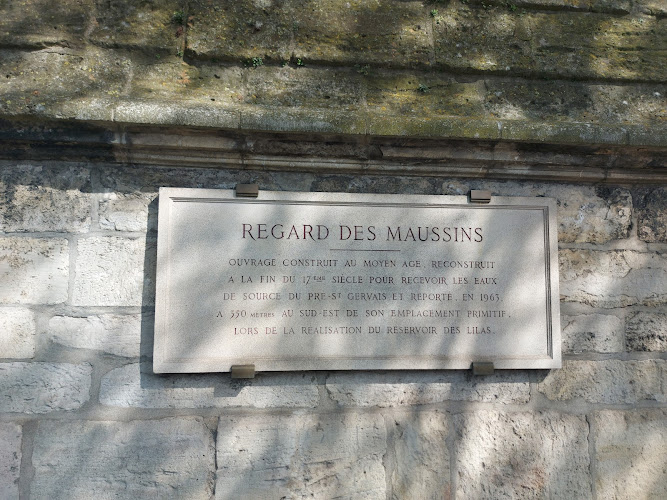
The Regard du Bernage exists within the broader context of Belleville’s rich hydraulic heritage, alongside other surviving structures like the Regard de la Lanterne, Regard Saint-Martin, and Regard des Maussins. Together, these monuments form an archaeological network that tells the story of medieval Paris’s transformation from a small settlement dependent on the Seine to a sophisticated city with engineered water distribution.
The preservation of these water monuments reflects growing recognition of infrastructure as cultural heritage, acknowledging that the systems that sustain urban life deserve the same respect as more traditionally celebrated architectural achievements.
Legacy of hydraulic innovation
The Regard du Bernage embodies principles of sustainable infrastructure design that remain relevant today: utilizing natural water sources, employing gravity-fed distribution, and creating systems robust enough to serve communities across centuries. The medieval engineers who created this network understood that reliable water infrastructure was not just practical necessity but the foundation of urban civilization.
Essential information
- Historical period: 13th-14th century (medieval)
- Fonction: Water inspection and regulation chamber
- Network role: Part of the great Belleville aqueduct system
- Construction type: Stone masonry hydraulic infrastructure
- Current status: Hidden beneath modern construction, still functional
- Heritage significance: Protected as part of Belleville’s water heritage
Cultural context
- Emplacement: 19th arrondissement, concealed within urban fabric
- Accessibilité: Not publicly accessible due to location beneath buildings
- Historical network: Connected to other surviving Belleville regards
- Educational value: Demonstrates medieval Parisian water management innovation
- Modern relevance: Continues functioning within contemporary systems
Invisible heritage
The Regard du Bernage represents the hidden layers of Parisian history that continue to function beneath our feet. This medieval marvel reminds us that today’s Paris rests upon centuries of ingenious engineering, where the wisdom of monastic builders created infrastructure so robust it remains essential to the city’s operation. For visitors exploring Belleville’s visible water heritage, the knowledge that regards like the Regard du Bernage continue their ancient work in secret adds profound depth to understanding how medieval innovation shaped modern Paris, where every glass of water connects us to the engineering genius of monks and builders who understood that the foundation of urban life flows through stone channels built to last forever.