
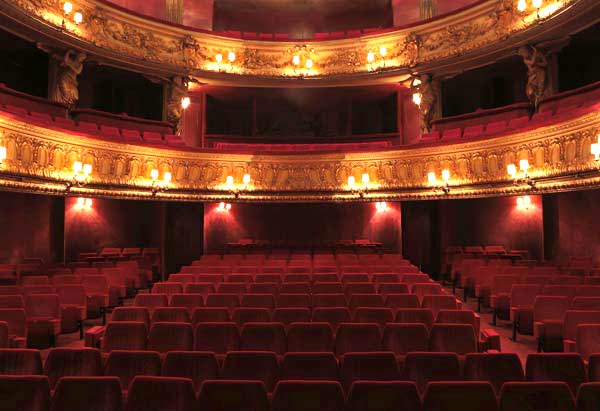
Description
The Théâtre de la Renaissance, located in the 10th arrondissement of Paris at 20 boulevard Saint-Martin, is a must-visit for theater enthusiasts. Built in the 1930s in the Art Deco style by architect Pierre-Henry de Rougemont, the theater combines traditional French theater with modern architecture. Home to the Théâtre de la Renaissance, a company of actors who specialize in traditional French theater, the theater is a popular destination for tourists and locals alike. The modern design of the theater provides a unique backdrop for the performances, which range from plays to musicals. In addition to its regular performances, the Théâtre de la Renaissance is also used as a venue for concerts and other events. Its central location makes it easily accessible by public transportation, and its popularity ensures a lively atmosphere. For those who appreciate theater and architecture, the Théâtre de la Renaissance is a must-see destination in Paris.
Principales caractéristiques
- Théâtre de la Renaissance is a historic performing arts theater located in the 10th arrondissement of Paris.
- The theater has a rich history dating back to its opening in the 19th century, and it has been a significant cultural landmark in Paris ever since.
- Notable for its stunning architectural design and historical significance, the theater offers a unique and immersive experience for visitors.
Accessibilité et commodités
- The museum is equipped with accessibility features to accommodate visitors with disabilities, including wheelchair access and accessible restrooms.
- Visitors can take advantage of amenities such as restrooms, dining options, and a gift shop offering a variety of souvenirs and cultural items.
- Additionally, the museum provides unique services such as audio guides to enhance the visitor experience and a convenient coat check service.
Planifier votre visite
- To avoid crowds, it is advisable to visit the theater during off-peak hours, typically in the morning or late afternoon.
- Visitors typically spend around 1-2 hours exploring the theater and enjoying its various attractions and performances.
- Recommended itineraries include exploring the theater's architectural features, attending a performance, and taking a guided tour to learn about its rich history and cultural significance.
What Makes the Théâtre de la Renaissance Notable
The Théâtre de la Renaissance is a historic performance venue at 20 boulevard Saint-Martin in Paris’s 10th arrondissement. Founded in 1838, it belongs to the long-running theatrical life of the Boulevard Saint-Martin, an area where theatres, cafés and broad city boulevards give an evening out a distinctly central-Paris character.
This is a place to choose for a performance rather than a stand-alone monument circuit. Its programme is associated with drama and comedy, making it a useful address for travellers who want to experience Paris through a live show. The appeal lies in combining a historic theatre setting with an easy-to-reach boulevard location, whether theatre is the main event of the evening or one part of a wider walk through the surrounding districts.
Location and Neighbourhood Context
The theatre stands on boulevard Saint-Martin, in the southern part of the 10th arrondissement, close to the meeting point of several central Paris neighbourhoods. This is an urban, boulevard-facing setting rather than a riverside or park-side destination: think façades, pavement cafés, theatres and the movement of people heading between the Grands Boulevards, République and the older streets to the south and east.
The address works well in a flexible central itinerary. Before a performance, allow time to wander the nearby boulevards or explore the edge of the Marais; afterwards, the surrounding streets offer a natural continuation for dinner or a drink. The Seine is not the immediate setting, so visitors planning a river walk should treat the theatre as an inland cultural stop and leave extra time to connect the two on foot.
Points forts des visiteurs
- A theatre with deep roots: founded in 1838, it offers a direct link to Paris’s nineteenth-century theatrical tradition.
- Drama and comedy: a strong choice for visitors who would rather see a live production than limit their cultural plans to museums and monuments.
- Central boulevard atmosphere: boulevard Saint-Martin makes it easy to build an evening around a show, a meal and a walk through adjacent central quarters.
- Best suited to: theatre-goers, French-language culture enthusiasts and repeat visitors seeking a Paris evening with a local cultural focus.
Practical Planning Tips
Start with the theatre’s official programme, as the production is the key to planning a visit. Check the performance date, language, any published running information and the ticket conditions before committing to the rest of your evening. If a particular show matters to you, book ahead rather than assuming availability on the day.
Arrive with enough margin to find the entrance, collect or check tickets if required, and settle in before the performance begins. Early evening is especially rewarding for seeing the boulevard shift from daytime traffic to theatre-going activity; daytime is better if your aim is simply to orient yourself in the neighbourhood and photograph the exterior. For current access arrangements or a question about a booking, contact the theatre directly on +33 1 42 08 18 50.
Questions fréquemment posées
Where is the Théâtre de la Renaissance?
It is at 20 boulevard Saint-Martin, in Paris’s 10th arrondissement.
What kind of venue is it?
It is a historic Paris performance venue known for drama and comedy, founded in 1838.
How should I plan a visit?
Consult the official programme first, then plan your arrival around the performance and allow time to enjoy boulevard Saint-Martin and the nearby central neighbourhoods.