
<\!-- wp:heading -->
Charles Siclis\u2019 modernist façade and the monastic legacy of agricultural Mathurins
<\!-- /wp:heading --><\!-- wp:parameter -->
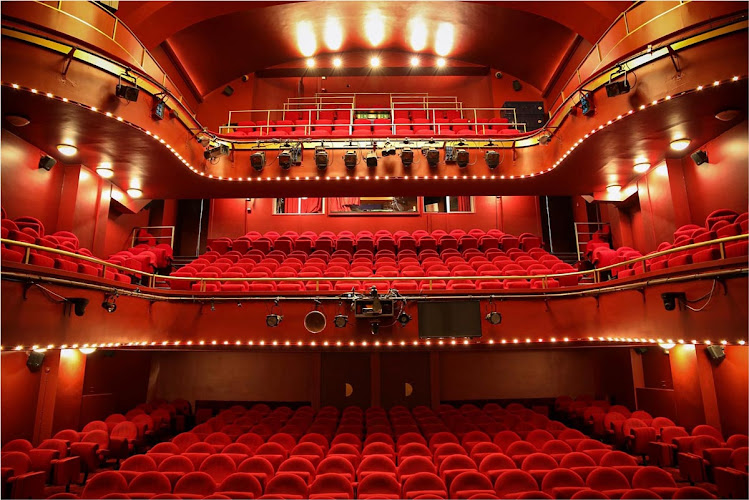
At 36 rue des Mathurins in the 8th arrondissement, Théâtre des Mathurins stands as an intimate 386-seat venue that embodies both the monastic heritage of its medieval origins and the architectural innovation of 1920s modernist design. The theatre\u2019s fascinating history traces back to the 13th century when the rue des Mathurins existed as farmland outside Paris\u2019 city limits, home to the industrious Mathurin monks whose agricultural work ultimately lent their name to both street and theatre, creating lasting cultural connections between medieval monastic tradition and contemporary theatrical excellence.
<\!-- /wp:paragraph --><\!-- wp:parameter -->
Established in 1897 and reconstructed in 1923 by architect Charles Siclis with décor commissioned by Sacha Guitry, this venue demonstrates how medieval agricultural heritage could inspire contemporary theatrical culture while maintaining essential character as place dedicated to cultural cultivation and artistic development that honors both historical tradition and innovative performance approaches.
<\!-- /wp:paragraph --><\!-- wp:heading {"level":3} -->
Charles Siclis\u2019 architectural rebellion and modernist innovation
<\!-- /wp:heading --><\!-- wp:parameter -->
Siclis\u2019 bold architectural decision to contrast his modernist façade starkly with classic Parisian apartments above demonstrates remarkable design courage that ignored contemporary conventions to create unique theatrical identity through architectural distinction. The modernist façade applied to the first three levels of a 19th-century building, protected as historic monument since 1994, shows how contemporary architectural intervention can enhance rather than compromise historical urban fabric.
<\!-- /wp:paragraph --><\!-- wp:parameter -->
This architectural synthesis of modernity and tradition within single building demonstrates how innovative designers can create distinctive theatrical identity while maintaining harmony with broader neighborhood character and urban architectural heritage that makes individual buildings contribute to rather than compete with surrounding cultural and architectural contexts.
<\!-- /wp:paragraph --><\!-- wp:heading {"level":3} -->
Sacha Guitry\u2019s debut and theatrical launching pad
<\!-- /wp:heading --><\!-- wp:parameter -->
The theatre\u2019s role as launching pad for Sacha Guitry\u2019s playwriting career, with his 1905 comedy “Nono” proving an instant success when he was only twenty years old, establishes the venue\u2019s significance in nurturing emerging theatrical talent while demonstrating how intimate theatre settings can provide optimal conditions for artistic development and audience connection that larger venues cannot achieve.
<\!-- /wp:paragraph --><\!-- wp:parameter -->
This commitment to emerging talent continues through contemporary programming that includes works by international luminaries including Oscar Wilde, Jean-Paul Sartre, Marguerite Duras, and Florian Zeller alongside developing artists, showing how great theatres can balance established excellence with ongoing artistic innovation and talent development.
<\!-- /wp:paragraph --><\!-- wp:heading {"level":3} -->
Entertainment district integration and cultural programming
<\!-- /wp:heading --><\!-- wp:parameter -->
The theatre\u2019s position within the 8th and 9th arrondissements\u2019 cultural hub, alongside Opéra Garnier, Théâtre Marigny, and Théâtre des Variétés, demonstrates how individual venues contribute to comprehensive theatrical districts that serve diverse artistic and cultural needs while maintaining distinctive identity and programming focus that enhances rather than duplicates neighboring institutions.
<\!-- /wp:paragraph --><\!-- wp:parameter -->
The venue\u2019s proximity to Boulevard Haussmann and Gare Saint-Lazare provides convenient access for both local and visiting audiences while contributing to broader neighborhood cultural programming that makes the area a comprehensive destination for visitors seeking world-class entertainment within historically significant architectural settings.
<\!-- /wp:paragraph --><\!-- wp:heading {"level":3} -->
Contemporary leadership and diverse programming
<\!-- /wp:heading --><\!-- wp:parameter -->
Under current co-direction by Louis-Michel Colla, Dominique Bergin, and Pierre Callegari since 2019, the theatre maintains membership in Théâtres et Producteurs Associés while presenting quality theatrical programming including plays, one-person shows, comedy performances, and children\u2019s productions that serve diverse artistic and educational needs within intimate theatrical settings.
<\!-- /wp:paragraph --><\!-- wp:parameter -->
For visitors to the 8th arrondissement interested in intimate theatrical experiences, modernist architecture, or French theatrical history, Théâtre des Mathurins offers an exceptional encounter with how medieval monastic heritage continues inspiring contemporary theatrical excellence through Charles Siclis\u2019 architectural innovation and ongoing commitment to artistic development. The theatre demonstrates that great intimate venues emerge when historical respect meets architectural innovation, creating performance environments that honor both monastic cultural tradition and contemporary artistic excellence while fostering the kind of close performer-audience relationships that make theatrical experiences personally transformative and culturally significant.
<\!-- /wp:paragraph -->