
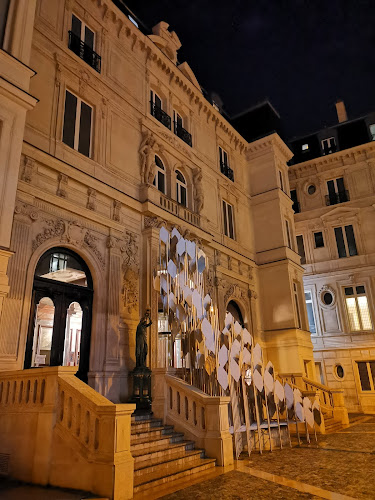
Baron’s mansion exemplifies Second Empire aristocratic architecture
At 7 rue de Tilsitt in the prestigious 17th arrondissement, Hôtel de Gunsburg stands as a magnificent example of Second Empire private mansion architecture, designed by Charles Rohault de Fleury in 1868 for Baron Joseph de Günzburg within the exclusive “Hôtels des maréchaux” district near the Arc de Triomphe. This extraordinary residence demonstrates how financial success during Napoleon III’s reign enabled wealthy families to commission architectural masterpieces that embodied both personal prosperity and social status through palatial design that created private worlds of luxury within the rapidly transforming Parisian urban landscape.
Charles Rohault de Fleury’s architectural excellence
Architect Charles Rohault de Fleury’s design for Baron de Günzburg created a mansion that exemplified Second Empire residential architecture through ornate facades, grand staircases, and opulent interior spaces that demonstrated how private wealth could commission architectural excellence rivaling public les monuments. This architectural achievement proved that successful mansion design required both technical mastery and aesthetic vision through building projects that transformed family prosperity into cultural heritage worthy of historical preservation and public appreciation.
The mansion’s strategic position at the intersection of rue de Tilsitt, avenue Mac-Mahon, and avenue de Wagram created maximum urban prominence while providing prestigious address that enhanced family social status through architectural presence that announced prosperity and taste to Parisian society through facade design that competed with neighboring aristocratic residences for architectural distinction within this exclusive district.
Banking wealth and cultural patronage
Baron Joseph de Günzburg’s commission of this palatial residence represented the transformation of banking fortune into architectural heritage, where financial success enabled cultural patronage through mansion construction that provided both family luxury and public architectural enrichment. This investment approach demonstrated how private wealth could serve broader cultural benefit through building projects that created employment for craftsmen while establishing architectural landmarks that enhanced neighborhood prestige.
The Günzburg family’s choice to create a mansion rather than merely comfortable residence showed how 19th-century wealth could aspire to architectural immortality through building projects that transcended immediate family needs to create cultural institutions worthy of historical preservation and ongoing public appreciation through design excellence that served both private enjoyment and social cultural contribution.
Property succession and institutional adaptation
The mansion’s succession from Baron de Günzburg to Count Vitali and eventual acquisition by the Direction des ressources humaines des ministères illustrates how exceptional private architecture can transition to public service while maintaining architectural integrity through institutional uses that honor original design excellence. This evolution proves that the finest private mansions achieve lasting cultural significance when architectural quality enables adaptive reuse that serves contemporary needs while preserving historical grandeur.
The building’s inclusion in the Base Mérimée historical monuments database recognizes its significance within French architectural heritage while ensuring preservation standards that protect both exterior facades and interior spaces from inappropriate modification through official recognition that validates the mansion’s contribution to Parisian cultural landscape and Second Empire architectural achievement.
Contemporary cultural relevance and architectural education
Today’s institutional use while maintaining historical monument status demonstrates how exceptional private architecture can continue serving public benefit through adaptive reuse that honors original architectural excellence while providing practical spaces for contemporary governmental functions. This transformation proves that successful historical preservation enables buildings to achieve ongoing relevance rather than mere museum status through uses that maintain architectural dignity while serving current social needs.
The mansion’s proximity to the Arc de Triomphe and position within one of Paris’s most prestigious districts ensures its role as part of the architectural ensemble that defines French capital grandeur, where private residential excellence contributes to public urban beauty through individual building achievements that collectively create neighborhood distinction worthy of international admiration and ongoing cultural tourism that appreciates both architectural detail and urban planning excellence.
Essential information
- Original owner: Baron Joseph de Günzburg
- Architect: Charles Rohault de Fleury
- Construction: 1868
- Emplacement: 7 rue de Tilsitt, 17th arrondissement
- District: “Hôtels des maréchaux” near Arc de Triomphe
- Succession: Count Vitali, then government ministries
- Heritage status: Listed in Base Mérimée
- Architectural period: Second Empire mansion architecture
- Design excellence: Ornate facades and opulent interior spaces
- Social function: Private wealth transformed into cultural heritage
- Urban integration: Prestigious address enhancing neighborhood distinction
- Historical preservation: Official recognition in monuments database
- Contemporary use: Government institutional functions maintaining dignity
Private wealth creates public architectural heritage
Hôtel de Gunsburg embodies the transformative power of private architectural patronage during the Second Empire, where Baron Joseph de Günzburg’s financial success generated a palatial residence that transcended family luxury to become part of Paris’s cultural heritage through Charles Rohault de Fleury’s design excellence that proved individual wealth can serve broader social benefit when channeled through architectural achievement. This extraordinary mansion demonstrates how successful private building projects can achieve public cultural significance through design quality that enriches neighborhood prestige while providing ongoing inspiration for architectural appreciation, creating residential landmarks that serve both family pride and civic beauty through excellence that attracts historical preservation and governmental use recognizing the mansion’s contribution to French architectural tradition. For Second Empire architecture enthusiasts, residential design admirers, or anyone interested in how private wealth can generate public cultural benefit, this prestigious mansion offers a remarkable encounter with aristocratic residential excellence, where palatial spaces demonstrate the sophisticated planning required to create family homes that achieve architectural distinction worthy of historical monument status, proving that the finest private mansions transcend exclusive family use to become cultural institutions that continue serving public appreciation through preservation efforts that honor both individual achievement and collective architectural heritage within prestigious districts that define Parisian urban grandeur.