Walking into a Parisian café for the first time can feel a bit intimidating, especially if you’re unsure how to pronounce your order. But honestly, ordering coffee in Paris isn’t as stressful as it seems. To order coffee like a local in Paris, start with a polite “Bonjour,” then say your order with French pronunciation—like “un café” (uhn kah-FEH) for espresso or “un café crème” (uhn kah-FEH krehm) for coffee with steamed milk.
I’ve seen so many tourists stumble through their coffee orders. Most Parisians are more forgiving than you’d expect.
The real trick isn’t perfect pronunciation—it’s knowing what to order and when. Parisians drink certain coffees at certain times, and if you get that right, you’ll blend in way better than if you just nail the accent.
This guide covers how to pronounce popular French coffee drinks, the polite phrases you’ll need, and the café customs that help you look less like a tourist. You’ll figure out which drinks go with which time of day, how to navigate different types of coffee on the menu, and even how to tweak your order without sounding totally out of place.
Points clés à retenir
- Learn basic French coffee pronunciations and always start with “Bonjour” to sound polite
- Order milky coffees like café crème in the morning; stick to espresso in the afternoon to fit in
- Pick up essential café phrases and etiquette, like asking for the bill and knowing where to sit or stand
Table des matières
- Essential French Coffee Orders and Pronunciation
- Un Café: Espresso Explained
- Café Allongé: The French Americano
- Café Crème and Café au Lait: Milky Favorites
- Noisette and Déca: Small Touches and Decaf
- How to Order Like a Parisian: Words, Phrases, and Pronunciation Tips
- Key Polite Phrases for Ordering
- French Pronunciation Guide
- Ordering for Takeaway: À Emporter
- Timing, Etiquette, and the Paris Café Experience
- When to Order Which Coffee
- Café Culture: Bar or Table?
- How to Pay for Your Coffee
- Pairing Coffee with Classic French Pastries
- Ordering a Croissant or Pain au Chocolat
- Best Coffee and Pastry Combinations
- Beyond Espresso: Alternative Café Drinks
- Chocolat Chaud: French Hot Chocolate
- Café Glacé: Iced Coffee Options
- Café Viennois: Indulgent Treats
- Customize Your Order: Milk, Sugar and More
- How to Ask for Du Sucre (Sugar)
- Requesting Milk or Cream
- Questions fréquemment posées
- What’s the local way to ask for a coffee with milk in a Parisian coffee shop?
- How might one order a specific style of coffee, such as a latte, in Paris without sounding like a tourist?
- What’s the insiders’ approach to requesting an Americano coffee in the heart of Paris?
- Is there a unique expression used in Paris for ordering a large or black coffee?
- Find Things to Do in Paris
- Find Accommodation
Essential French Coffee Orders and Pronunciation

The secret to ordering coffee in Paris is knowing exactly what to say and how to say it. If you can pronounce drinks like un café, café allongé, and café crème, you’ll sound way more confident at any counter.
Un Café: Espresso Explained

When you order un café (say “uhn kah-FAY”), you’re getting a straight espresso shot. That’s the default coffee in Paris—small, strong, and in a tiny cup. Say “uhn” softly, like “un” in “under,” then “kah-FAY” with the stress on the second part.
Most Parisians drink un café standing at the bar in the morning or after lunch. It’s quick and strong. Don’t expect a big mug of drip coffee.
If you walk in and say “un café, s’il vous plaît,” you’ll fit right in. That’s what locals do every day. And honestly? After your first Parisian espresso, you’ll get why they keep it simple.
Café Allongé: The French Americano
UN café allongé (say “kah-FAY ah-lon-ZHAY”) is basically an espresso with extra hot water. It’s the French take on an Americano, even if locals don’t really call it that.
“Allongé” means “lengthened,” so you’re stretching out the espresso with more water.
Break it down: “uhn kah-FAY ah-lon-ZHAY.” The “zh” is like the “s” in “pleasure.” Stress the last part.
If espresso feels too intense but you still want that flavor, this is your drink. It’s not as common as un café, but every café knows what you mean.
Café Crème and Café au Lait: Milky Favorites

Un café crème (say “uhn kah-FAY krem”) is probably the closest thing to a cappuccino in Paris—espresso with steamed milk and a bit of foam, in a bigger cup.
Say it as “uhn kah-FAY krem,” both words even. “Crème” rhymes with “gem,” but with a slightly nasal twist.
Parisians usually drink café-crème in the morning, often with a croissant. Order one after lunch and you might get a look—milky coffee is for breakfast. But honestly, if you want it at 3 PM, just go for it.
Café au lait (say “kah-FAY oh LAY”) is similar but usually comes in a bowl, not a cup. You’ll see this more at home than in cafés. Pronounce it as “kah-FAY,” then “oh” like the letter O, then “LAY” like the word “lay.”
Noisette and Déca: Small Touches and Decaf
UN noisette (say “nwah-ZET”) is an espresso with just a splash of milk—pretty much a French macchiato. The word means “hazelnut,” because of the color the milk gives it.
Say un noisette ou café noisette as “uhn nwah-ZET.” The “nwah” is like “nwa” in “noir,” just quicker. Don’t pronounce the final “t.”
This is what you order if you want strong coffee but just a hint of smoothness. It’s not as common as café crème, but you won’t confuse anyone.
Un déca (say “uhn day-KAH”) is just decaf. “Day” like the English word, then “KAH” with the stress there.
You can mix déca with other orders: “un déca allongé,” “un déca crème,” whatever you like. Just know that decaf isn’t super popular in Paris, so tiny cafés might not always have it ready.
How to Order Like a Parisian: Words, Phrases, and Pronunciation Tips
Learning a few polite phrases and some basic French pronunciation will totally change your café experience. The main thing? Get comfortable with “un café s’il vous plaît” and know when to throw in “à emporter” if you’re in a rush.
Key Polite Phrases for Ordering
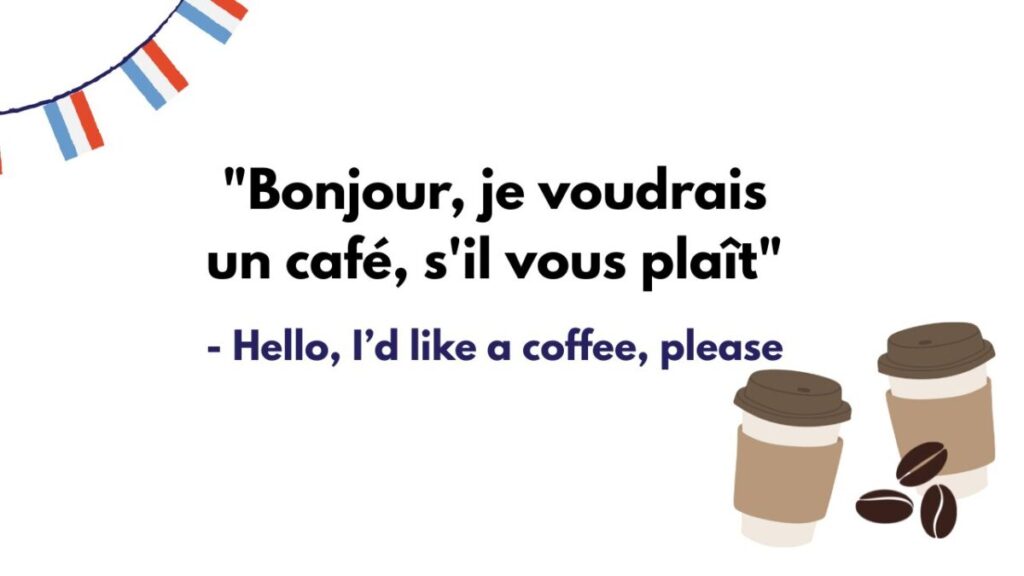
Always—and I mean always—start with “Bonjour” when you walk in. It’s not optional in Paris, and skipping it marks you as a tourist faster than a fanny pack ever could.
Quand ordering coffee in Paris, use these:
- “Bonjour, je voudrais un café, s’il vous plaît” – Hello, I’d like a coffee, please
- “Un café s’il vous plaît” – A coffee, please (short version)
- “Je prends un café crème” – I’ll have a coffee with cream
“Je voudrais un” means “I’d like a,” and you can swap in “croissant” or “pain au chocolat” for “café.”
When you’re done, catch the server’s eye and say “L’addition, s’il vous plaît” (the bill, please). Tipping isn’t a big deal here—just leave some coins if you feel like it.
French Pronunciation Guide

French pronunciation can be intimidating, but you really only need a few sounds to get your coffee order across.
For “café”: Say “kah-FAY,” stress the second part. Don’t say “caff” like in English. The é sounds like “ay.”
For “s’il vous plaît”: It comes out “seel voo pleh.” “S’il” is quick, and “plaît” rhymes with “lay.”
For “je voudrais”: Say “zhuh voo-DREH.” The “je” is like the “s” in “measure,” and the “s” at the end of “voudrais” is barely there.
Parisians speak quickly and drop sounds. “Bonjour” often sounds like “b’jour.” Don’t sweat being perfect—making the effort is what counts.
Ordering for Takeaway: À Emporter
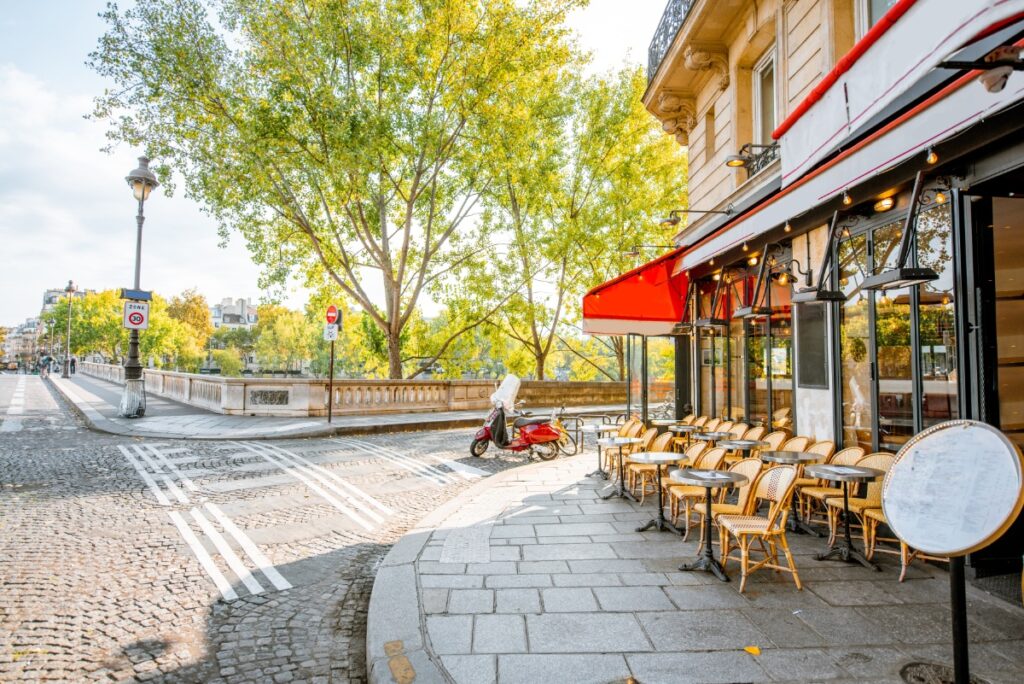
If you want your coffee to go, just add “à emporter” (say “ah em-por-TAY”). So, “Un café à emporter, s’il vous plaît.”
But honestly, taking coffee to go isn’t really the Parisian style. Locals usually stand at the bar for a quick espresso or sit down to enjoy it. It’s also cheaper at the counter—table service costs more.
If you order “à emporter,” you’ll get a paper cup instead of ceramic. Some smaller spots might give you a look because takeaway is more American than French, but they’ll serve you anyway.
Voir connexe : French Breakfast: Best Breakfast Items in France
Timing, Etiquette, and the Paris Café Experience
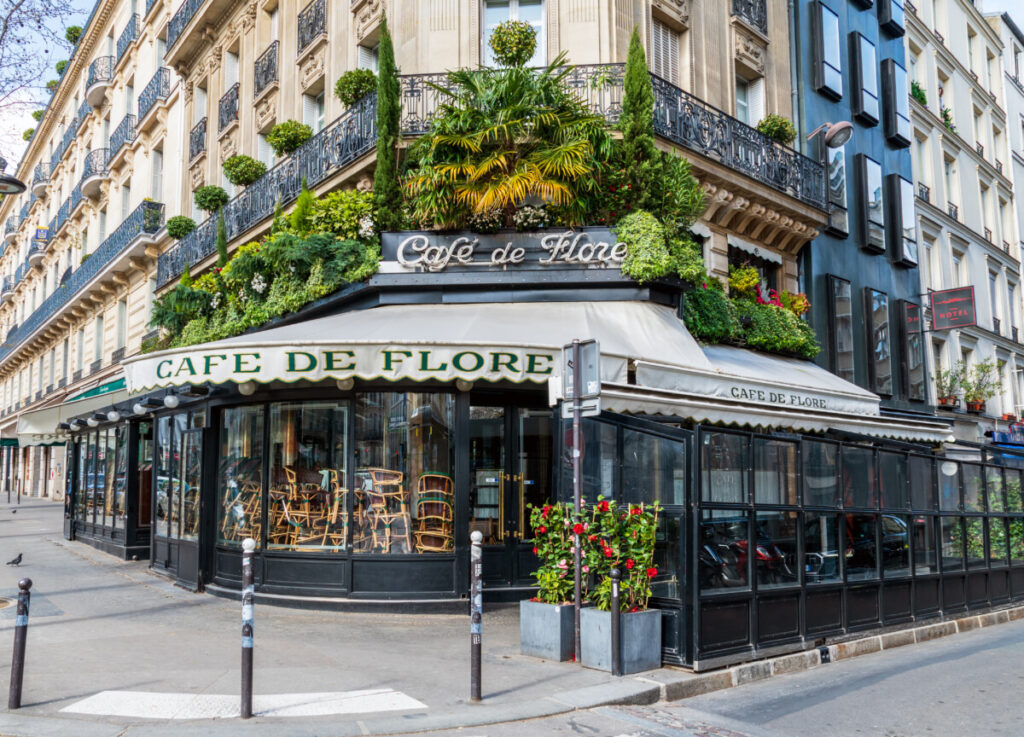
French coffee culture has its own rhythm—certain drinks match certain times, and where you sit (or stand) actually changes the price.
When to Order Which Coffee
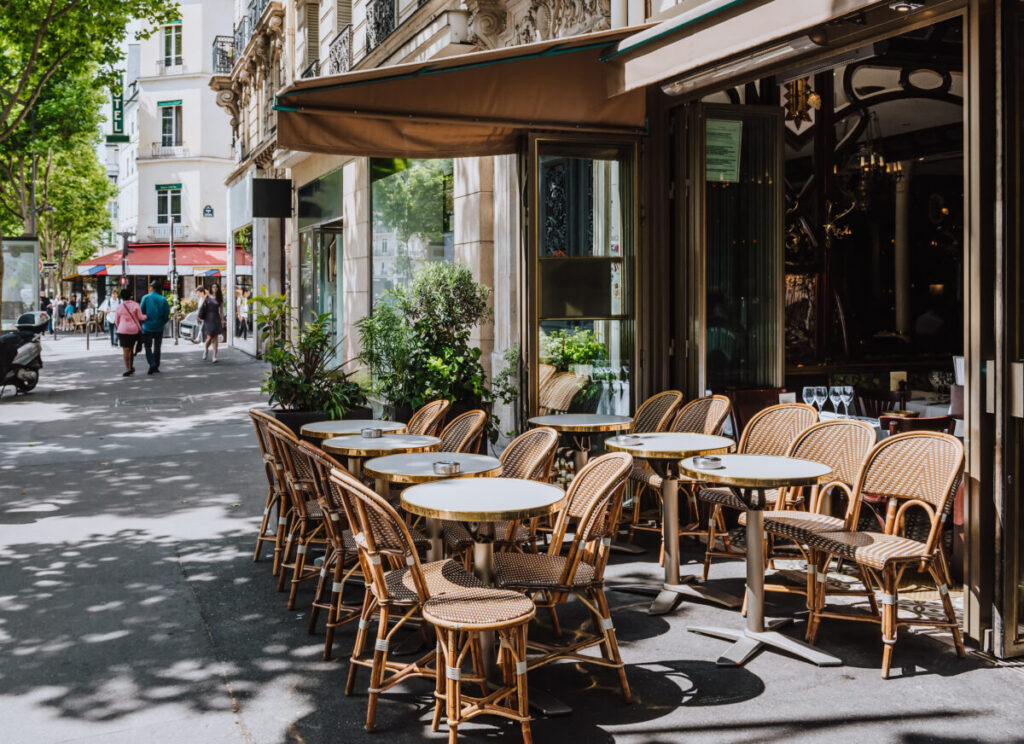
Here’s a tip for Parisian cafés: the French are pretty particular about timing. You probably don’t want to order a café crème at 3 PM unless you’re okay with a subtle eyebrow raise.
Morning (until about 11 AM): This is when you go for milky drinks. Café crème, café au lait, or even a cappuccino—no judgment. Pair it with a croissant or pain au chocolat, and you’re set.
Afternoon and Evening: Switch to un café (espresso) or un noisette if you want just a splash of milk. Large milky coffees are a breakfast thing here, and honestly? They do feel a bit heavy later in the day.
If you really want a café crème at 4 PM, just order it. Most waiters have seen enough tourists that they don’t care much anymore.
Café Culture: Bar or Table?
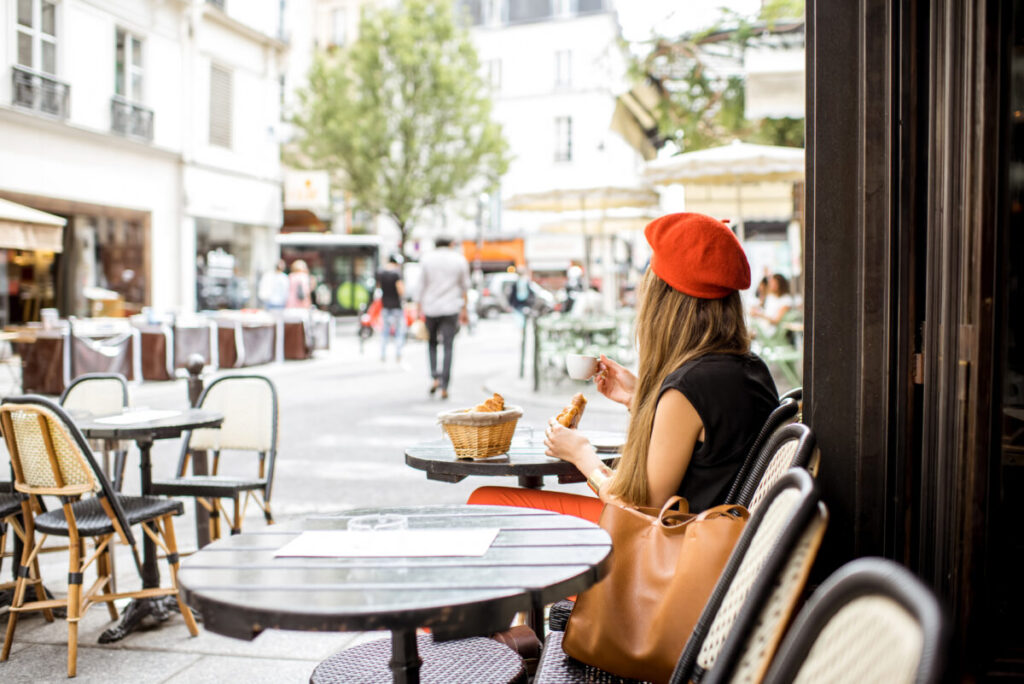
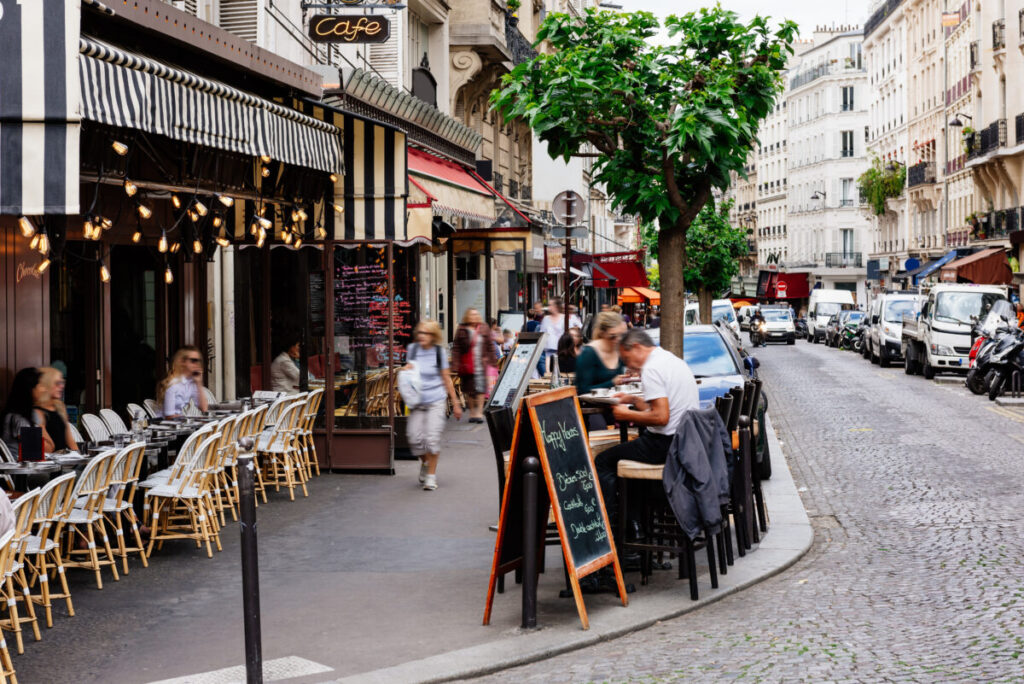
This is where ordering coffee in France gets a little quirky—your spot decides your price. Stand at the bar (le comptoir) and you’ll pay less than if you take a seat at a table, sometimes way less.
Grab a coffee at the bar and it might be €1.50, but sit outside on the terrace and suddenly that same drink is €3 or more. You’re not just buying coffee—you’re buying a front-row seat for people-watching as long as you like.
Most locals pop in for their morning espresso, stand at the bar, knock it back in two sips, and rush out. It’s quick, cheap, and honestly, pretty Parisian.
If you sit, nobody’s going to hustle you out. You can linger over that espresso for an hour, reading or working, and nobody cares. That’s one of the best things about French café culture—once you sit down, time’s yours.
How to Pay for Your Coffee
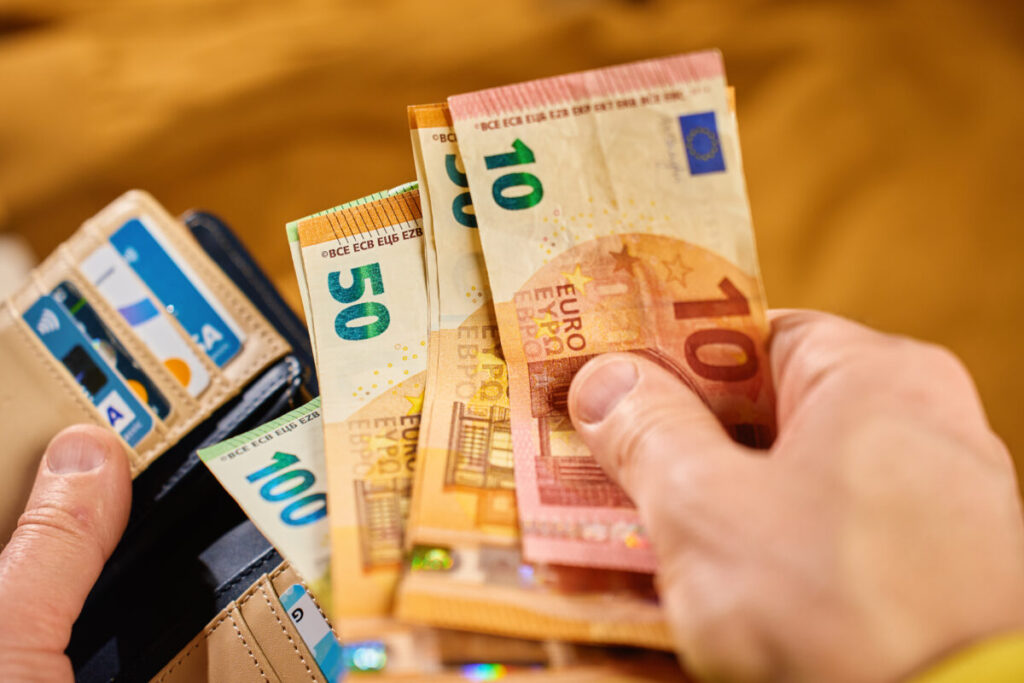
Don’t expect your check to magically appear. In Paris, the waiter waits for you to ask. When you’re ready, just catch their eye and say, “L’addition, s’il vous plaît” (lah-dee-see-ohn, see voo pleh).
Payment tips:
- Service is already included in the price
- Leaving €0.50-€1 in loose change is appreciated but optional
- Most places accept cards now, but small cafés might prefer cash for amounts under €10
- You typically pay at your table, not at a register
And don’t sweat asking for the bill—it’s normal. The waiter assumes you’re enjoying yourself and doesn’t want to hurry you, so you have to let them know when you’re done.
Pairing Coffee with Classic French Pastries

The French care about breakfast, and knowing which pastry goes best with your coffee can make you feel right at home in any Parisian café. It helps to know both the ordering phrases and the classic combos locals love.
Ordering a Croissant or Pain au Chocolat
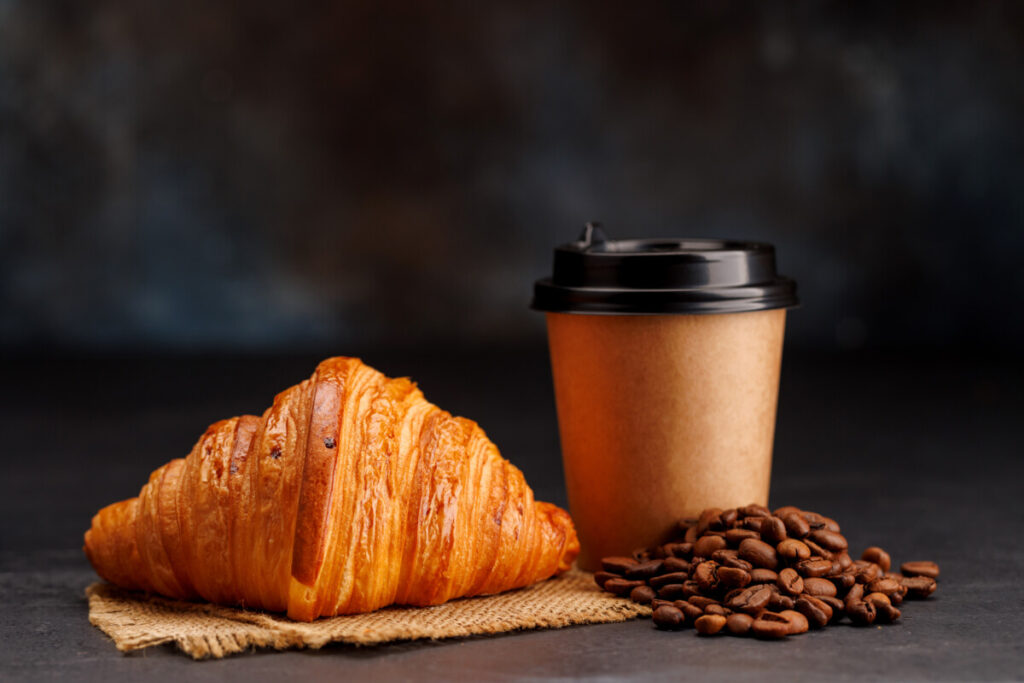
Ready to order? Keep it simple, like Parisians do. Just say “Je voudrais un croissant, s’il vous plaît” (I’d like a croissant, please) or “Je voudrais un pain au chocolat, s’il vous plaît” for the chocolate one.
Most locals just point at the pastry display and order their coffee at the same time. No need for fancy French here.
The pronunciation’s not too tricky. For “un croissant,” say “uhn kwah-SOHN”—not “cruh-SONT” like tourists do. “Pain au chocolat” comes out as “pan oh shoh-koh-LAH.”
One thing to keep in mind: real Parisians never order these after noon. Pastries like these are for mornings, usually before 11 AM, when they’re fresh and flaky.
Best Coffee and Pastry Combinations
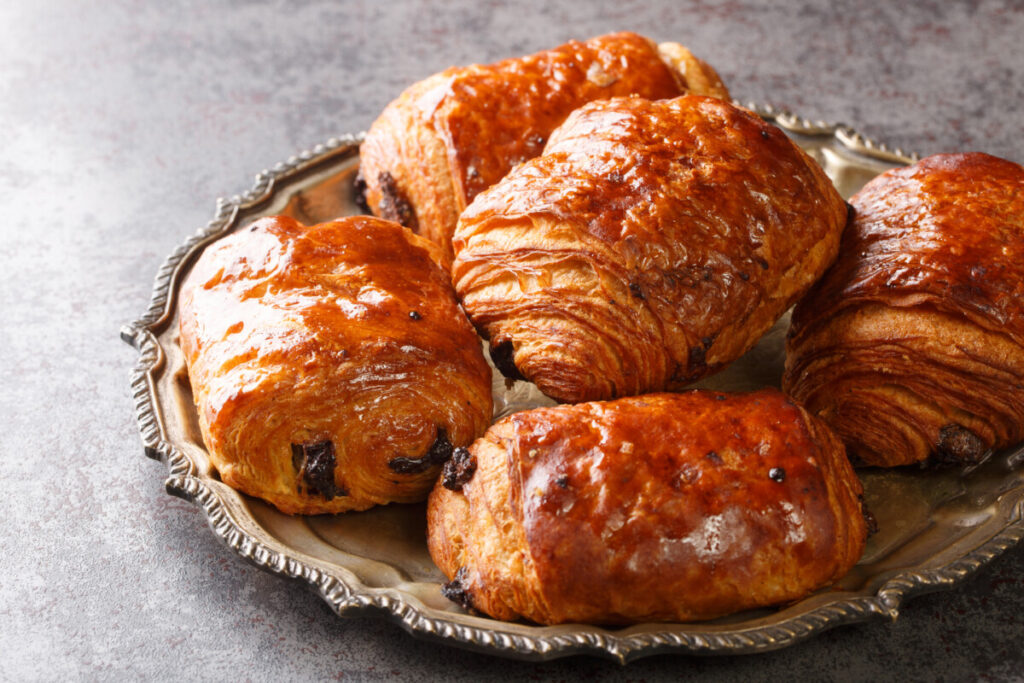
Classic pairings locals go for:
- Un café (espresso) + croissant – The gold standard Parisian breakfast
- Un café crème + pain au chocolat – If you want something a little richer
- Un café allongé + pain aux raisins – Lighter coffee, sweet spiral pastry
- Un noisette + tartelette – Espresso with a splash of milk and a tiny fruit tart
I’ve watched the same regulars order the same thing every single morning. The older guy at my local café? Always a café and croissant, no exceptions.
But you won’t see anyone pairing cappuccinos with pastries. Parisians think all that milk is just too much with buttery viennoiseries. They save milky drinks for the afternoon, not breakfast.
Voir connexe : Les meilleures choses à faire à Paris en mai
Beyond Espresso: Alternative Café Drinks
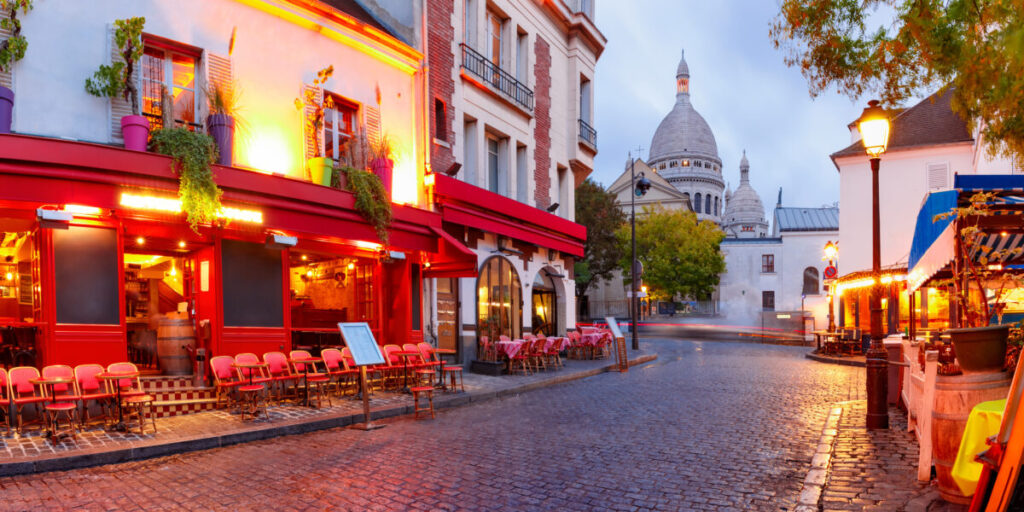
Paris cafés have more than just espresso—think rich hot chocolate, cold coffee for summer, and a few creamy treats that locals sneak in now and then.
Chocolat Chaud: French Hot Chocolate

If you order chocolat chaud in a Parisian café, you’ll get something way better than the powdery stuff at home. It’s basically melted dark chocolate in a cup.
French hot chocolate is thick, super rich, and made with real dark chocolate. It’s almost like sipping a liquid chocolate bar. Cafés usually serve it in a small cup, like espresso, because it’s so intense.
You’ll find it all year, but it’s especially popular when the weather turns cold. Kids love it, but honestly, plenty of grown-ups order it too. I’ve seen businesspeople take a chocolat chaud break in the afternoon with zero shame.
Expect to pay about €4-6, depending on where you sit. And honestly, you’ll want to sit and linger over this one.
Café Glacé: Iced Coffee Options

Getting iced coffee in Paris used to be nearly impossible, but things are changing. More cafés now serve café glacé, though you still won’t find it everywhere.
Order iced coffee at a traditional spot and you might get a puzzled look. But the younger, trendier places usually have it. The French version is just cold espresso poured over ice, maybe with a little sugar.
Don’t expect sweet, flavored drinks like elsewhere. French iced coffee is pretty basic—espresso, ice, maybe milk if you ask. Sometimes they’ll add a scoop of vanilla ice cream for an affogato vibe.
Summer’s the best time to spot café glacé on menus. Still, plenty of locals stick to their hot espresso, no matter how hot it gets outside.
Café Viennois: Indulgent Treats
Le café viennois is what you order when you want your coffee to double as dessert. It’s espresso or strong coffee with a generous swirl of whipped cream (chantilly) on top.
You’ll spot it on menus at traditional cafés, especially those with lots of tourists, but locals go for it sometimes too—usually as a mid-afternoon treat. The cream melts into the coffee, making it sweet and creamy.
Some spots sprinkle cocoa or chocolate on top, or maybe toss in a little cookie. It’s basically a cappuccino’s over-the-top cousin.
Order this when you’re craving something between coffee and dessert. Parisians don’t usually drink milky or creamy coffees after meals, so save the café viennois for a sweet afternoon pick-me-up.
Customize Your Order: Milk, Sugar and More
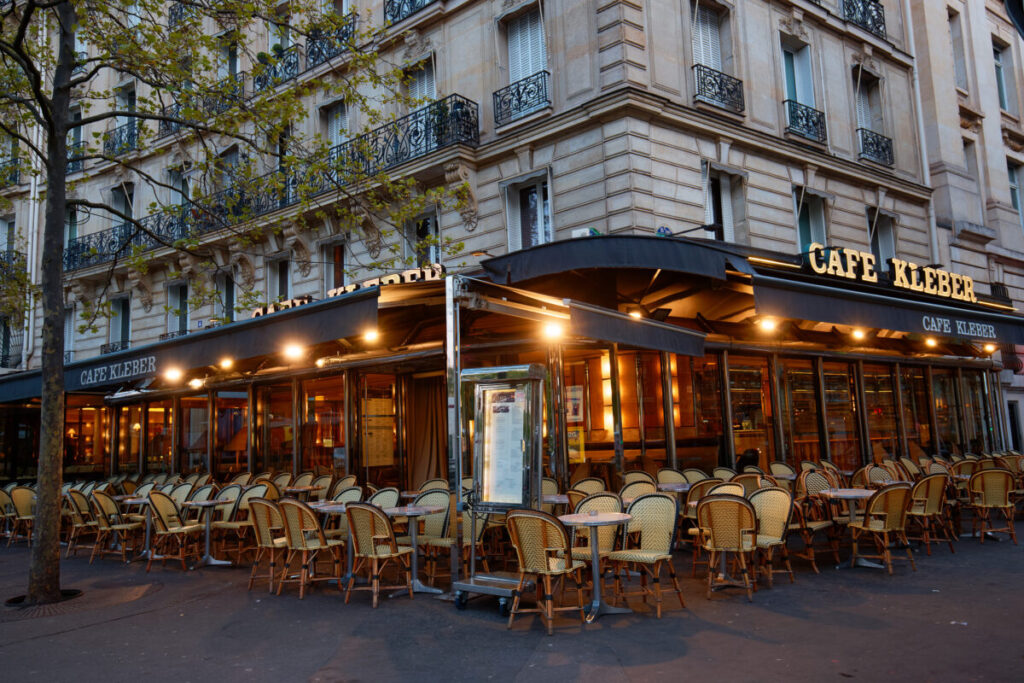
When you’re ordering coffee in Paris, knowing how to ask for milk or sugar makes a difference. Cafés won’t assume you want extras—you have to ask.
How to Ask for Du Sucre (Sugar)

Your coffee usually shows up unsweetened, so you’ll need to ask for sugar. Use the phrase “du sucre, s’il vous plaît” (dew SOO-kruh, see voo pleh). “Du” means “some” in French—don’t skip it.
Most cafés have sugar packets or cubes on the counter or table. If they don’t, just get the server’s attention and ask. Some spots offer both white sugar (sucre blanc) and brown (sucre roux), but white is what you’ll get most of the time.
After years here, I’ve noticed Parisians don’t dump sugar in their coffee. One cube or packet is normal for espresso. But honestly? Add what you want—it’s your coffee.
Requesting Milk or Cream

If you want milk, you’ll need to be a bit specific. For a splash, say “un peu de lait” (uhn puh duh leh). The “leh” rhymes with “play.”
If you want more milk, order a café crème instead of an espresso. But if you already have your coffee and want to add milk, ask for “du lait, s’il vous plaît.” Usually, you’ll get a little pitcher of steamed milk.
One thing that surprised me at first: Parisians rarely add cold milk to coffee. It’s usually steamed or at least warm. If you absolutely need cold milk, try “lait froid” (leh frwah), but don’t be shocked if you get a confused look.
Voir connexe : Top Coffee Shops in Paris for Your Perfect Brew
Questions fréquemment posées
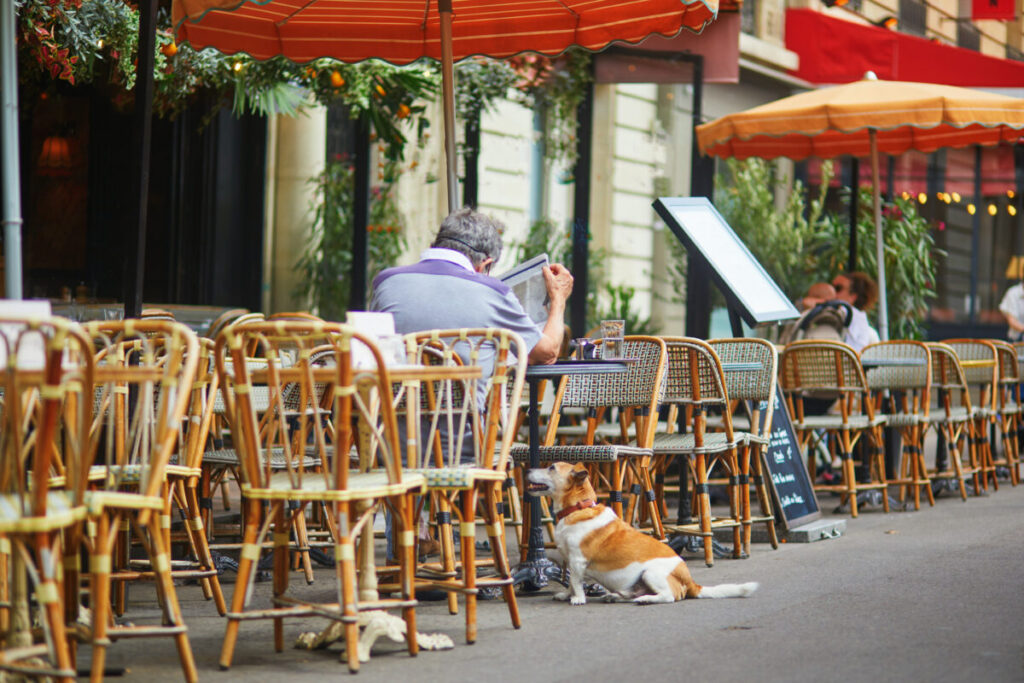
Ordering coffee in Paris has its own quirks and phrases. Here are some common questions and answers to help you sound more like a local.
What’s the local way to ask for a coffee with milk in a Parisian coffee shop?
It depends on the time of day and how much milk you want. For a real coffee with steamed milk, ask for “un café crème” (uhn kah-FAY krehm).
That’s the classic morning drink, and it’s the Parisian answer to a cappuccino. Just remember, the “è” in crème sounds like the “e” in “bed.”
If you want just a splash, order “un noisette” (uhn nwah-ZEHT). The espresso gets a little milk, turning it a light brown—hence the name, which means “hazelnut.”
But honestly, most Parisians stop drinking milky coffee after about 11 AM. It’s not a hard rule, but you’ll stick out if you order a café crème in the afternoon.
How might one order a specific style of coffee, such as a latte, in Paris without sounding like a tourist?
You can’t really get a latte in a traditional Parisian café. That drink just doesn’t exist in the classic sense.
Go for “un café crème”—it’s espresso with milk, and it’s the closest thing. The cup’s smaller than what you’d get at Starbucks, but the taste isn’t too far off. When you order, skip the fancy customizations—Parisians like their coffee simple and high quality.
Some newer coffee shops in trendy neighborhoods like the Marais do serve real lattes. There, you can just say “un latte” (uhn LAH-tay) and you’ll get what you expect. But in a classic café? Stick to café crème and you’ll blend right in.
What’s the insiders’ approach to requesting an Americano coffee in the heart of Paris?
The French have their own version called “un café allongé” (uhn kah-FAY ah-lon-ZHAY). “Allongé” means “lengthened” or “stretched out.”
This one’s basically an espresso with extra hot water poured in, so yeah, it’s almost the same as an Americano. That “j” in allongé? It’s soft, kind of like the “s” in “pleasure”—not always easy to nail right away.
When you order, try: “Bonjour, un café allongé, s’il vous plaît” (bohn-ZHOOR, uhn kah-FAY ah-lon-ZHAY, seel voo PLEH). The greeting matters—skip it, and you might get a side of attitude with your coffee. Honestly, that’s probably worse than messing up the order itself.
Is there a unique expression used in Paris for ordering a large or black coffee?
Not really—Parisians just don’t drink big coffees like Americans do. If you want black coffee, ask for “un café” (uhn kah-FAY).
You’ll get a straight espresso, nothing mixed in. It’s tiny, only a couple ounces at most, but that’s just how it is in Paris.
If you want something a bit bigger (but still black), try “un café allongé.” That’ll get you more coffee, still without milk. Some folks might try ordering “un café américain,” hoping for a big mug, but honestly, hardly anyone says that anymore and it gives away that you’re not local.
And those giant 20-ounce drip coffees? Forget it. French coffee culture values quality over quantity, so they keep the servings small on purpose.
If you’re craving more, just order another round. That’s how they do it.