

Belleville is safe for tourists during the day and generally safe at night if you stick to the main streets. Petty theft, not violent crime, is the real risk here, and it is the same risk you will find in any busy Paris neighborhood. Most visitors who spend an afternoon or evening in Paris‘s Belleville district report a normal, uneventful trip. This is a working-class, multicultural neighborhood in northeastern Paris, not a place featured in most guidebooks, and it is generally safe by the same standards as any other dense city district.
This article contains links to tour and hotel booking partners. If you book through one of them, Paris Top Ten may earn a commission at no extra cost to you.
The neighborhood mixes street art, Chinese and North African food, and a lived-in feel that is different from the postcard streets of Saint-Germain or Le Marais. It is not as polished, and that is a big part of why people go. As with any busy area, crowded streets and metro platforms attract pickpockets, but the U.S. State Department’s current France travel advisory (Level 2, “Exercise Increased Caution,” last updated 2026) cites the same concerns for the entire country: petty crime, occasional protests, and terrorism risk. None of it is specific to Belleville.
If you have traveled in other large cities, the pattern here will look familiar: crowded transport, vie nocturne animée, and a handful of streets that feel quieter after dark. In exchange, you get a slice of Paris that feels lived-in, with a cultural mix that is hard to find in the more tourist-heavy arrondissements.
Points clés à retenir
- Belleville is safe to explore in daylight and reasonably safe at night if you stay on the main boulevards.
- The neighborhood offers street art, ethnic food, and Belleville culture you will not find in the main tourist hubs.
- Pickpocketing, not violent crime, is the primary risk, concentrated around the Belleville metro station and market crowds.
- The France travel advisory sits at Level 2 (“Exercise Increased Caution”) as of 2026, the same level applied nationwide, not a Belleville-specific warning.
Is Belleville Safe for Tourists?

Belleville has a mixed reputation, but most visitors find it lively, authentic, and no more risky than many other working-class areas of Paris. The experience depends mostly on when you go, where you wander, and how aware you stay of your surroundings.
Current Safety Overview
If you stick to the main streets and popular spots, Belleville feels fairly safe. The neighborhood is busy during the day with locals shopping, eating, and hanging out in cafes. Markets draw crowds, and street vendors can be pushy, but they are more of a nuisance than a real danger.
At night, the area stays active with bars and restaurants. Groups of young Parisians drink on terraces well past dark, which adds to the sense of safety because the main streets do not empty out completely. Some quieter side streets, as in most Paris neighborhoods, feel less welcoming after midnight.
Tourists should keep an eye on their belongings, especially in crowded areas near the Belleville metro station. Pickpocketing is the biggest issue reported in Paris generally, and Belleville is no exception. Serious crime against visitors is rare, and most travelers report uneventful trips when they use normal city awareness.
What the Official Travel Advisory Actually Says
The U.S. Department of State’s France travel advisory sits at Level 2, “Exercise Increased Caution,” as of 2026. That level applies to the entire country, not to Belleville specifically, and it flags three things: petty crime, occasional civil unrest and demonstrations, and terrorism risk. It is the same advisory level applied to popular destinations like Le Marais, the Latin Quarter, and central Paris as a whole.
In practice, that means Belleville does not carry a distinct or elevated warning compared to the rest of the city. The neighborhood’s reputation as “grittier” comes from its working-class, multicultural character and less-polished streetscape, not from official crime data singling it out.
The area’s bar and restaurant scene, including long-running spots like Aux Folies and newer natural-wine bars, keeps the main streets lively well into the evening, which is generally a good sign for pedestrian safety since empty streets are the ones worth avoiding, not busy ones.
Comparison to Other Paris Neighborhoods
Compared to central tourist districts, Belleville feels grittier. Areas like Le Marais or Saint-Germain are more polished, with more visible security and fewer street vendors. Belleville, on the other hand, is more down-to-earth. That does not mean unsafe, it just has a different vibe.
Compared to neighborhoods sometimes flagged for safety concerns further north around Gare du Nord, Belleville is not nearly as tense. Locals and expats often describe it as authentic and diverse rather than dangerous, and it draws the same Level 2 advisory as the rest of France, not a heightened one.
If you are comfortable in multicultural, bustling neighborhoods, you will probably enjoy Belleville. If you prefer polished, postcard-perfect Paris, you might feel less at home here. In terms of actual safety, Belleville sits in the same range as most residential Paris neighborhoods: petty theft is the real risk, not violent crime.
Common Safety Concerns in Belleville

Belleville feels lively and authentic, but like many busy Paris neighborhoods, it pays to stay alert. The main issues here involve petty theft, tourist scams, and a handful of spots that feel less comfortable after dark, not violent crime.
Pickpocketing and Petty Theft
Pickpockets are the most common concern in Belleville, as in most crowded parts of Paris. They often work in pairs or small groups and target distracted visitors, especially near metro stations, on the crowded Line 11 platform, or at busy market stalls. The technique is quick: one person distracts, another lifts a phone or wallet, and the target often does not notice until minutes later.
To lower the risk, keep bags zipped and worn in front of the body rather than as a backpack. Avoid leaving a phone on a cafe table, even briefly, and keep wallets in a front pocket rather than a back one or an outer bag pocket.
These habits do not require paranoia, just the same baseline awareness locals already use. Parisians deal with the same risk day to day and manage fine with routine caution.
Scams Targeting Tourists
Scams in Paris are not unique to Belleville. Visitors run into the same tricks here as near Montmartre or the tour Eiffel. The “friendship bracelet” scam, where someone ties a string bracelet onto a wrist and then demands payment, still turns up occasionally. The fake petition scam works similarly: someone asks for a signature for a cause, then pressures for cash.
The most effective response is simply not engaging. A polite decline with no eye contact, or stepping into a shop or cafe, ends the interaction quickly. Locals recognize these routines and typically ignore them entirely.
Reading up on common Paris scams before a trip helps make sure nothing catches a first-time visitor off guard.
Nighttime Safety
Belleville at night is a mixed picture. The main boulevards, rue de Belleville and boulevard de Belleville, stay busy and feel comparable to other lively Paris nightlife strips. Some quieter side streets near Place des Fetes or the upper end of rue de Belleville feel less welcoming after dark, though many families live in the area and go about their evenings as usual.
Sticking to well-lit main streets and avoiding long solo walks down empty side streets after midnight covers most of the practical risk. The atmosphere shifts once bars close and the crowds thin out, generally after 1 or 2 a.m.
Planning a route back to a metro exit that leads onto a busier corner, rather than a quiet residential block, is a simple and effective precaution anywhere in Paris at night.
Belleville’s Location and Surroundings

Belleville sits on the northeastern edge of Paris, straddling several arrondissements and bordering neighborhoods that feel very different from the postcard image of the city. Its borders connect to lively multicultural streets, along with a few pockets worth extra awareness at night.
Arrondissements and Borders
Belleville stretches across the 19th et 20th arrondissements, with parts spilling into the 10th et 11th. The Belleville metro station itself sits at the exact junction of all four districts. That mix gives the area its character: gritty in places, creative in others, with a strong Chinese and North African community influence.
The main hub is around the Belleville metro station, where Lines 2 and 11 meet. From there, it is an easy walk to Buttes-Chaumont park in the 19th or downhill toward Republique in the 10th. The streets climb steeply toward Parc de Belleville, which has one of the best skyline views in the city.
Because it straddles multiple districts, Belleville does not have the polished look of central Paris. Old bistros sit next to Asian supermarkets, and street art covers many corners. Hotels in the area also tend to be more affordable than in the tourist-heavy center.
Nearby Areas to Approach With Caution
A few blocks north or west, the character shifts. The Goutte d’Or dans le 18ème arrondissement et Chateau Rouge are lively but can feel overwhelming after dark, with street vendors, counterfeit-goods sellers, and occasional petty crime.
Closer to the canal, the Stalingrad area has improved in recent years but still has a reputation for feeling less comfortable at night, with groups gathering along the water. Most activity there is harmless, but it is not the easiest place for a first-time visitor to navigate alone after dark.
Belleville also borders Seine-Saint-Denis, a suburban department known for cultural diversity and, in parts, higher reported crime rates than central Paris. Most visitors will not end up there unless they go looking for it.
Sticking to the main streets, especially in the evening, and avoiding visible valuables covers the same common-sense approach that applies in any large city.
Transport Safety in and Around Belleville

Getting around Belleville is straightforward, though it pays to stay alert in crowded spots. The metro station is busy and can get chaotic at rush hour, so knowing what to expect helps.
Metro Stations and Public Transit
Belleville station sits on Metro lines 2 and 11, opened in 1903 and 1935 respectively, at the corner of the 10th, 11th, 19th, and 20th arrondissements. That makes it an easy transfer point across the city, but also a crowded one, and pickpocketing is the main thing to watch for. Keeping a bag zipped and held in front, rather than worn loosely on the back, removes most of the opportunity.
Platforms feel busy and safe for most of the day, but can feel emptier and quieter late at night. Standing near other passengers rather than in an isolated section of the platform after 11 p.m. is a reasonable precaution, as it is on most Paris metro lines that late.
Staying off the phone while boarding or exiting trains is a small habit that helps, since thieves sometimes grab and run just as the doors close.
Train Stations: Risks and Tips
Gare du Nord, one of Europe’s busiest train stations, is a short metro ride from Belleville. Violent crime there is rare, but petty theft is common given the sheer foot traffic. Keeping a hand near a bag while checking departure boards or buying tickets, and being wary of unsolicited “helpful” strangers offering directions, covers the main risks.
For very early or late trains, a taxi or ride-share directly to the station is a safer option than walking with luggage through quiet streets at odd hours. Traveling light also reduces the practical risk, since there is simply less to keep track of.
Cultural Vibe and Daytime Experience
Belleville is not the Paris of postcards. It is lively, a little gritty, and that is a large part of its appeal. During the day, murals cover walls, food markets bustle, and a mix of cultures sets it apart from the more polished parts of town.
Local Art and Street Life

A walk along rue Denoyez shows why Belleville is sometimes called an open-air gallery. Walls are covered in colorful murals, tags, and stencils that change regularly. It is not curated like a museum, but it is raw and full of energy.
Life spills onto the streets here. Shops, cafes, and corner bars keep their doors open, and people gather outside rather than staying indoors. Little of it is staged for tourists.
For photography, Belleville offers a mix of old bistros, Asian markets, and alleys covered in graffiti. Guided Visites parisiennes that swing through the neighborhood are also an option for a more structured visit.
Where to Eat and Drink

Belleville’s food scene is a genuine draw. Chinese dumpling spots, Vietnamese pho, and North African bakeries all sit within a few minutes’ walk of one another, generally at lower prices than central Paris.
Aux Folies, at 8 rue de Belleville, is a longtime neighborhood institution open daily from 7 a.m. to 2 a.m., with a heated terrace and beer starting around 2.50 euros. La Liquiderie, a natural wine and craft beer bar at 7 rue de la Presentation near the metro station, is open Tuesday through Sunday evenings (closed Monday), with hours running from 5 p.m. to as late as 2 a.m. on Fridays. Both places keep their stretches of street busy well into the night, which helps rather than hurts pedestrian safety in the immediate area.
Most restaurants here are casual and family-run. Sticking to busy spots where food turns over quickly is a reasonable freshness check, and on crowded terraces it is worth keeping bags and phones close, since distracted diners are a common pickpocketing target anywhere in Paris.
Belleville’s Multicultural Atmosphere
Belleville is one of the most diverse corners of Paris, home to large Chinese and North African communities alongside artists, students, and families who have lived there for generations. That mix gives the area a character that is hard to find in the tourist-heavy center.
Markets reflect that diversity: on market days, Asian vegetables, Moroccan spices, and French cheeses sit side by side. For a look at everyday Paris life beyond the monuments, Belleville is one of the more accessible places to find it.
Safety Tips for Tourists Visiting Belleville

Belleville is lively and full of character, but like anywhere in Paris, a bit of planning makes for a smoother, less stressful visit.
Essential Precautions
Pickpocketing is the main risk in Belleville, not violent crime. Keeping a bag zipped and close, especially in the metro or at busy crossings, addresses most of it. A small crossbody bag held in front works better than a backpack in crowds.
Avoiding visible cash or expensive electronics, and stepping to the side of foot traffic rather than checking a phone in the middle of a busy street, reduces the chance of being targeted.
At night, sticking to well-lit main streets and skipping the quieter alleys covers the practical risk. Belleville has an active nightlife scene, but some side streets feel less comfortable after dark. When in doubt, the metro or a taxi beats a long walk through unfamiliar quiet streets.
Emergency Contacts and Resources
Dial 112 for emergencies in France, covering police, fire, and medical. For non-urgent police matters, call 17.
For a lost passport or other urgent consular issue, the nearest embassy or consulate is the right first call. Saving that address and number before departure is worth the two minutes it takes.
Paris has tourist police stations with English-speaking officers who help visitors who have been pickpocketed or scammed file a report.
Solo and Female Traveler Advice
Solo visitors, including women traveling alone, generally report uneventful trips through Belleville when they stick to busy streets like Boulevard de Belleville or Rue de Belleville, where cafes, markets, and foot traffic are a constant presence.
Sharing a planned route or live location with a friend for a night out is a reasonable extra precaution, as is sitting near other passengers on public transport late at night rather than in an empty train car.
Paris is generally considered a statistically safe city for solo and female travelers by comparison with other major European capitals, provided the same baseline awareness applies here as anywhere else in the city.
How Belleville Compares to Other Paris Tourist Hotspots
Belleville has a different feel from Paris’s polished, postcard-perfect neighborhoods: fewer tour groups, more locals running errands, and a stronger sense of everyday life. The contrast stands out most clearly against the city’s best-known districts.
Le Marais and the Latin Quarter

Le Marais is polished and curated: trendy boutiques, Jewish delis, and art galleries tucked into medieval streets. It is well-lit and busy, though pickpocketing in the crowds is still worth watching for.
Le Quartier latin leans academic, with bookshops, student bars, and the Sorbonne keeping the streets lively. It draws more tourists than Belleville but also plenty of students, and street life stays vibrant later into the night than in Belleville’s quieter corners.
For a classic Paris feel, Le Marais and the Quartier latin both deliver. Belleville is more raw, multicultural, and unpolished by comparison.
Montmartre and Les Halles

Montmartre, famous for Sacre-Coeur and its hilltop views, is heavily photographed and packed with tourists, especially around Place du Tertre, where pickpockets are a well-known risk. Compared to Belleville, Montmartre feels more built for visitors, though quieter side streets still hold some charm.
Les Halles is modern and central, built around a large shopping complex with chain stores and a mix of commuters and tourists. It is safe during the day, with late evenings near Chatelet-Les Halles station feeling somewhat busier and less relaxed.
Belleville has neither Montmartre’s postcard views nor Les Halles’ commercial buzz. Instead, it offers markets, street art, and immigrant-run cafes that feel lived-in rather than built for tourism.
Major Attractions: Eiffel Tower, Louvre, and Notre Dame
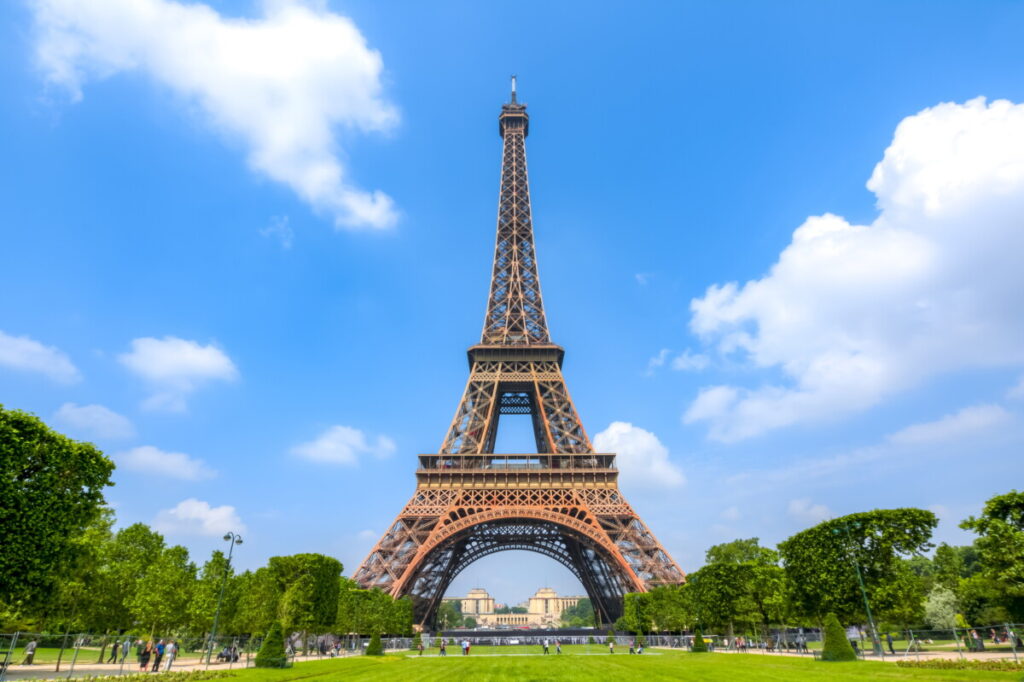
Le tour Eiffel, Louvre, and Notre Dame sit at the heart of tourist Paris. These areas are packed, heavily policed, and generally safe, though pickpockets and minor scam artists work the crowds. The same applies to the Seine riverbanks, Arc de Triomphe, and Champs-Elysees: safe enough, but crowded.
Belleville offers the opposite trade. There are no world-famous les monuments, but Parc de Belleville gives sweeping skyline views, including a distant glimpse of the Eiffel Tower, in exchange for a relaxed, neighborhood pace instead of a crowd.
For iconic sights, the major landmarks win. For a slice of how Parisians actually live and work day to day, Belleville offers something the areas around the Louvre or notre Dame generally do not.
Understanding Broader Paris Safety Issues

Paris is a city where most travelers feel at ease, but a couple of citywide factors are worth understanding regardless of which neighborhood a visit centers on: petty theft in crowded spots, and a visible security presence tied to broader terrorism concerns.
Pickpocketing Across Paris
Pickpocketing is the most consistently reported problem for visitors to Paris, especially around busy tourist hotspots like the Eiffel Tower, Sacre-Coeur, and the metro lines connecting them. Thieves typically work in small groups, with one person distracting a target while another lifts a wallet or phone.
Keeping valuables zipped inside a bag held close, rather than in a back pocket or an easily-accessed outer compartment, addresses most of the risk. It helps to remember:
- Use a crossbody bag and keep it in front.
- Do not leave a phone out on crowded trains.
- Stay alert if someone bumps into you or starts an unsolicited conversation.
Even locals occasionally get caught off guard. Basic awareness and a little common sense address most of the issues that travel guides consistently warn about.
Terrorism Risk and Security Measures
Terrorism risk is part of the France travel advisory picture, which is why armed police and military patrols are visible around train stations, airports, and landmarks like Notre-Dame and the Louvre. The U.S. State Department’s Level 2 advisory for France reflects this alongside petty crime and demonstration risk, applying nationwide rather than to any single neighborhood.
Security checks are now a routine part of daily life in the city: bag checks at museums, shopping centers, and some supermarkets are standard. They add a small amount of friction but reflect ordinary precaution rather than an active or elevated threat.
For most visitors, the practical risk is considered low. Standard advice applies: stay aware, follow instructions from authorities, and avoid large demonstrations, since those can shift quickly.
Questions fréquemment posées
Belleville is lively, diverse, and full of character, but it still rewards staying aware of your surroundings. Petty theft, crowded streets, and a few rougher corners mean it is worth balancing curiosity with a bit of caution.
Find Things to Do in Paris
Find Accommodation

Continue Planning Your Paris Trip
Your Go-To Guide for Local SIM Cards in France: What Tourists Need to Know
Visiting France and want to stay connected without roaming fees? How tourists pick a local SIM card, what…
Read Guide →Paris Fashion Week Travel Guide: Ultimate Insider Tips and Hotspots
You don't need a runway seat to experience Paris Fashion Week. Catch street style, designer boutiques, pop-up installations,…
Read Guide →
Travel Agencies in Paris: 10 Current Agencies and Tour Operators for 2026
Planning a Paris trip and want local expertise? Ten travel agencies for 2026, from boutique luxury specialists to…
Read Guide →