
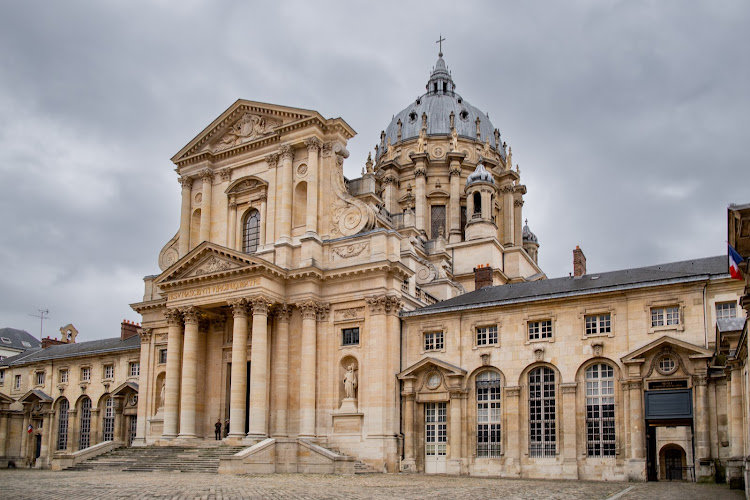
Royal gratitude becomes baroque masterpiece
In the heart of the 5th arrondissement near the Luxembourg Garden, the Abbaye du Val-de-Grâce stands as one of France’s most magnificent examples of baroque religious architecture. Built between 1645 and 1665 by Queen Anne of Austria to celebrate the miraculous birth of her son Louis XIV after 23 years of childless marriage, this extraordinary complex demonstrates how royal gratitude and maternal devotion combined with architectural genius to create a sacred space that embodies both spiritual thanksgiving and artistic triumph.
Anne of Austria’s maternal vow and divine intervention
Queen Anne of Austria’s commission of Val-de-Grâce represents one of history’s most personal royal architectural projects. After decades of unsuccessful attempts to produce an heir for Louis XIII, the Queen vowed to build a magnificent church if her next child would be a boy who could secure the Bourbon succession.
The birth of the future Louis XIV in 1638 fulfilled Anne’s prayers, and her gratitude to the Virgin Mary motivated the creation of this baroque masterpiece. The church’s every element reflects maternal joy and religious thanksgiving, making it perhaps the most emotionally motivated royal commission in French architectural history.
François Mansart’s architectural vision and departure
Construction began in 1645 under François Mansart, one of France’s greatest baroque architects, whose vision established the church’s magnificent design principles. However, Mansart departed after only one year due to disagreements over project scope and costs, demonstrating the challenges of balancing artistic vision with royal financial constraints.
Jacques Lemercier and then Pierre Le Muet completed the project by 1665, largely following Mansart’s original design while managing costs more effectively. This architectural succession created a baroque church that honored the original vision while demonstrating how great projects can survive changes in leadership through strong foundational concepts.
French baroque and Jesuit architectural influence
The church’s design represents the pinnacle of French baroque classical style, drawing inspiration from the “Jesuit style” established by the Church of the Gesù in Rome (1584). This architectural approach combined French classical principles with Italian baroque dramatic effects, creating a uniquely French interpretation of Counter-Reformation religious architecture.
The most spectacular feature is Pierre Mignard’s massive fresco “Heavenly Glory,” painted in fourteen months and featuring over 200 characters including prophets, saints, martyrs, Church Fathers, and recognizable personalities including Queen Anne of Austria herself. This artistic program transforms the church interior into a vision of divine celebration that matches the maternal joy that inspired its creation.
Revolutionary transformation and military service
During the French Revolution, the abbey was transformed into a military hospital, beginning a healthcare mission that continued until 1979. This adaptation demonstrated how revolutionary authorities could preserve magnificent architecture while adapting religious buildings for practical social service that served Republican rather than royal purposes.
The transformation from royal abbey to military hospital reflects the Revolution’s practical approach to magnificent buildings—preserving architectural heritage while ensuring it served broader social needs rather than exclusive aristocratic or religious purposes.
Museum of military medical heritage
Today, the complex houses the Museum of the Military Health Service, creating an educational institution that honors both the building’s architectural significance and France’s military medical traditions. This contemporary use demonstrates how historic religious architecture can successfully serve entirely secular educational purposes while maintaining its essential dignity and beauty.
The museum’s presence ensures that Val-de-Grâce continues to serve public rather than private purposes, democratizing access to both architectural heritage and military medical history within spaces originally designed for royal and religious exclusivity.
Essential information
- Commission: Queen Anne of Austria (maternal vow)
- Construction: 1645-1665
- Architects: François Mansart, Jacques Lemercier, Pierre Le Muet
- Celebration: Birth of Louis XIV (1638)
- Architectural style: French baroque classical
- Emplacement: 5th arrondissement, near Luxembourg Garden
- Revolutionary transformation: Military hospital (1790s-1979)
- Current use: Museum of Military Health Service
Artistic treasures
- Master fresco: Pierre Mignard’s “Heavenly Glory” (200+ characters)
- Architectural inspiration: Church of the Gesù, Rome
- Baroque elements: French classical style with Italian dramatic effects
- Royal portraiture: Queen Anne of Austria featured in heavenly vision
- Historical significance: Maternal gratitude expressed through architectural grandeur
Maternal devotion in stone
The Abbaye du Val-de-Grâce embodies the most personal form of royal architectural patronage, where a mother’s gratitude for divine intervention created one of France’s most magnificent baroque churches. This remarkable complex demonstrates how deeply personal religious devotion can inspire architectural masterpieces that serve both individual thanksgiving and broader cultural celebration. For baroque enthusiasts, French royal history lovers, or anyone interested in how personal faith shapes public architecture, Val-de-Grâce offers an extraordinary encounter with maternal devotion expressed through architectural grandeur, where Queen Anne of Austria’s prayers for an heir resulted in a church that continues to inspire wonder and reverence beneath Pierre Mignard’s heavenly vision that eternally celebrates both divine mercy and royal succession.