
Description
The Cour de l’Industrie, located in the 11th arrondissement of Paris, is a must-visit destination for anyone interested in French architecture and history. This grand building, built in 1867, is the largest in Paris and is a masterpiece of French design. As a building belonging to the French government, the Palais de l’Industrie houses and displays some of the most important public buildings in Paris, including the Palais du Luxembourg and the Palais de la Porte Saint-Martin. The Palais de l’Industrie is part of the Palais des Tuileries and has been designed to host a number of public buildings. Visitors to the Cour de l’Industrie will be struck by the grandeur and beauty of the building. The Palais de l’Industrie is a testament to the skill and creativity of French architects and is one of the most impressive buildings in the world. The building’s sheer size and intricate design make it a sight to behold, and visitors will find themselves awed by its majesty. In addition to the Palais du Luxembourg and the Palais de la Porte Saint-Martin, the Palais de l’Industrie is home to numerous other important public buildings. Visitors can spend hours exploring the different buildings and learning about their history and significance. Overall, the Cour de l’Industrie is a must-visit destination for anyone interested in French architecture, history, and culture. Its grandeur and beauty make it one of the most impressive buildings in the world, and visitors will find themselves captivated by its history and significance.
Principales caractéristiques:
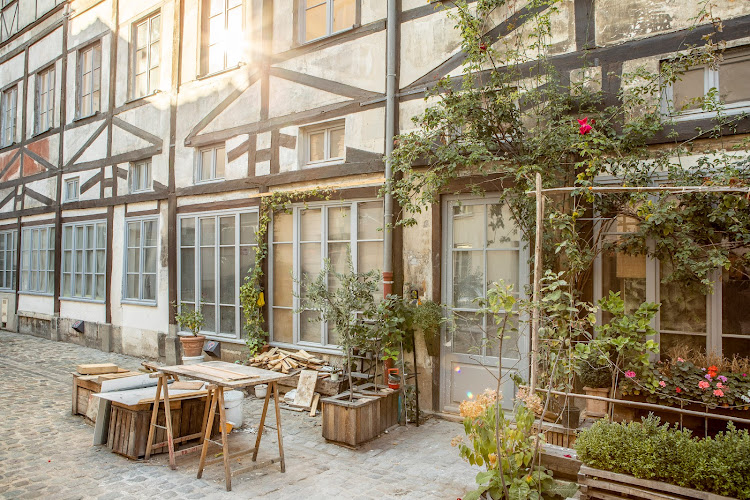
The Cour de l'Industrie, strategically located at the crossroads of Bastille and Place de la Nation, preserves and rehabilitates artisan workshops that span over three centuries of history. The site is home to a diverse range of rare crafts, including plastic artists, painters, sculptors, ceramicists, photographers, and many more.
Accessibilité et commodités :
The museum provides accessibility features to accommodate visitors with disabilities. Additionally, amenities such as restrooms, dining options, and gift shops are available. Unique services include art restoration, art studio visits, and the opportunity to interact with skilled artisans.
Planifier votre visite :
To avoid crowds, it's best to visit during weekdays and early mornings. Visitors typically spend 1-2 hours exploring the unique artisan workshops and interacting with the craftsmen. A recommended itinerary includes starting with a guided tour to gain insights into the historical significance of the workshops and then exploring the diverse range of crafts on display.
What Makes Cour de l’Industrie Notable
Cour de l’Industrie, also known as “le 37bis”, is a surviving ensemble of nineteenth-century industrial courtyards in the historic Faubourg Saint-Antoine. Its significance lies less in monumental scale than in the character of its working passageways: this is a place shaped by making, repair and small-scale production within Paris’s dense urban fabric.
The site’s history begins in 1673, and it remains connected to creative and artisanal activity today. The official site identifies 50 artists’ and craftspeople’s workshops here, giving the courtyard a lived-in purpose rather than the atmosphere of a conventional museum. For visitors interested in Paris beyond its formal boulevards and landmark façades, it offers a useful introduction to the manufacturing history associated with the Faubourg Saint-Antoine.
Location and Neighborhood Context
The courtyard is at 37 bis rue de Montreuil in the 11th arrondissement, within the Faubourg Saint-Antoine. This is an east-Paris quarter whose street pattern retains the close-grained feel of a former workshop district. Rue de Montreuil is best approached as part of a walk through the surrounding streets rather than as an isolated sightseeing stop.
The 11th is a practical area for travellers who enjoy walking between everyday Parisian streets, independent addresses and traces of older trades. Allow time to look at the frontage and the sequence of spaces rather than expecting a single grand viewpoint. Cour de l’Industrie also makes a thoughtful contrast with the more ceremonial architecture found elsewhere in central Paris: its interest is human scale, continuity and the relationship between workspaces and the street.
Points forts des visiteurs
- A rare surviving industrial-courtyard ensemble: the site is described as the last such group from the nineteenth century remaining in its historic Faubourg Saint-Antoine setting.
- An active creative address: 50 artists’ and artisans’ workshops connect the architecture to present-day practice.
- A rewarding stop for design-minded visitors: it suits travellers interested in craftsmanship, urban history, façades and less formal architectural walks.
- A compact addition to an 11th-arrondissement itinerary: it works well for those exploring the Faubourg Saint-Antoine on foot and wanting to pause for a closer look at Parisian working heritage.
Practical Planning Tips
Treat Cour de l’Industrie as an active workshop site, not as a ticketed monument with guaranteed visitor circulation. Access, events and the visibility of individual studios can vary, so check the official 37bis website before setting out. This is especially important if you hope to encounter a particular maker or attend a programmed occasion.
Visit in daylight, when architectural details and the relationship between courtyard and street are easiest to appreciate. Keep your visit unhurried but modest in length, then continue on foot through the neighborhood. Respect closed doors, private work areas and the needs of people working on site; the appeal here depends on the courtyard remaining a functioning place rather than being treated as a staged attraction.
Questions fréquemment posées
What is Cour de l’Industrie?
It is a historic industrial-courtyard ensemble in the Faubourg Saint-Antoine, also called le 37bis, with roots dating to 1673.
Why is it associated with craftsmanship?
The Faubourg Saint-Antoine has a long workshop tradition, and the site currently brings together 50 artists’ and artisans’ workshops.
Can visitors enter the workshops?
Workshop access is not something to assume. Check the official website for current information and respect any private or working spaces on arrival.