
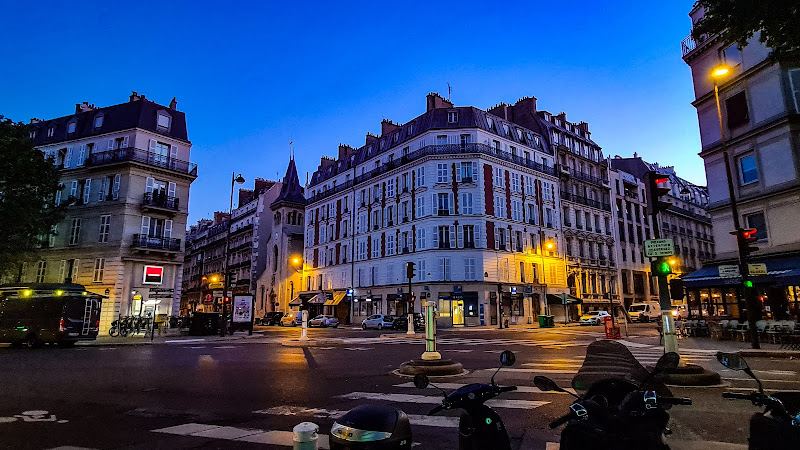
Lost Art Nouveau pavilion that epitomized Belle Époque transportation design
The former Édicule Guimard of the Wagram station represented one of Hector Guimard’s three extraordinary free-standing pavilions for the Paris Métro, designed around 1900 on Avenue de Wagram near Étoile as part of the revolutionary Art Nouveau entrance system that transformed functional urban infrastructure into sculptural masterpieces. Influenced by Japanese pagoda architecture and featuring glass-roofed structures that enclosed stairways with projecting canopies, this demolished pavilion demonstrated how visionary public design could elevate ordinary transportation access into aesthetic experiences that educated Parisians about modernist principles while serving practical metropolitan mobility needs through beauty integrated into essential urban infrastructure.
Japanese inspiration and architectural innovation
The pavilion’s Japanese pagoda influence, combined with Guimard’s Art Nouveau philosophy, created a unique synthesis of Eastern architectural wisdom and Western modernist innovation that demonstrated how global design traditions could inform Parisian urban planning through cultural exchange that enriched local architectural vocabulary. This international inspiration proved that exceptional public architecture emerges when designers embrace diverse cultural influences while adapting foreign concepts to serve specific urban contexts and transportation requirements.
The glass-roofed structure with elaborate cast iron framework created weather protection that functioned simultaneously as practical shelter and aesthetic education, where daily commuters experienced architectural artistry through routine metro use that transformed transportation access into cultural encounters with modernist design principles that challenged conventional Parisian architectural traditions through innovative public art integration.
Belle Époque vision and urban transformation
The Wagram pavilion’s role within Guimard’s comprehensive metro entrance system—167 original installations creating the distinctive “Style Métro”—demonstrated how systematic artistic vision could transform entire urban transportation networks into coherent aesthetic experiences that served both practical mobility and cultural education. This comprehensive approach proved that exceptional public art requires coordinated planning that maintains stylistic consistency while adapting to diverse urban contexts through modular design systems that serve multiple functional requirements.
The pavilion’s early demolition by 1926, along with its Étoile and Bastille counterparts, reflected changing aesthetic fashions that unfortunately eliminated some of Art Nouveau’s most sophisticated achievements when post-WWI architectural preferences turned toward different stylistic approaches that failed to appreciate the innovative integration of beauty and function that Guimard’s pavilions represented through public art that enhanced rather than complicated urban infrastructure.
Cultural loss and preservation awakening
The destruction of all three free-standing pavilions during the interwar period, when Art Nouveau fell from fashion, created cultural loss that eventually generated passionate preservation efforts for surviving Guimard entrances through Historical Monument classifications in 1965 and 1978. This preservation awakening proved that artistic value often requires time for full appreciation, where initial public resistance yields to protective affection when communities recognize the irreplaceable nature of innovative public art destroyed by aesthetic fashion changes.
The survival of only 86 from 167 original Guimard entrances illustrates how cultural preservation requires vigilant protection against demolition pressures that eliminate exceptional public art when architectural fashion shifts eliminate appreciation for previous innovation, creating permanent cultural loss that cannot be recovered when unique artistic achievements face destruction during periods of aesthetic transformation that fail to recognize lasting design value.
Memorial significance and design legacy
Though physically lost, the Wagram pavilion’s influence continues through surviving Guimard entrances that maintain Art Nouveau principles while serving ongoing transportation needs, proving that exceptional public design achieves immortality through stylistic influence that transcends individual building survival when design principles continue inspiring appreciation for beauty integrated into functional urban infrastructure. This legacy demonstrates how lost architectural achievements can continue cultural influence through surviving examples that preserve original design vision.
Essential information
- Designer: Hector Guimard (Art Nouveau master)
- Design period: c. 1900 (Belle Époque)
- Original location: Avenue de Wagram near Étoile
- Taper: Free-standing pavilion (one of three)
- Inspiration: Japanese pagoda architecture
- Demolition: By 1926 (architectural fashion change)
- Companion pavilions: Étoile (demolished 1926), Bastille (demolished 1962)
- Legacy: Part of Style Métro movement
Design and cultural significance
- Architectural concept: Glass-roofed structures with projecting canopies
- Cultural synthesis: Japanese influence within Art Nouveau framework
- Urban function: Weather protection combined with aesthetic education
- Preservation lesson: Loss highlighting importance of architectural protection
- Historical importance: Part of comprehensive Art Nouveau metro system
Lost pavilion reminds us that beauty requires protection
The demolished Édicule Guimard of the Wagram station embodies the tragic lesson that exceptional public art requires vigilant protection against aesthetic fashion changes that can eliminate irreplaceable cultural achievements, where Hector Guimard’s innovative pavilion design combined Japanese architectural wisdom with Art Nouveau innovation to create metro entrances that proved public transportation infrastructure could serve both practical mobility and cultural education through beautiful design that enhanced rather than complicated urban functionality. This lost pavilion reminds contemporary urban planners that the finest public architecture emerges when visionary designers understand how functional requirements and aesthetic achievement can unite to create civic infrastructure that continues inspiring appreciation across generations of users, proving that authentic urban beauty requires protective preservation that recognizes exceptional design value before demolition pressures eliminate cultural achievements that cannot be recovered once destroyed. For Art Nouveau enthusiasts, urban design historians, or anyone interested in how aesthetic fashion can threaten cultural heritage, this lost Wagram pavilion offers a sobering reminder about preservation necessity, where exceptional public art faces existential threats when changing architectural preferences eliminate appreciation for innovative design that served both practical transportation needs and cultural distinction through beauty that made ordinary metropolitan movement more inspiring, educational, and aesthetically significant than purely functional approaches to essential urban infrastructure could achieve.