
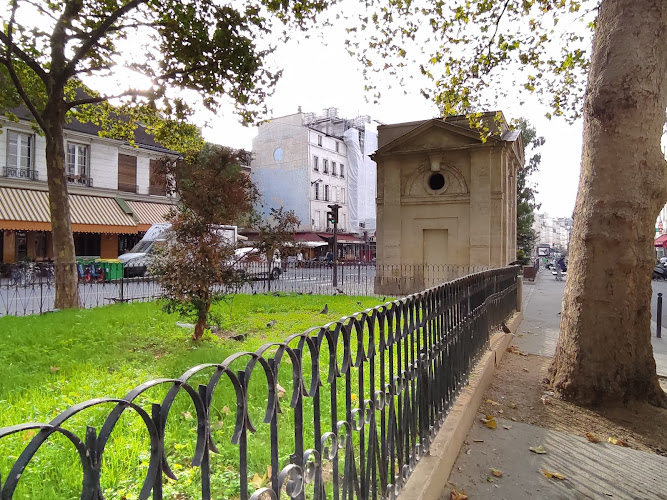
Description
The Fontaine de Montreuil is a hidden gem tucked away in the 17th arrondissement of Paris. This public fountain, created by the talented French sculptor Jean-François Chalgrin, is a true work of art that has been captivating visitors since its inauguration in 1831. Located on the Rue du Faubourg-Saint-Antoine, the Fontaine de Montreuil is a testament to the rich history and culture of Paris. The fountain’s intricate design and attention to detail make it a must-see for anyone interested in art, architecture, or history. As you approach the Fontaine de Montreuil, you’ll be struck by the beauty of the sculptures and the way they seamlessly blend into the surrounding environment. The fountain’s water features are equally impressive, with streams of water cascading down the sides of the structure and into the basin below. Whether you’re a seasoned traveler or a first-time visitor to Paris, the Fontaine de Montreuil is a must-see attraction that is sure to leave a lasting impression. So why not take a stroll down the Rue du Faubourg-Saint-Antoine and experience the beauty and wonder of this incredible monument for yourself?
Principales caractéristiques
The Fontaine de Montreuil, located in the 11th arrondissement of Paris, is a historical landmark that has stood the test of time. Its intricate architectural design and historical significance make it a must-see attraction for visitors. The fountain's rich history and unique features provide a captivating glimpse into the past, making it an essential stop for history enthusiasts and architecture aficionados alike.
Accessibilité et commodités
The museum provides accessibility features to accommodate visitors with disabilities, including wheelchair access and accessible restrooms. Additionally, visitors can enjoy amenities such as on-site dining options, gift shops, and audio guides to enhance their experience. The availability of unique services like audio guides and coat check adds convenience and value to the visit.
Planifier votre visite
For the best experience, visitors are recommended to plan their visit during off-peak hours to avoid crowds. On average, visitors spend approximately 1-2 hours exploring the monument and its surroundings. To make the most of their visit, guests can follow recommended itineraries that highlight the fountain's unique features and historical significance.
What Makes Fontaine de Montreuil Notable
Fontaine de Montreuil is a historic public fountain on Rue du Faubourg-Saint-Antoine in Paris’s 11th arrondissement. Its interest lies less in being a stand-alone spectacle than in what it represents: an enduring fragment of the city’s early public water infrastructure in the eastern districts. For visitors who enjoy reading Paris through its everyday fabric rather than through its largest monuments, it gives a useful point of reference.
The name recalls the eastern edge of Paris and the former boundary with Montreuil. That setting matters. This is a place to notice the relationship between a practical civic structure, a historic route out of the city, and the dense streets that have grown around it. Approach it as a short architectural and urban-history stop, best paired with a walk rather than treated as a destination requiring a long visit.
Location and Neighbourhood Context
Rue du Faubourg-Saint-Antoine is one of eastern Paris’s long-established thoroughfares, running through an area shaped by workshops, commerce and residential streets. The 11th arrondissement has a close-grained, lived-in character: its broad routes and narrower side streets reward an unhurried walk, particularly for travellers interested in the transition from central Paris to its eastern neighbourhoods.
Fontaine de Montreuil works well as a pause while exploring this side of the city on foot. Keep your route flexible and allow time to look beyond the fountain itself at the surrounding street pattern and façades. It is not presented as a formal museum visit, so the pleasure comes from placing a small historic landmark within the wider Faubourg-Saint-Antoine landscape.
Points forts des visiteurs
- A piece of civic history: the fountain recalls the development of public water provision in Paris.
- An eastern Paris perspective: its association with the former Montreuil boundary adds context to a district often explored for its streets rather than major sights.
- A compact stop: suitable for travellers building a self-guided walk along Rue du Faubourg-Saint-Antoine.
- An architectural detail to seek out: best for readers of façades, street furniture and the practical infrastructure woven into Parisian neighbourhoods.
- Good for independent explorers: especially those who prefer local urban history to a heavily programmed attraction.
Practical Planning Tips
Plan Fontaine de Montreuil as a brief outdoor stop. Daylight makes it easier to examine the structure and understand its position on the street; an early walk can also make observation more comfortable before the pavement becomes busier. As with any streetside monument, remain aware of traffic, pedestrians and the need to keep the public way clear.
There is no need to build an entire day around the fountain. Instead, combine it with a walk through the 11th arrondissement, leaving room for detours down adjoining streets. Check current local conditions before setting out, particularly if you are travelling specifically to photograph or closely inspect the site. Bring a map or use a walking route so that the stop becomes part of a coherent east-Paris itinerary.
Questions fréquemment posées
Where is Fontaine de Montreuil?
It is on Rue du Faubourg-Saint-Antoine in the 11th arrondissement, in eastern Paris.
How long should I allow for a visit?
Allow a short pause to view it, then continue with a walk through the surrounding neighbourhood.
Who will enjoy this monument most?
It particularly suits visitors interested in Parisian infrastructure, local history and small-scale architectural landmarks.