
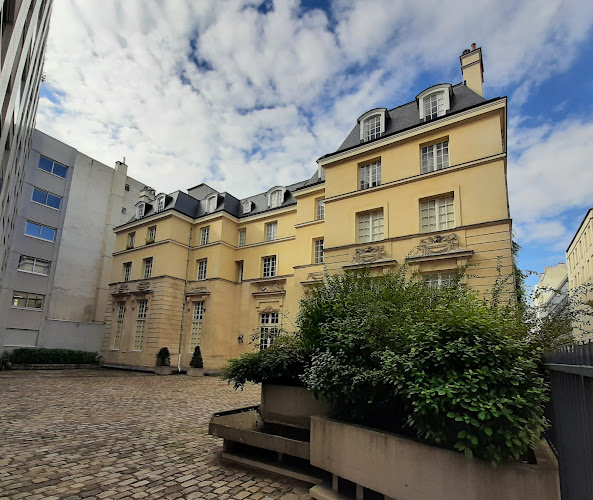
Description
The Hôtel de Mortagne, located in the 11th arrondissement of Paris, is a stunning architectural masterpiece that has been in the same family for over 400 years. Built in the 18th century, the hotel is a symbol of Parisian history and culture, and a must-see for any visitor to the city. With its unique and beautiful design, the Hôtel de Mortagne is one of the most famous and beautiful hotels in Paris. Its cultural significance is undeniable, having been featured in a number of films including The Da Vinci Code, The Three Musketeers, The Prince and the Pauper, and The Lion in Winter. What makes the Hôtel de Mortagne so special is its rich history and the fact that it has remained in the same family for so many years. This gives the hotel a unique character and charm that cannot be found in other hotels. Visitors to the Hôtel de Mortagne can expect to be transported back in time to the 18th century, with its stunning architecture and beautiful design. The hotel is a true gem of Paris and a testament to the city’s rich cultural heritage. In conclusion, the Hôtel de Mortagne is a must-see for anyone visiter Paris. Its unique history, stunning architecture, and cultural significance make it one of the most interesting and beautiful les monuments in the city.
Principales caractéristiques:
- The Hôtel de Mortagne, located in the 11th arrondissement, is renowned for its stunning 18th-century architecture and historical significance as a private mansion.
- Visitors can explore the unique blend of classical and modern architectural features, including ornate facades and grand interior spaces, providing a captivating glimpse into Parisian history and design.
Accessibilité et commodités :
- The museum offers accessibility features, including wheelchair ramps and elevator access, to ensure all visitors can fully enjoy the experience.
- Amenities include restrooms, a charming café for refreshments, and a gift shop offering a curated selection of souvenirs and art-inspired items. Additionally, visitors can utilize audio guides for an enriched tour experience.
Planifier votre visite :
- To avoid crowds, consider visiting during weekday mornings or late afternoons, as these times typically offer a more serene atmosphere for exploration.
- On average, visitors spend approximately 1.5 to 2 hours at the museum, allowing ample time to appreciate the architectural details and historical exhibits. A suggested itinerary includes starting with the grand entrance hall, followed by the exquisite salons and concluding with a visit to the museum shop for unique mementos.
What Makes Hôtel de Mortagne Notable
Hôtel de Mortagne is a historic private mansion at 51, 53 rue de Charonne in Paris’s 11th arrondissement. Dating from the 16th century, it is noted as an example of Renaissance residential architecture: an intriguing survival in a district better known for the later development of the Faubourg Saint-Antoine and for its busy contemporary street life.
In this context, “hôtel” means a grand urban residence rather than a conventional place to stay. The interest lies in reading the building as part of Paris’s residential history—private architecture shaped by the city’s changing eastern quarters—rather than expecting the format of a large, purpose-built visitor monument. It rewards travellers who look closely at old Paris beyond the headline landmarks.
Location and Neighborhood Context
Rue de Charonne runs through the 11th arrondissement, an area of central-east Paris with a dense mix of historic streets, independent shops, cafés and everyday residential life. Hôtel de Mortagne sits in the wider Faubourg Saint-Antoine landscape, where older passageways and workshops historically contributed to the character of the quarter. This makes it an effective stop on a self-guided walk rather than a destination that needs an entire day.
The address is also well placed for exploring the streets around Bastille and continuing toward the Marais on foot. Allow time to wander rather than treating the mansion in isolation: the contrast between a Renaissance-era private residence and the active 11th-arrondissement streets around it is central to the experience. Comfortable shoes are useful, as the best approach is to combine it with a broader neighborhood walk.
Points forts des visiteurs
- A rare chance to seek out a 16th-century private mansion in the 11th arrondissement.
- Renaissance residential architecture, best appreciated as part of Paris’s long history of private urban homes.
- A worthwhile exterior-focused stop for architecture enthusiasts, history-minded walkers and repeat visitors looking beyond the major monuments.
- An easy addition to a walk through the rue de Charonne and Faubourg Saint-Antoine area.
- A useful point of contrast with the nearby streets’ later, more commercial and artisanal character.
Practical Planning Tips
Plan your visit as a brief architectural stop within a longer exploration of the 11th arrondissement. Morning is often the most comfortable time for observing details from the street before the neighborhood reaches its busiest rhythm, while a weekday can make walking and pausing easier. Keep your focus on the façade, street setting and the relationship between the residence and its surroundings.
As this is a historic private mansion rather than a major museum site, do not assume that interiors are open or that entry is available. Check current access arrangements through reliable official local information before making a special journey. There is no reason to book ahead unless an announced visit, event or private opening specifically requires it. Respect the building, its occupants and the flow of the street when taking photographs.
Questions fréquemment posées
Where is Hôtel de Mortagne?
It is at 51, 53 rue de Charonne, in Paris’s 11th arrondissement.
Is Hôtel de Mortagne a hotel where visitors can stay?
No. In this case, hôtel refers to a historic private mansion, not a conventional accommodation property.
Can visitors go inside?
Interior access should not be assumed. Check current official information before visiting, and plan for an exterior architectural view.