
<\!-- wp:heading -->
Scipion Sardini\u2019s Italian Renaissance masterpiece and architectural innovation in 16th-century Paris
<\!-- /wp:heading --><\!-- wp:paragraph -->
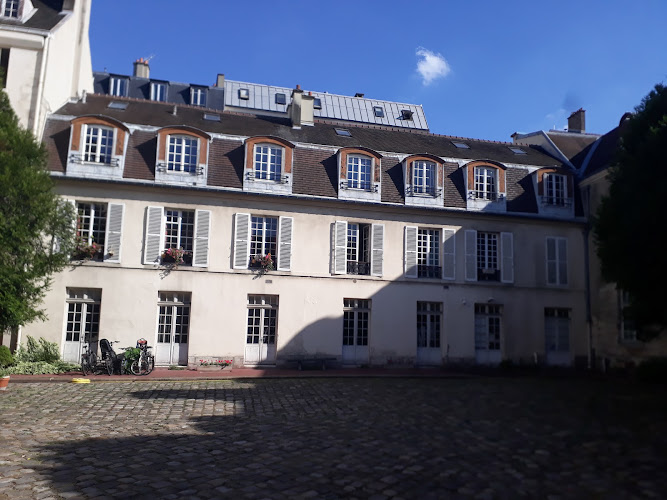
At 13 rue Scipion in the 5th arrondissement, the Hôtel Scipion stands as an extraordinary architectural achievement and the first building in Paris constructed with the revolutionary brick and stone combination that would transform French residential architecture. Built beginning in 1565 by Scipion Sardini, the Italian banker to Queen Catherine de Médicis, this magnificent Renaissance mansion demonstrates how foreign architectural expertise could enhance French building traditions while establishing new standards for aristocratic residential design.
<\!-- /wp:paragraph --><\!-- wp:paragraph -->
Sardini\u2019s remarkable success story—from modest Tuscan origins to becoming one of France\u2019s wealthiest financiers through service to Catherine de Médicis—inspired contemporary observers to quip: “Once a sardine, now a big whale: this is how France fattens little Italian fish.” This transformation from immigrant to architectural patron reflects broader patterns of cultural exchange that enriched French Renaissance culture.
<\!-- /wp:paragraph --><\!-- wp:heading {"level":3} -->
Architectural pioneering: Paris\u2019s first brick and stone construction
<\!-- /wp:heading --><\!-- wp:paragraph -->
The Hôtel Scipionu2019s groundbreaking use of brick and stone construction, utilizing materials “extracted and carved in Paris itself,” established new precedents for Parisian architecture while demonstrating how innovative building techniques could achieve both aesthetic beauty and structural excellence. This construction innovation would later influence iconic Parisian developments including Place Dauphine and Place des Vosges.
<\!-- /wp:paragraph --><\!-- wp:parameter --><\!-- wp:paragraph -->
The distinctive red brick Renaissance gallery, supported by six full-circle stone arcades around a vast paved courtyard surrounded by spruces, creates majestic Italian-style architecture that introduced Renaissance spatial concepts and decorative approaches to Parisian residential design while establishing models for future aristocratic architecture.
<\!-- /wp:paragraph --><\!-- wp:heading {"level":3} -->
Della Robbia-inspired terracotta medallions
<\!-- /wp:heading --><\!-- wp:parameter --><\!-- wp:paragraph -->
The mansion\u2019s most artistic treasures are the remarkable terracotta medallions in high bas-relief that originally decorated the Renaissance gallery, inspired by the art of Girolamo della Robbia. Though partially destroyed over time, four medallions were restored in the 1970s, depicting figures including an old bearded man, a woman in dress and necklace, a warrior (possibly alluding to Scipio Africanus), and a woman with bare breast.
<\!-- /wp:parameter --><\!-- wp:paragraph -->
These sculptural programs demonstrate how Italian Renaissance decorative arts could be successfully integrated with French architectural traditions, creating comprehensive artistic environments that celebrated both classical heritage and contemporary aristocratic culture through sophisticated iconographic programs.
<\!-- /wp:paragraph --><\!-- wp:heading {"level":3} -->
Historic monument recognition and preservation legacy
<\!-- /wp:heading --><\!-- wp:parameter --><\!-- wp:paragraph -->
The mansion\u2019s early recognition as a historic monument—with the Renaissance gallery classified in 1899 and the street façade listed in 1969—reflects understanding of its crucial role in French architectural development and its significance as one of Paris\u2019s finest Renaissance residential achievements. This early preservation demonstrates the building\u2019s exceptional architectural and historical importance.
<\!-- /wp:paragraph /><\!-- wp:parameter --><\!-- wp:paragraph -->
The recent transition from institutional use to educational function, with the International Fashion Academy scheduled to occupy the Scipion campus from September 2025, demonstrates how historic residential architecture can be adapted to serve contemporary educational needs while preserving architectural integrity and cultural significance.
<\!-- /wp:parameter --><\!-- wp:heading {"level":3} -->
Catherine de Médicis\u2019 cultural circle and Italian influence
<\!-- /wp:heading --><\!-- wp:parameter --><\!-- wp:paragraph -->
Scipion Sardini\u2019s position within Catherine de Médicis\u2019 entourage reflects the broader cultural exchange that characterized French Renaissance court life, where Italian expertise in banking, arts, and architecture enhanced French cultural development while creating lasting institutions and architectural achievements that influenced French civilization for centuries.
<\!-- /wp:paragraph /><\!-- wp:parameter --><\!-- wp:paragraph -->
For visitors to the Quartier latin interested in Renaissance architecture, Italian cultural influence in France, or innovative building techniques, the Hôtel Scipion offers an exceptional encounter with 16th-century architectural innovation and cultural exchange. The mansion proves that great residential architecture emerges when foreign expertise meets local building traditions, creating architectural synthesis that establishes new standards for design excellence while influencing broader architectural development through innovative construction techniques and decorative programs that honor both historical precedent and contemporary artistic achievement.
<\!-- /wp:paragraph -->