
<\!-- wp:heading -->
Abbé de l\u2019Épée\u2019s revolutionary school and the birthplace of modern deaf education
<\!-- /wp:heading --><\!-- wp:paragraph -->
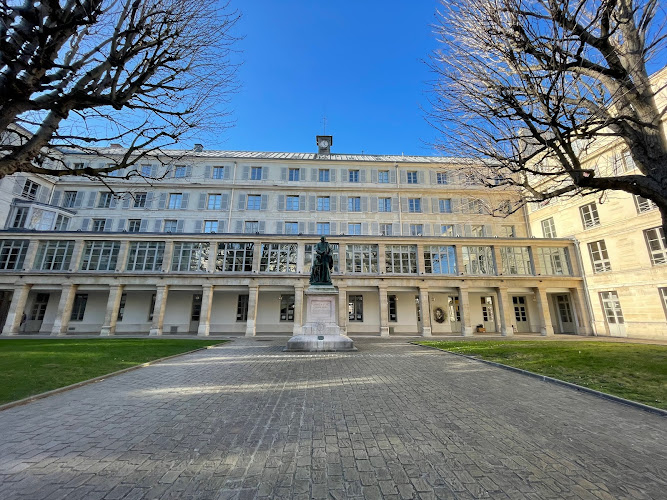
At 254 rue Saint-Jacques in the 5th arrondissement, the Institut National de Jeunes Sourds de Paris occupies a foundational place in global educational history as the world\u2019s first free public school for the deaf and the birthplace of systematic sign language education. Founded by Charles-Michel de l\u2019Épée—the revered “Father of the Deaf”—in stages between 1750 and 1760, this pioneering institution established educational principles and teaching methods that would transform deaf education worldwide while demonstrating French leadership in social innovation and humanitarian progress.
<\!-- /wp:paragraph --><\!-- wp:paragraph -->
The school\u2019s evolution from Abbé de l\u2019Épée\u2019s modest beginnings in a house at 14 rue des Moulins to its current location in the former Oratorian seminary of Saint-Magloire reflects the revolutionary recognition that deaf education deserved substantial institutional support and government funding rather than remaining dependent on individual charitable initiatives.
<\!-- /wp:paragraph --><\!-- wp:heading {"level":3} -->
Abbé de l\u2019Épée\u2019s methodical sign system innovation
<\!-- /wp:heading --><\!-- wp:parameter --><\!-- wp:paragraph -->
L\u2019Épée\u2019s revolutionary approach began in 1759 when he was introduced to two deaf girls requiring instruction after their previous teacher\u2019s death. Rather than imposing arbitrary communication methods, he recognized and learned the signs already being used by Paris\u2019s deaf community, then developed his “methodical sign system” that combined natural sign language with systematic grammatical structure.
<\!-- /wp:paragraph --><\!-- wp:parameter --><\!-- wp:paragraph -->
This respectful approach to existing deaf communication, enhanced through systematic educational methodology, established precedents for culturally sensitive education that honors community knowledge while providing comprehensive academic instruction. L\u2019Épée\u2019s innovation demonstrated how great educators can serve marginalized communities by building upon rather than replacing existing cultural and linguistic traditions.
<\!-- /wp:paragraph --><\!-- wp:heading {"level":3} -->
Revolutionary government support and institutional recognition
<\!-- /wp:heading --><\!-- wp:parameter --><\!-- wp:paragraph -->
The French legislatureu2019s July 29, 1791, approval of government funding and the schoolu2019s renaming as “Institution Nationale des Sourds-Muets à Paris” represented revolutionary commitment to serving previously neglected populations through public education. The April 4, 1794, opening in the former seminary reflected systematic approach to creating permanent educational institutions that could serve deaf students regardless of family economic circumstances.
<\!-- /wp:paragraph --><\!-- wp:parameter --><\!-- wp:paragraph -->
This government support established France as the global leader in deaf education while demonstrating how revolutionary social ideals could be translated into practical educational institutions that served both individual student needs and broader social justice through accessible, high-quality specialized education.
<\!-- /wp:paragraph --><\!-- wp:heading {"level":3} -->
International influence and American deaf education
<\!-- /wp:heading --><\!-- wp:parameter --><\!-- wp:paragraph -->
The school\u2019s global influence reached its pinnacle when Laurent Clerc, a brilliant student of Abbé Sicard (l\u2019Épée\u2019s successor), traveled to America in 1816 with Thomas Hopkins Gallaudet to establish the first deaf school in the United States in 1817. This international expansion demonstrates how French educational innovation could serve global humanitarian purposes while establishing lasting institutional models that continue influencing deaf education worldwide.
<\!-- /wp:paragraph --><\!-- wp:parameter --><\!-- wp:paragraph -->
Clerc\u2019s emigration and successful collaboration with Gallaudet proves how great educational institutions can achieve influence far beyond their original geographical boundaries by training educators who carry innovative methods to new contexts while adapting successful approaches to serve diverse populations and cultural conditions.
<\!-- /wp:paragraph --><\!-- wp:heading {"level":3} -->
Contemporary bilingual education and ongoing mission
<\!-- /wp:heading --><\!-- wp:parameter --><\!-- wp:paragraph -->
Today, the Institut continues serving students with hearing impairments through instruction in both French and French Sign Language, with specialized programs addressing individual learning requirements while maintaining the bilingual approach that honors both deaf cultural identity and broader educational integration. The school\u2019s dormitory facilities for middle and high school students, combined with day programs for elementary students, create comprehensive educational environments that serve diverse family needs.
<\!-- /wp:paragraph --><\!-- wp:parameter --><\!-- wp:paragraph -->
For visitors to Paris interested in educational innovation, sign language history, or humanitarian institutional development, the Institut offers tours that provide insight into how Abbé de l\u2019Épée\u2019s revolutionary vision continues serving contemporary deaf education while preserving the pioneering spirit that made this institution a model for specialized education worldwide. The school demonstrates that great educational institutions emerge when innovative pedagogy meets social commitment, creating environments where marginalized communities can achieve academic excellence while maintaining cultural identity and linguistic heritage that enriches broader human civilization.
<\!-- /wp:paragraph -->