
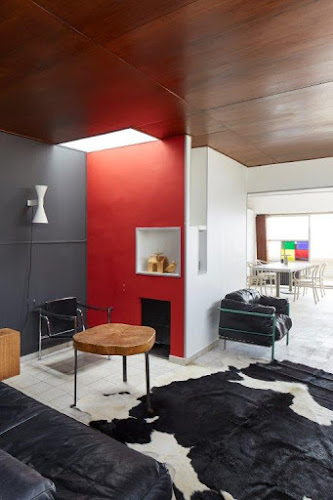
Immeuble Molitor
Le Corbusier studio apartment is a Paris Monument Culturel landmark located in the 16 arrondissement. Table of ContentsLe Corbusier’s glass revolution where modernist theory became residential realityFive Points architecture and residential innovationPersonal residence and architectural laboratoryUNESCO recognition and contemporary architectural educationEssential informationGlass architecture revolution creates residential modernist cathedralNearby in 16 Le Corbusier’s glass revolution where […]
Le Corbusier studio apartment is a Paris Monument Culturel landmark located in the 16 arrondissement.
Table des matières
- Le Corbusier’s glass revolution where modernist theory became residential reality
- Five Points architecture and residential innovation
- Personal residence and architectural laboratory
- UNESCO recognition and contemporary architectural education
- Essential information
- Glass architecture revolution creates residential modernist cathedral
- Nearby in 16
Le Corbusier’s glass revolution where modernist theory became residential reality
At 24 rue Nungesser et Coli in the 16th arrondissement, Immeuble Molitor stands as Le Corbusier and Pierre Jeanneret’s 1931-1934 revolutionary achievement—the first all-glass apartment block in architectural history—where eight storeys of floor-to-ceiling glazing demonstrated how modernist principles could serve practical residential development while creating Le Corbusier’s personal 240-square-meter duplex apartment-studio on the top two floors. This extraordinary building proves how architectural theory can achieve practical residential success when innovative design serves both immediate living comfort and long-term influence on international residential architecture through construction that embodies Four Points of Modern Architecture while creating optimal living environments that serve both family life and professional artistic work within unified architectural frameworks.
Five Points architecture and residential innovation
The building’s embodiment of Le Corbusier’s modernist principles—free floor plan, column structure replacing load-bearing walls, free facade, and roof garden—within practical residential development demonstrated how architectural theory could serve both immediate housing needs and broader building industry transformation through construction techniques that proved modernist ideology could achieve commercial residential success while maintaining design excellence worthy of architectural pilgrimage and UNESCO World Heritage recognition. This theoretical application proved that exceptional residential architecture emerges when innovative design principles serve both individual living requirements and collective architectural advancement.
Personal residence and architectural laboratory
Le Corbusier’s residence within his own architectural creation from 1934 until his 1965 death created unique opportunity for architect to experience daily living within modernist design while continuing architectural development through personal encounter with residential functionality that informed ongoing theoretical development and practical building improvement. This residential experience proved that exceptional architects benefit from living within their own design innovations through daily use that reveals both successes and necessary refinements that improve subsequent architectural projects through practical knowledge gained from extended residential occupation of innovative building techniques.
UNESCO recognition and contemporary architectural education
The 2016 UNESCO World Heritage inscription alongside sixteen other Le Corbusier works recognizes this building’s exceptional significance in documenting modernist residential development while acknowledging its continuing influence on contemporary architectural education through preserved residential environments that enable ongoing study of Le Corbusier’s living and working methods. Today’s operation as public museum within Le Corbusier’s personal residence demonstrates how architect homes can achieve ongoing cultural relevance through adaptive programming that maintains both domestic scale and educational function, proving that exceptional residential architecture transcends private family use to become cultural institutions serving architectural education.
Essential information
- Architects: Le Corbusier and Pierre Jeanneret
- Construction: 1931-1934
- Innovation: First all-glass apartment block in architectural history
- Le Corbusier residence: 240-square-meter duplex (7th-8th floors)
- UNESCO status: World Heritage Site (2016)
- Current access: Fondation Le Corbusier museum tours
Glass architecture revolution creates residential modernist cathedral
Immeuble Molitor embodies the extraordinary moment when Le Corbusier’s modernist theory achieved practical residential reality through revolutionary all-glass construction that established new possibilities for urban apartment living while creating the architect’s personal residence-laboratory where daily living within innovative design validated theoretical principles through 31 years of personal architectural experience. For modernist architecture enthusiasts, residential design admirers, or anyone interested in how architectural theory can achieve practical living success, this glass apartment revolution offers an unparalleled encounter with residential innovation excellence, proving that the finest residential architecture achieves immortality through ongoing cultural service rather than mere historical preservation.