
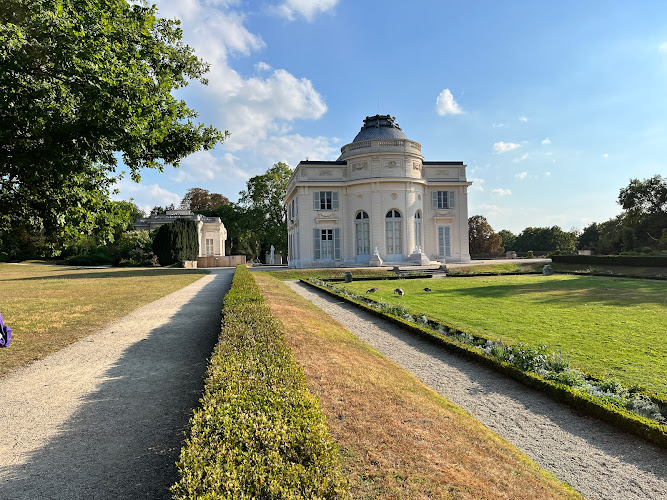
Château de Bagatelle
Parc Bagatelle – la Roseraie is a Paris Jardin landmark located in the 16 arrondissement. Table of ContentsRoyal wager creates botanical paradise in record construction timeAnglo-Chinese garden revolution and aesthetic rebellionMillion-livre investment and architectural collaborationInternational rose competition and botanical excellenceMunicipal preservation and contemporary botanical missionEssential informationGarden and cultural significanceRoyal competition creates eternal botanical heritageNearby in […]
Parc Bagatelle – la Roseraie is a Paris Jardin landmark located in the 16 arrondissement.
Table des matières
- Royal wager creates botanical paradise in record construction time
- Anglo-Chinese garden revolution and aesthetic rebellion
- Million-livre investment and architectural collaboration
- International rose competition and botanical excellence
- Municipal preservation and contemporary botanical mission
- Essential information
- Garden and cultural significance
- Royal competition creates eternal botanical heritage
- Nearby in 16
Royal wager creates botanical paradise in record construction time
Within the Bois de Boulogne’s 24-hectare sanctuary in the 16th arrondissement, Château de Bagatelle stands as the extraordinary result of an 1775 wager between Marie Antoinette and her brother-in-law the Comte d’Artois, who achieved the impossible by constructing this Anglo-Chinese garden paradise in just 64 days with architect François-Joseph Bélanger and 900 laborers working around the clock. This remarkable achievement demonstrates how royal competition can inspire architectural innovation that creates lasting cultural institutions, where personal rivalry generated artistic collaboration that transcended immediate construction challenges to establish botanical gardens that continue serving public education and aesthetic inspiration 250 years after their audacious creation through royal determination that proved seemingly impossible deadlines can inspire rather than compromise exceptional results.
Anglo-Chinese garden revolution and aesthetic rebellion
Million-livre investment and architectural collaboration
International rose competition and botanical excellence
Municipal preservation and contemporary botanical mission
Essential information
- Royal wager: 1775 between Marie Antoinette and Comte d’Artois
- Construction: 64 days with 900 workers (over 1 million livres investment)
- Architect: François-Joseph Bélanger
- Garden designer: Thomas Blaikie (Scottish landscape architect)
- Taille: 24 hectares within Bois de Boulogne
- Municipal acquisition: 1905 from Sir John Murray-Scott
- Restoration: Jean-Claude Nicolas Forestier (city gardens curator)
- Rose competition: World’s oldest (since 1907)
Garden and cultural significance
- Design style: Anglo-Chinese garden challenging French classical tradition
- Architectural follies: Chinese pagodas, grottos, artificial ruins, waterfalls
- Botanical collections: 10,000 rose bushes from 1,200 species
- Scientific mission: One of Paris’s four botanical gardens
- Public access: Royal pleasure garden transformed into municipal parc
Royal competition creates eternal botanical heritage
Château de Bagatelle embodies the extraordinary power of royal competition to generate lasting cultural institutions, where Marie Antoinette’s 64-day construction challenge inspired the Comte d’Artois to create an Anglo-Chinese garden paradise that transcended immediate royal entertainment to become one of the world’s most important botanical research centers and rose competition venues serving international horticultural advancement. This remarkable garden proves that competitive royal projects can achieve lasting public benefit when unlimited resources meet visionary design, creating landscapes that serve both immediate aesthetic pleasure and long-term scientific education through botanical collections that honor both historical garden heritage and contemporary research requirements. For garden design enthusiasts, botanical researchers, or anyone interested in how royal rivalry can generate lasting cultural institutions, this Bois de Boulogne sanctuary offers an unparalleled encounter with landscape excellence, where Chinese pagodas, romantic grottos, and 10,000 rose bushes create garden poetry that demonstrates how exceptional landscape architecture emerges when unlimited financial commitment meets international design expertise and botanical knowledge, proving that the finest gardens achieve immortality through ongoing scientific and cultural service rather than mere historical preservation, creating public spaces where royal pleasure gardens continue serving contemporary botanical education and aesthetic inspiration within romantic settings that honor both French garden heritage and international horticultural collaboration through landscape beauty that transcends original royal entertainment purpose to become essential cultural resources serving ongoing public education and scientific advancement.