
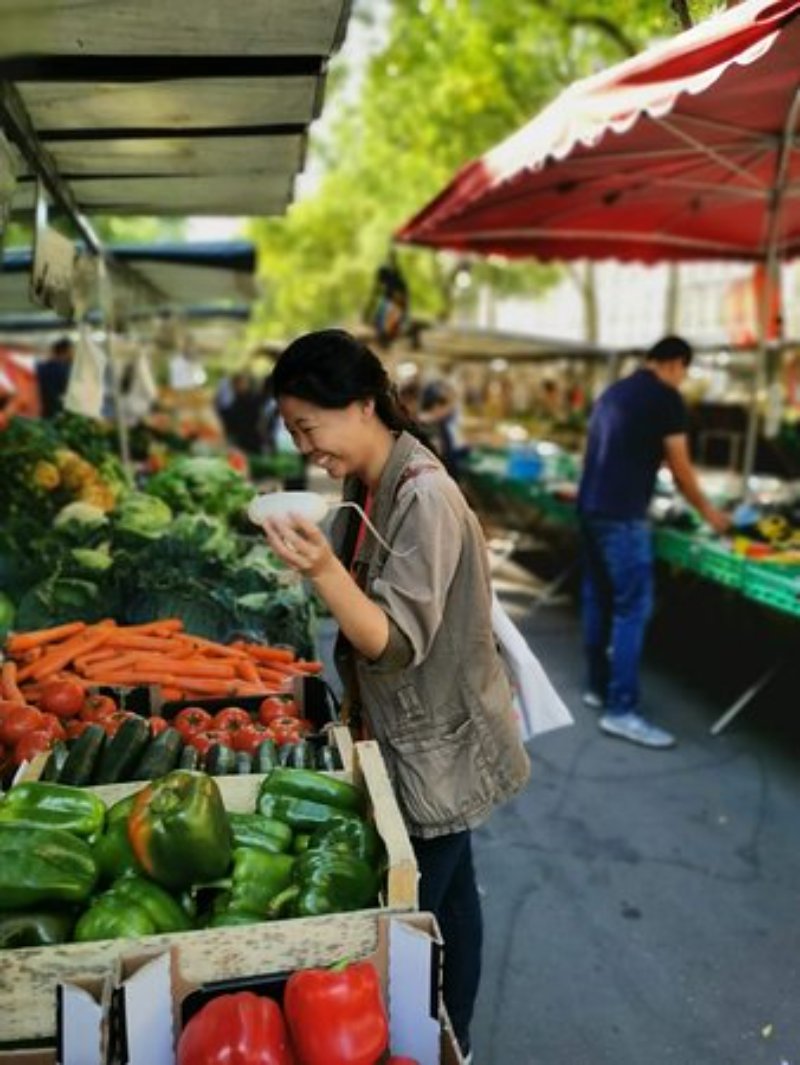
Paris runs more than 80 food markets, and the single most useful thing to know about all of them is that almost none open on Monday. The roving open-air markets (marchés découverts) set up on fixed days between roughly 7am and early afternoon, then vanish by mid-afternoon. The covered halls (marchés couverts) such as the Marché des Enfants Rouges and Marché Saint-Quentin keep longer shop-style hours from Tuesday to Sunday. If you want the shortest answer: go on a Sunday morning, when Marché Bastille, Marché Monge and the Raspail organic market are all running at once.
Some links on this page are affiliate links. If you book a tour through them we may earn a commission at no extra cost to you. This does not affect which markets we recommend.
Which farmers market in Paris is open today?
Nearly every Paris food market closes on Monday. From Tuesday to Sunday the roving markets rotate by neighbourhood, so the question is never whether a market is open but which one. This table shows the major markets by day.
Jour | Roving open-air markets | Covered halls and market streets |
|---|---|---|
Lundi | None. This is the citywide closing day. | Closed, including Enfants Rouges and Saint-Quentin. |
Mardi | Raspail (6th, traditional), Maubert (5th), Aligre (12th) | Enfants Rouges, Saint-Quentin, Beauvau, Mouffetard, Montorgueil |
Mercredi | Monge (5th), Président Wilson (16th), Aligre (12th) | Enfants Rouges, Saint-Quentin, Beauvau, Mouffetard, Montorgueil |
Thursday | Bastille (11th), Saxe-Breteuil (7th), Maubert (5th), Aligre (12th) | Enfants Rouges (late, to 9.30pm), Saint-Quentin, Beauvau, Mouffetard |
Vendredi | Raspail (6th, traditional), Monge (5th), Aligre (12th) | Enfants Rouges, Saint-Quentin, Beauvau, Mouffetard, Montorgueil |
Samedi | Saxe-Breteuil (7th), Président Wilson (16th), Maubert (5th), Batignolles organic (17th), Aligre (12th) | Enfants Rouges, Saint-Quentin, Beauvau, Mouffetard, Montorgueil |
Dimanche | Bastille (11th), Monge (5th), Raspail organic (6th), Aligre (12th) | Enfants Rouges (to 5pm), Saint-Quentin (to 1.30pm), Beauvau, Mouffetard |
What is the difference between a marché, a covered market, and a market street?
Paris has three different things that all get called “farmers markets” in English, and they behave differently. A roving market appears on set mornings and is gone by afternoon. A covered market is a permanent hall with fixed traders and shop hours. A market street is an ordinary street lined with permanent food shops, open whenever those shops are, with no stalls to catch. Confusing the three is the most common way visitors turn up to an empty pavement.
Taper | French name | How it works | Exemples |
|---|---|---|---|
Roving open-air market | Marché découvert | Stalls set up on fixed mornings, roughly 7am to early afternoon, then pack away completely. | Bastille, Monge, Saxe-Breteuil, Raspail, Président Wilson, Maubert |
Covered market | Marché couvert | A permanent hall with fixed traders. Longer, shop-style hours Tuesday to Sunday, often with a midday break. | Enfants Rouges, Saint-Quentin, Beauvau |
Market street | Rue commerçante | A street of permanent bakeries, cheesemongers and greengrocers. No stalls, no set market day. | Rue Montorgueil, Rue Cler, Rue des Martyrs |
Which are the best farmers markets in Paris?
These are the markets worth crossing the city for, with the day you need to show up. Paris spreads its food markets across every arrondissement, so most Parisians simply walk to whichever one is trading that morning rather than travelling for a particular name. As a visitor you can afford to be choosier. Closing times shift by season and by trader, so treat the hours as the shape of the morning rather than a timetable.
Marché | Arrondissement | Days | Nearest métro | Known for |
|---|---|---|---|---|
Marché Bastille | 11th | Thu, Sun | Bastille / Richard-Lenoir | The big one. Around 100 traders along Boulevard Richard-Lenoir. |
Marché d’Aligre | 12th | Tue to Sun | Ledru-Rollin | The only Paris market running six days a week. Cheapest produce in the city. |
Marché Beauvau | 12th | Tue to Sun | Ledru-Rollin | The covered hall at Place d’Aligre. Fish, meat, cheese, pastry. |
Marché des Enfants Rouges | 3rd | Tue to Sun | Filles du Calvaire | Oldest covered market in Paris, 1615. Hot food stalls, not a produce run. |
Marché Saint-Quentin | 10th | Tue to Sun | Gare de l'Est | Largest covered market in Paris. A Baltard-style iron and glass hall. |
Marché Raspail (organic) | 6ème | Soleil | Rennes | About 50 certified organic stalls. The famous one. |
Marché Raspail (traditional) | 6ème | Tue, Fri | Rennes | Same boulevard, ordinary produce market, far quieter. |
Marché Saxe-Breteuil | 7ème | Thu, Sat | Ségur / Duroc | Stalls framed by the Eiffel Tower straight down the avenue. |
Marché Président Wilson | 16ème | Wed, Sat | Iéna / Alma-Marceau | Where Paris chefs shop. Around 700m of stalls. |
Marché Mongé | 5th | Wed, Fri, Sun | Place Mongé | Small, pretty, on a leafy square in the Latin Quarter. |
Marché Maubert | 5th | Tue, Thu, Sat | Maubert-Mutualité | A genuine neighbourhood market with no tourist overlay. |
Marché biologique des Batignolles | 17th | Sat | Place de Clichy | All-organic, on the boulevard median. |
Marché Dejean | 18ème | Tue to Sun | Château Rouge | West African produce, fish and spices in the Goutte d’Or. |
Marché Bastille (11th arrondissement): the biggest morning in Paris
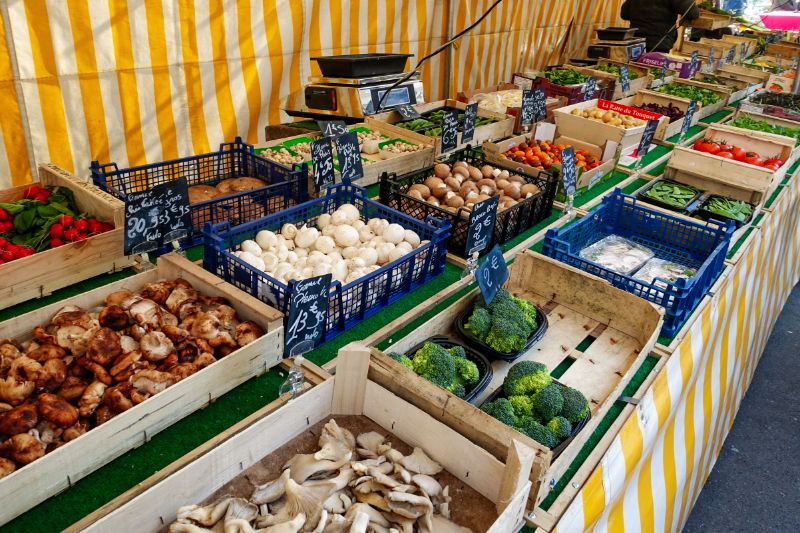
Marché Bastille runs on Thursday and Sunday mornings along the tree-lined centre of Boulevard Richard-Lenoir, starting near Place de la Bastille. Around a hundred traders sell fruit and vegetables, fish, meat, cheese, bread and flowers, which makes it the most complete single market visit in the city. Sunday is the fuller day and stays open slightly later than Thursday. Come before 11am if you want to move at your own pace, because the middle of a Sunday here is genuinely crowded. More on the surrounding markets in our guide to the Bastille and Popincourt markets.
Marché d’Aligre and Marché Beauvau (12th arrondissement): the six-day market
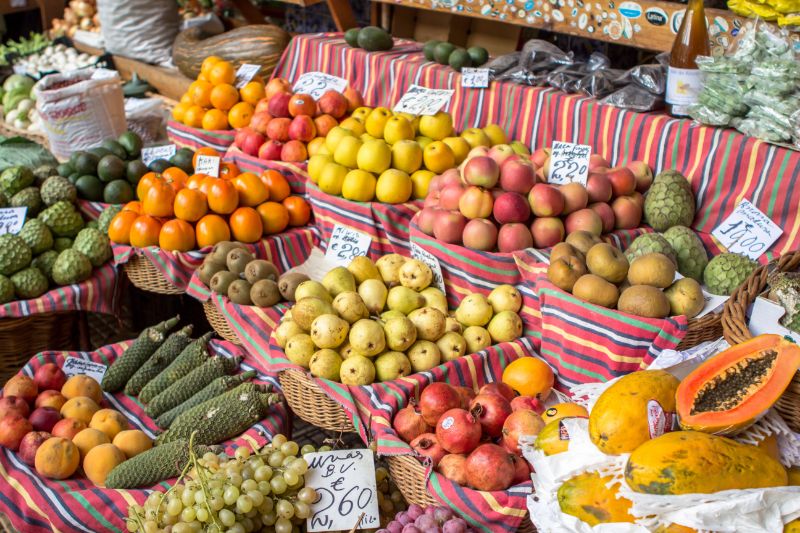
Place d’Aligre in the 12th arrondissement holds two markets at once. The open-air Aligre market spreads along Rue d’Aligre from Tuesday to Sunday, which makes it the only Paris market you can rely on six mornings a week, and it has a reputation as the cheapest produce in the city. Inside the hall on the square sits Marché Beauvau, a covered market with fish, meat, cheese and pastry counters that keeps shop hours with a long midday break. A small flea market shares the square. Full detail in our guide to the Beauvau market and Rue d’Aligre.
Marché des Enfants Rouges (3rd arrondissement): the oldest covered market
Hidden behind a gate on Rue de Bretagne in the Marais, the Marché des Enfants Rouges has been trading since 1615 and is the oldest covered market in Paris. It takes its name from an orphanage that stood on the site, whose children wore red. Set expectations correctly before you go: this is now mostly a lunch destination, with Moroccan, Japanese, Italian and Lebanese counters and shared tables, plus a handful of produce stalls. It opens Tuesday to Sunday, runs late on Thursday, and closes Monday. Read our full guide to the Marché des Enfants Rouges.
Marché Saint-Quentin (10th arrondissement): the largest covered market, by Gare de l’Est
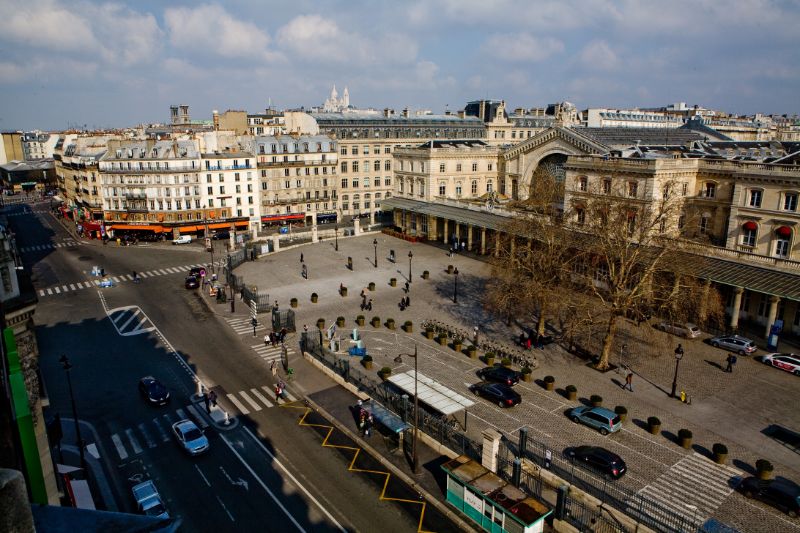
The covered market to head for near Gare de l’Est is Marché Saint-Quentin at 85 bis Boulevard de Magenta, a triangular iron-and-glass hall in the Baltard style and the largest covered market in Paris. It sits within a short walk of both Gare de l’Est and Gare du Nord, which makes it the obvious stop if you have an hour before a train. Alongside the fruit, vegetable, cheese, fish and butcher stalls there are Italian, Portuguese, Lebanese, Moroccan, Asian and Brazilian counters selling food to eat in or take away. It opens Tuesday to Sunday and closes Monday, with a short Sunday.
Marché Raspail (6th arrondissement): the organic Sunday market
Boulevard Raspail hosts two separate markets that visitors regularly mix up. On Sunday morning it becomes the Marché biologique Raspail, roughly 50 certified organic stalls and the best-known organic market in the city, busy and not cheap. On Tuesday and Friday the same stretch runs an ordinary traditional produce market that is far quieter and much less expensive. If someone recommends “the Raspail market” for its organic produce, they mean Sunday. Our guide to the Marché Raspail covers both.
Marché Saxe-Breteuil (7th arrondissement): the Eiffel Tower view
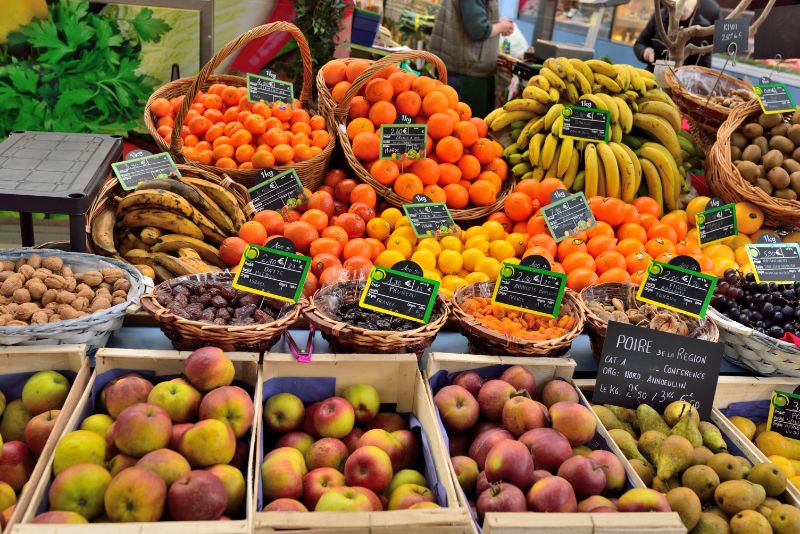
Marché Saxe-Breteuil sets up on Avenue de Saxe on Thursday and Saturday mornings, and the reason to pick it over a closer market is the sightline: the stalls and the plane trees converge on the Eiffel Tower straight down the avenue. Saturday is the bigger of the two days. It is a working neighbourhood market rather than a tourist attraction, so the produce is good and the prices are ordinary. See our guide to the Marché Saxe-Breteuil.
Marché Monge and Marché Maubert (5th arrondissement): the Latin Quarter pair
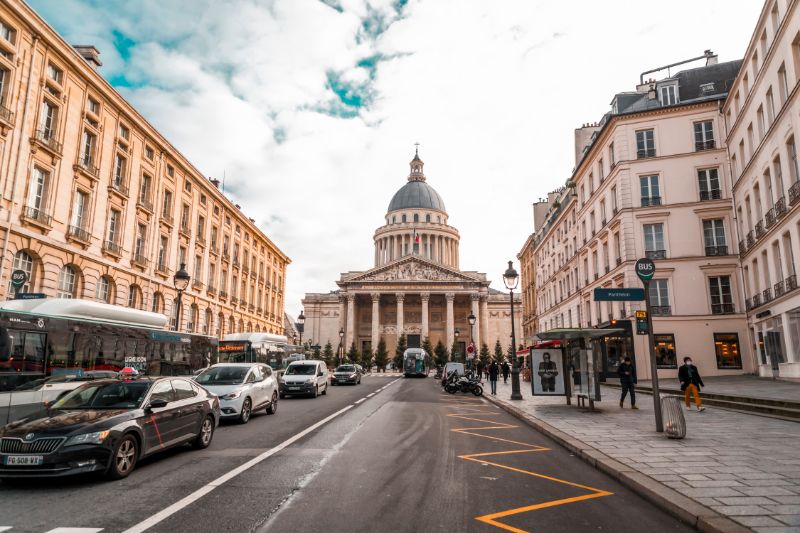
The 5th runs two markets on opposite schedules, which between them cover most of the week. Marché Monge takes over Place Monge on Wednesday, Friday and Sunday, on a small square shaded by trees, and it is the prettier of the two. Marché Maubert runs Tuesday, Thursday and Saturday on Place Maubert and is the plainer, more local option. Between them you can reach a Latin Quarter market on six mornings out of seven. Our guides cover Marché Monge and the wider Quartier latin.
Two markets for a specific errand
Marché Président Wilson in the 16th arrondissement, on Wednesday and Saturday, is the market Paris chefs shop at. It stretches roughly 700 metres along Avenue du Président-Wilson near the Trocadéro, and it is where you go for unusual heritage vegetables rather than a cheap weekly shop. Marché Dejean in the Goutte d’Or in the 18th arrondissement, open Tuesday to Sunday around Rue Dejean and the Château Rouge métro, serves the West African community with plantain, manioc, peppers and fish you will not find anywhere else in Paris. The Marché biologique des Batignolles adds a second all-organic option on Saturday mornings on the Boulevard des Batignolles median in the 17th.
Which Paris market streets are worth walking?
Market streets are not markets. They are streets of permanent food shops, which means there is no market day to catch and nothing packs away at 2pm, but also no stalls and no farmer standing behind the produce. They are the better choice if you are shopping on a Monday, when the actual markets are shut, and Parisians use them the same way for the same reason.
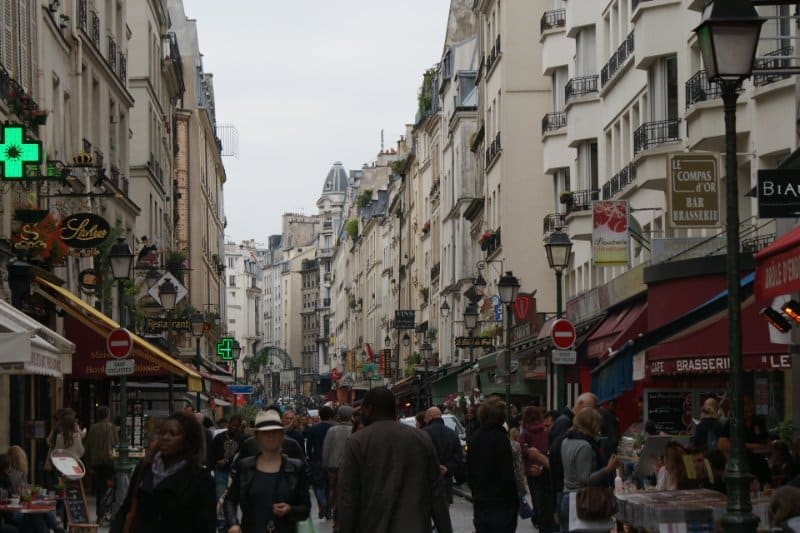
Rue Montorgueil in the 2nd is the oldest and best known of them, a wide pedestrian street beside the old Les Halles with bakeries, cheesemongers, fishmongers, wine shops and produce stands, plus cafe terraces to sit at while you work out what you have bought.
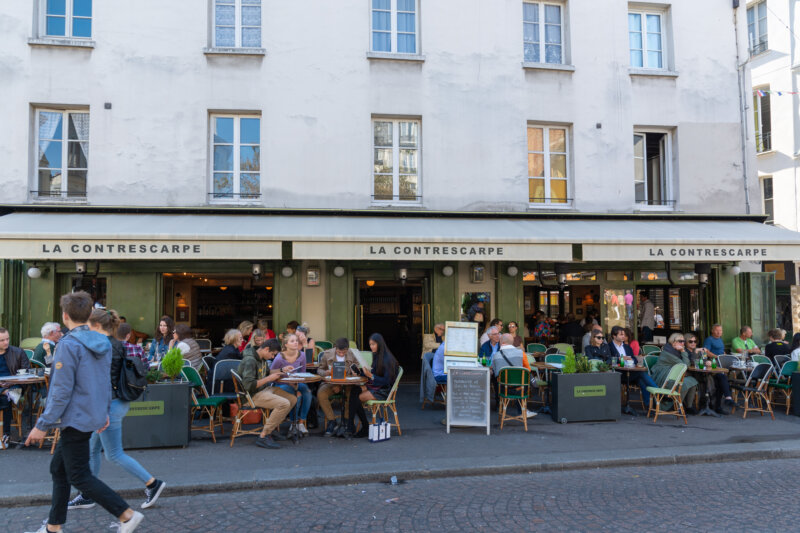
Rue Mouffetard in the 5th is the hybrid case. It is a cobbled market street of permanent shops, but it also carries produce stalls at the lower end from Tuesday to Sunday, roughly 8am to 1pm. It is closed on Monday like the markets, so it is the one market street that does keep a market day.
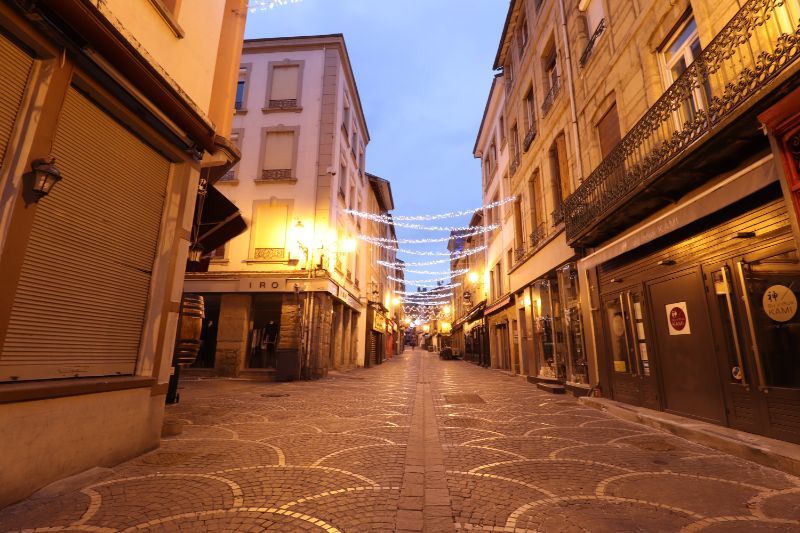
Rue des Martyrs climbs from the 9th towards Montmartre and is a shopping street rather than a market street in the strict sense, with bakeries, chocolate shops, cheesemongers and delicatessens rather than stalls. Rue Cler in the 7th plays the same role near the Eiffel Tower. Both are covered in our guide to the top ten shopping streets in Paris.
What should you buy at a Paris farmers market?
Buy the things that are better here than at a supermarket and that survive a day in a bag: cheese, bread, charcuterie, fruit, and whatever the stall has piled highest, because that is what is in season.
- Cheese. The fromager will ask when you plan to eat it and cut from a wheel accordingly, so answer honestly rather than guessing.
- Bread. Look for the queue rather than the sign. A baker selling a plain baguette de tradition is the safer buy than one selling twenty flavours.
- Fruit and vegetables. Most stalls prefer you not to handle the produce. Point, say the quantity, and let the trader pick.
- Fish and shellfish. Best at the covered halls such as Beauvau and Saint-Quentin, where there is refrigeration, rather than from an open stall late in the morning.
- Charcuterie and roast chicken. The rotisserie stall with potatoes cooking in the drippings underneath is a full lunch for a few euros.
- Wine. A handful of markets carry independent growers, though for range you are better off at a caviste. Our wine tours in Paris guide covers tastings.
How do you build a picnic from a Paris market?
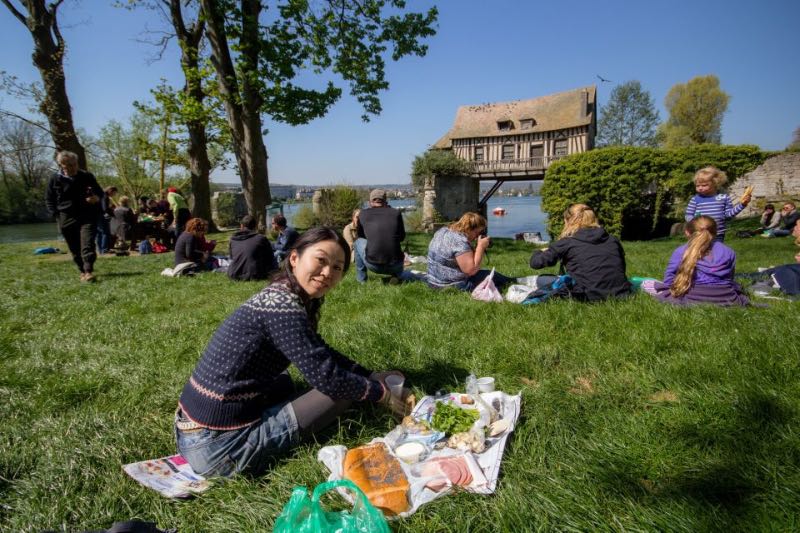
A market picnic works best as four stops in one lane: bread, cheese, something cured or roasted, and fruit. Ask for a sac if you want a bag, bring a small knife if your accommodation has one, and buy the bread last so it stays crisp. Marché Bastille sits a short walk from the Place des Vosges gardens, Marché Monge is minutes from the Jardin des Plantes, and Saxe-Breteuil puts you on the Champ de Mars lawns with the tower in front of you. Our guide to the les meilleurs parcs de Paris has more places to spread out, and the one day in Paris itinerary shows how to fit a market morning around the sights.
Mistakes to avoid at a Paris market
- Turning up on Monday. This is the citywide closing day for markets and covered halls alike. Walk a market street instead.
- Arriving at 1pm. Roving markets start dismantling well before their official closing time, and the best stalls sell out first. Aim for 9am to 11am.
- Assuming the Enfants Rouges is a produce market. It is largely a hot-food hall now, and it disappoints anyone arriving with a shopping list.
- Handling the fruit. On most stalls this is a genuine irritation. Point and ask.
- Carrying only a card. Many smaller traders take cards now, but not all of them, and not always for small amounts. Bring some cash.
- Expecting Sunday afternoon. Sunday is the best market morning of the week and one of the deadest afternoons.
Are guided market tours worth it?
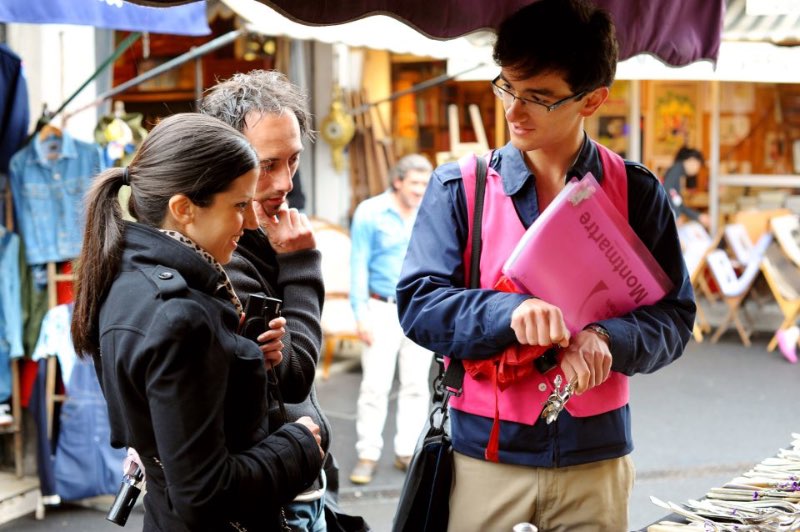
A guided market tour is worth the money if you do not speak French or you want the cheese and charcuterie explained while you taste it, and it is not worth it if you are confident pointing at things and happy to work it out. Most tours combine a market with tastings at nearby shops, run two to three hours, and go out in the morning while the stalls are full. Book the day around the market’s actual opening day rather than the other way round.
- Paris food and market walking tours, which pair a market visit with tastings.
- Cheese and wine tastings in Paris for a shorter, seated alternative.
- Market-to-table cooking classes, where you shop the market and then cook what you bought.
- Marais and Enfants Rouges food walks for the covered-market version.
- Private guided food tours in Paris if you want the pace set to you.
Our own guides to the best food tours in Paris et le best food markets go further, and the food markets hub lists every market we have written up individually.
Paris farmers markets: frequently asked questions
Are Paris farmers markets open on Monday?
No. Monday is the citywide closing day for Paris food markets, and it applies to the covered halls as well as the roving open-air markets. If you are shopping on a Monday, walk a market street such as Rue Montorgueil or Rue Cler, where the shops are permanent.
Which farmers market in Paris is open today?
It depends on the day. Tuesday brings Raspail, Maubert and Aligre. Wednesday has Monge and President Wilson. Thursday has Bastille and Saxe-Breteuil. Friday repeats Raspail and Monge. Saturday has Saxe-Breteuil, President Wilson and the Batignolles organic market. Sunday has Bastille, Monge and the Raspail organic market. Aligre, Enfants Rouges, Saint-Quentin and Beauvau run Tuesday to Sunday.
What time do Paris markets open and close?
Roving open-air markets start around 7am and wind down through the early afternoon, with most traders packing up somewhere between 1.30pm and 3pm depending on the market, the day and the season. Covered halls keep longer shop-style hours, often with a midday break, and close later. Arrive between 9am and 11am for the fullest stalls.
What is the biggest farmers market in Paris?
Marche Bastille is the largest roving open-air market, with around 100 traders along Boulevard Richard-Lenoir on Thursday and Sunday mornings. Marche Saint-Quentin, at 85 bis Boulevard de Magenta in the 10th, is the largest covered market.
What is the oldest market in Paris?
The Marche des Enfants Rouges on Rue de Bretagne in the 3rd, trading since 1615 and the oldest covered market in Paris. It is named after an orphanage that stood on the site whose children wore red. Today it is mostly hot-food stalls rather than a produce market.
Which Paris market is best for organic produce?
The Marche biologique Raspail in the 6th on Sunday mornings, with roughly 50 certified organic stalls, is the best known. The Marche biologique des Batignolles in the 17th offers a smaller all-organic alternative on Saturday mornings.
Is Rue Montorgueil a farmers market?
No. Rue Montorgueil is a market street, meaning a street of permanent food shops rather than a market with stalls and a set market day. The same applies to Rue Cler and Rue des Martyrs. Rue Mouffetard is the in-between case, a market street that also carries produce stalls from Tuesday to Sunday.
Do Paris markets take credit cards?
Many traders do, but not all, and some set a minimum. Bring cash for smaller purchases. Prices are usually marked per kilo, so a stated price is rarely what you pay for a single item.
What we corrected on this page
This guide previously carried several errors that we have now fixed. We are listing them rather than quietly overwriting them, because some of them had been repeated elsewhere.
- The Marché Beauvau was placed near Gare de l’Est. It is at Place d’Aligre in the 12th arrondissement. The covered market near Gare de l’Est is Marché Saint-Quentin.
- The Marché des Enfants Rouges was dated to 1628. It has traded since 1615.
- The Enfants Rouges was called the largest wholesale food market in Paris. It is the oldest covered market and one of the smallest. The largest covered market is Saint-Quentin, and the region’s wholesale market is Rungis, outside the city.
- The Enfants Rouges was also described as a flea market. It is a food market.
- Rue Montorgueil, Rue Mouffetard and Rue des Martyrs were listed as farmers markets. They are market streets, which is a different thing, and the distinction now has its own section.
- Rue Mouffetard was described as a daily market. Its stalls run Tuesday to Sunday and close on Monday.
- Opening days and hours were missing for almost every market on the page. They are now stated for each one.
- Hummus was listed among the seafood. It is not seafood.
Sources and method
Market days, addresses and métro stops were checked against the Paris Convention and Visitors Bureau listings, the Ville de Paris market pages, and each market’s own entry, then cross-checked against at least one independent guide before being stated here.
Two things we could not pin down precisely, and have not guessed at. First, exact closing times vary between sources for most roving markets, typically by an hour, and they also move with the season and with how quickly an individual trader sells out. We have given the shape of the morning rather than a minute. Second, the number of food markets in Paris is usually given as “more than 80”, and the precise current figure changes as markets are added and suspended, so we have not stated one. For the day you are actually going, the Ville de Paris market listing is the authority.
Last updated August 2026. Market days re-verified this month; the Gare de l’Est market was corrected from Marché Beauvau to Marché Saint-Quentin, and the founding date of the Marché des Enfants Rouges was corrected to 1615.
Related Paris guides
- Best food markets in Paris and the full food markets hub.
- Marché hippie, for second-hand rather than food.
- Rue de Rivoli and Le Marais, the district around the Marché des Enfants Rouges.
- Paris on Bastille Day, worth checking before a Sunday visit to Marché Bastille in mid-July.
- Squares of Paris et le Paris monuments guide, for what to see between markets.
- La tour Eiffel, a short walk from both Marché Saxe-Breteuil and Rue Cler.
More tours and tastings, if you would rather be shown around: Paris market and gourmet experiences, small-group Paris food walks, et Paris tastings and cooking experiences.
External references used for market details on this page: the Paris Convention and Visitors Bureau listing for the Marché biologique des Batignolles et le Paris Markets entry for Saxe-Breteuil.

Find Things to Do in Paris
Find Accommodation

Continue Planning Your Paris Trip
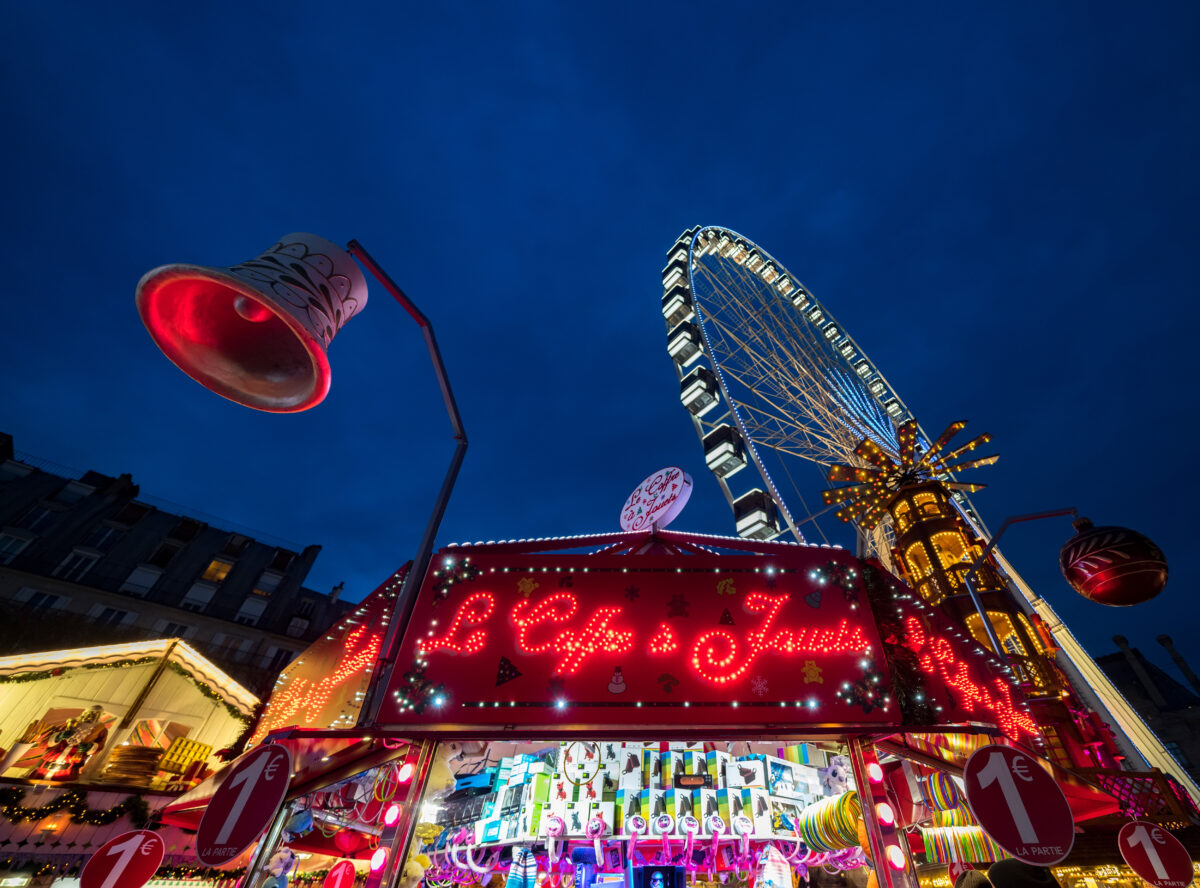
9 Best Christmas Markets in Paris
Nine Paris Christmas markets to wander, from twinkling chalet stalls to mulled wine and Alsace-rooted traditions. Where to…
Read Guide →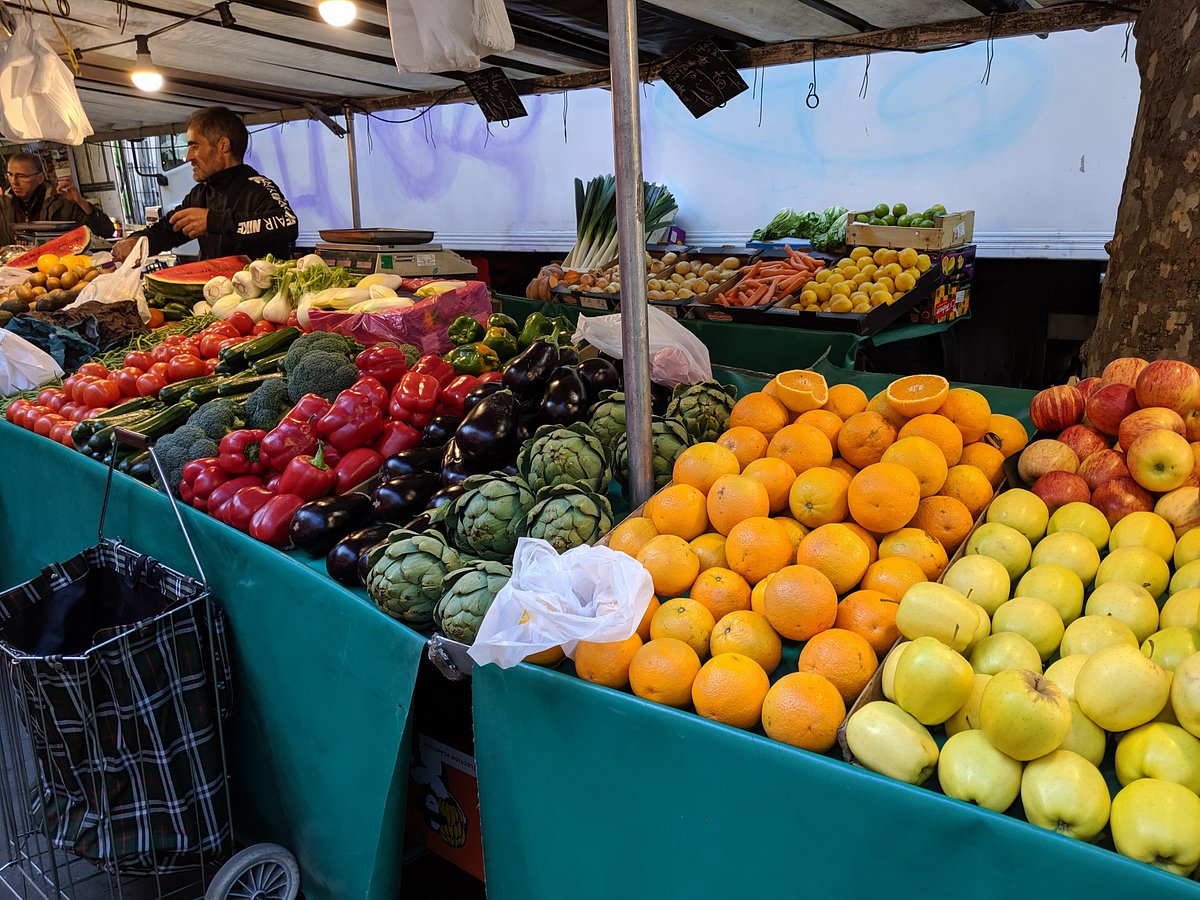
Gourmet Food Markets in Paris: A Culinary Adventure
Paris food markets are cultural experiences in themselves. Start at Marche des Enfants Rouges, the city's oldest covered…
Read Guide →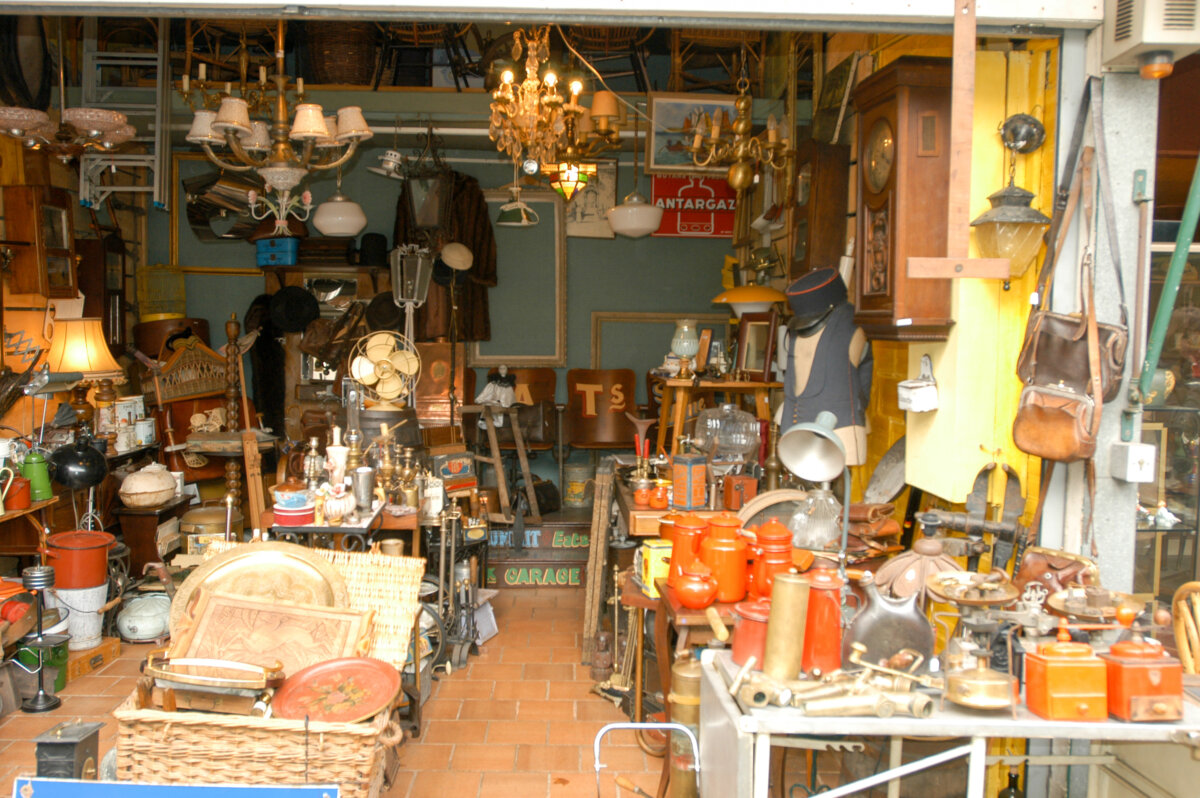
Weekend Adventures: Exploring Local Flea Markets and Brocantes!
Weekend treasure hunting: how to spend a lazy Saturday or Sunday digging for vintage finds and quirky bargains…
Read Guide →