
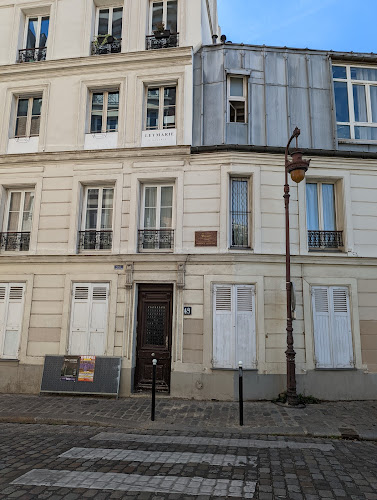
At 13 Rue Ravignan, just below the bustling Place du Tertre in Montmartre, stands a modest building that witnessed one of art history’s most revolutionary moments. The Bateau-Lavoir, a ramshackle artists’ residence, served as the birthplace of Cubism and the studio where Pablo Picasso painted “Les Demoiselles d’Avignon”—the work many consider the first truly modern painting.
## From Piano Factory to Artists’ Paradise
Originally a ballroom and piano factory, the building was transformed in 1889 when it was squatted and divided into 20 small workshops. French poet Max Jacob coined the name “Bateau-Lavoir” because the creaking wooden structure resembled the public clothes-washing boats moored on the Seine—floating laundries where Parisians cleaned their linens.
The living conditions were far from luxurious. The building offered small, unheated rooms distributed along a corridor with a single water source. Artists shared their cramped spaces with armies of cockroaches, working in conditions that would horrify modern tenants. Yet these harsh circumstances fostered an extraordinary creative community.
## Picasso’s Revolutionary Years (1904-1912)
In 1904, young Pablo Picasso rented a studio in the Bateau-Lavoir that would become his artistic laboratory. From 1904 to 1909, he lived in this bohemian sanctuary, working through his Rose Period and developing the revolutionary aesthetic that would become Cubism.
The most significant moment came in 1907 when Picasso completed “Les Demoiselles d’Avignon” within these walls. This radical painting, depicting five female figures with geometric faces influenced by African art, shattered centuries of artistic convention. Art historians consider it the first truly modern painting—the work that launched contemporary art into uncharted territory.
Picasso kept his studio until 1912, and years later remained nostalgic about his time here, saying, “We will all go back to the Bateau Lavoir, the only place where we were really happy.” The rural Montmartre of his youth had provided the perfect incubator for artistic revolution.
## A Community of Creative Rebels
The Bateau-Lavoir attracted a constellation of artistic talents who would reshape modern culture. Maxime Maufra was the first noted artist to take residence around 1890, but after 1904, the building became a magnet for creative rebels:
– **Amedeo Modigliani**: The Italian painter known for his elongated portraits
– **Juan Gris**: Spanish Cubist painter and Picasso’s neighbor
– **Max Jacob**: French poet who named the building
– **André Salmon**: Writer and art critic
– **Van Dongen**: Dutch-French Fauvist painter
– **Pierre Mac Orlan**: Novelist and songwriter
– **Pierre Reverdy**: Surrealist poet
This remarkable community created a creative ecosystem where ideas cross-pollinated, movements were born, and artistic history was written in daily conversations between neighbors.
## The Birth of Cubism
Within the Bateau-Lavoir’s walls, Picasso and his contemporaries developed Cubism—the movement that fractured reality into geometric planes and multiple perspectives. The poverty and camaraderie of the building created ideal conditions for artistic experimentation, where conventional success mattered less than creative breakthrough.
The influence extended beyond painting. Writers, poets, and critics lived alongside visual artists, creating an interdisciplinary dialogue that enriched all creative endeavors. This cross-pollination helped establish the theoretical foundations that supported revolutionary artistic practices.
## Fire, Destruction, and Rebirth
Tragedy struck on May 12, 1970, when fire gutted the original building. Only the facade survived the blaze, destroying the physical spaces where modern art was born. However, the site proved too significant to abandon.
In 1978, the Bateau-Lavoir was completely rebuilt to its original specifications, maintaining the spirit of the original while providing modern amenities. Today, it houses 25 artist studios, continuing its mission as a creative sanctuary. Though visitors cannot tour the interior, the building maintains its role in Montmartre’s artistic ecosystem.
## The Modern Legacy
Current artist residents must join a waiting list to occupy these legendary studios, reflecting the continued desirability of this historic creative address. The community of Montmartre has preserved the building’s artistic mission, ensuring that new generations of artists can follow in Picasso’s footsteps.
The rebuilt Bateau-Lavoir proves that creative spaces can transcend their physical limitations. While the original walls that witnessed Cubism’s birth are gone, the spirit of artistic innovation continues within new structures built on sacred creative ground.
## Visiting the Bateau-Lavoir
**Address:** 13 Rue Ravignan, Place Émile Goudeau, 75018 Paris
**Metro:** Abbesses (Line 12), then 5-minute walk uphill
**Viewing:** Exterior only—interior studios are private
**Nearby:** Place du Tertre (2 minutes), Moulin de la Galette (5 minutes)
**Historical Context:** Birthplace of Cubism and modern art
## The Pilgrimage Site of Modern Art
Standing before the Bateau-Lavoir creates a profound connection to art history’s pivotal moment. Here, in conditions of beautiful poverty, young revolutionaries changed how humanity sees and represents reality. The building’s modest exterior belies its monumental importance—a reminder that the most significant cultural revolutions often begin in the humblest circumstances.
## Eternal Creative Spirit
The Bateau-Lavoir embodies Montmartre’s enduring appeal to artists: a place where creative passion matters more than material comfort, where artistic community transcends individual success, and where revolutionary ideas can flourish in unexpected circumstances.
Today’s visitors experience the same creative energy that inspired Picasso, understanding why he remained forever nostalgic for his time in this magical building where modern art was born.