
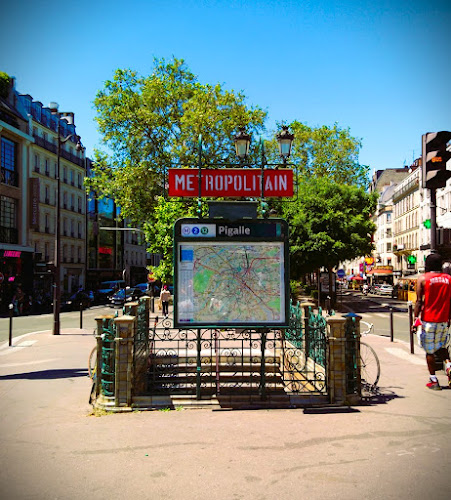
Édicule Guimard of the Pigalle station
Pigalle is a Paris Station De Transit landmark located in the 18 arrondissement. Table of ContentsArt Nouveau genius transforms urban infrastructure into artistic heritageModular innovation and naturalistic artistryPublic resistance and eventual beloved acceptanceUniversal exhibition legacy and international influenceContemporary relevance and urban design inspirationEssential informationDesign and cultural significanceFunctional beauty creates eternal urban poetryNearby in 18 Art […]
Pigalle is a Paris Station De Transit landmark located in the 18 arrondissement.
Table des matières
- Art Nouveau genius transforms urban infrastructure into artistic heritage
- Modular innovation and naturalistic artistry
- Public resistance and eventual beloved acceptance
- Universal exhibition legacy and international influence
- Contemporary relevance and urban design inspiration
- Essential information
- Design and cultural significance
- Functional beauty creates eternal urban poetry
- Nearby in 18
Art Nouveau genius transforms urban infrastructure into artistic heritage
At Pigalle station in the 18th arrondissement, the Édicule Guimard stands as one of Hector Guimard’s extraordinary Art Nouveau metro entrances, designed for the 1900 Exposition Universelle that demonstrated how functional urban infrastructure could achieve artistic excellence through cast iron and glass construction that transformed utilitarian transport access into sculptural masterpieces. This remarkable entrance proves how visionary design can elevate everyday urban experience through architectural innovation that serves both practical transportation needs and aesthetic education, creating public art that enriches daily life while establishing Paris’s distinctive architectural identity through metro entrances that become beloved civic symbols.
Modular innovation and naturalistic artistry
Guimard’s revolutionary use of modular cast iron elements painted in oxidized brass green enabled him to create five distinct entrance types—from simple railings to elaborate glass-roofed édicules—that demonstrated how industrial production techniques could serve artistic expression through standardized components that achieved aesthetic variety. This innovative approach proved that Art Nouveau could embrace modern manufacturing while maintaining naturalistic design principles through sinuous curves and organic forms that suggested plant growth rather than mechanical assembly.
The Pigalle entrance’s serpentine lamp posts joined by flowing arches, topped with glowing red orbs resembling insect eyes or flower buds, created transportation access that functioned simultaneously as street lighting, directional signage, and public sculpture through integrated design that proved how comprehensive artistic vision can transform urban furniture into cultural landmarks that serve multiple practical and aesthetic purposes.
Public resistance and eventual beloved acceptance
Initial public criticism of Guimard’s radical departure from conventional architectural decoration gave way to passionate protection efforts when post-WWI demolitions threatened these unique entrances, proving how innovative public art often requires time for popular appreciation to develop through daily interaction that reveals aesthetic value previously obscured by stylistic unfamiliarity. This evolution demonstrates how artistic excellence can overcome initial resistance through persistent presence that educates public taste through ongoing encounter with design quality.
The survival of only 86 entrances from the original 167 installations, protected as historical les monuments in 1965 and 1978, illustrates how cultural preservation requires both official recognition and popular affection to ensure that innovative public art survives periods when aesthetic fashion turns against original stylistic vision through preservation efforts that prove lasting artistic value transcends temporary style preferences.
Universal exhibition legacy and international influence
The 1900 Exposition Universelle context that motivated Guimard’s commission proved that international cultural events can generate lasting urban improvements when artistic vision guides infrastructure development through design competitions that prioritize aesthetic excellence alongside functional efficiency. This project demonstrated how world expositions can serve long-term cultural development rather than temporary spectacle through architectural legacies that continue serving civic pride long after exhibition crowds disperse.
The metro entrances’ international recognition as quintessentially Parisian architectural symbols proves how successful public art can transcend its original functional purpose to become cultural ambassadors that represent entire cities through design excellence that captures local aesthetic identity while inspiring worldwide appreciation for innovative urban planning that serves both practical transportation and cultural tourism needs.
Contemporary relevance and urban design inspiration
Today’s continued daily use by millions of Parisians and tourists proves that exceptional urban design achieves immortality through ongoing functional service rather than museum preservation, where Art Nouveau entrances continue facilitating metro access while providing aesthetic enrichment that makes ordinary commuting experiences more beautiful. This practical continuity demonstrates how the finest public art serves both immediate utility and long-term cultural inspiration through design excellence that enhances rather than complicates urban functionality.
Essential information
- Designer: Hector Guimard (Art Nouveau architect)
- Commission period: 1900 (Exposition Universelle)
- Emplacement: Pigalle station, 18th arrondissement
- Matériaux: Cast iron, glass, concrete
- Color: Oxidized brass green
- Original quantity: 167 entrances (86 survive)
- Historical protection: 1965 and 1978 classifications
- Design principle: Modular elements creating varied entrance types
Design and cultural significance
- Aesthetic concept: Naturalistic curves suggesting organic plant growth
- Functional integration: Transport access, lighting, signage in unified design
- Cultural evolution: Initial resistance to beloved civic symbols
- International recognition: Quintessential Parisian architectural identity
- Urban legacy: Proof that excellent public art enhances daily life
Functional beauty creates eternal urban poetry
The Édicule Guimard at Pigalle embodies the transformative power of artistic vision applied to urban infrastructure, where Hector Guimard’s Art Nouveau genius created metro entrances that prove functional architecture can achieve poetic beauty through design excellence that elevates ordinary transportation into aesthetic experience. This extraordinary entrance demonstrates how innovative public art can overcome initial resistance to become beloved civic symbols that represent entire cities through design quality that captures local cultural identity while serving universal human appreciation for beauty integrated into daily urban life. For Art Nouveau enthusiasts, urban design admirers, or anyone interested in how exceptional public art can transform utilitarian infrastructure into cultural heritage, this Pigalle metro entrance offers an unparalleled encounter with functional sculpture, where cast iron curves and glowing red orbs create transportation poetry that proves the finest urban design achieves immortality through ongoing daily use that makes ordinary commuting experiences more beautiful, demonstrating that authentic civic art emerges when visionary designers understand that functional excellence and aesthetic achievement can unite to create public infrastructure that serves both practical transportation needs and cultural inspiration through design innovation that continues enriching urban experience across generations of users who benefit from beauty integrated into essential city services.