
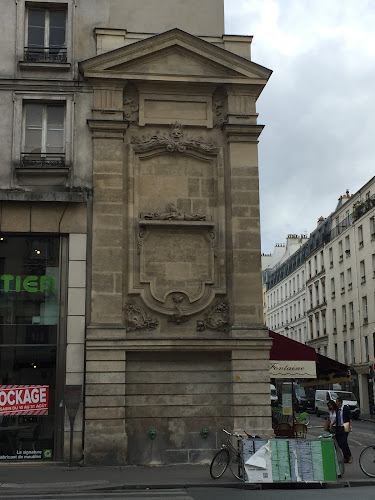
Description
The Fontaine de Charonne in Paris, France is a hidden gem that is often overlooked by tourists. Located in the 11th arrondissement at 61 rue du Faubourg-Saint-Antoine, this art deco water fountain was designed by architect Paul Proust and built in 1932. The Fontaine de Charonne is listed as a historic monument and is a testament to the city’s rich history and architectural heritage. What makes this fountain so unique is its intricate design and attention to detail. The fountain features a central column with four spouts that pour water into a lower basin. The basin is decorated with intricate carvings and reliefs that depict various scenes from Parisian life. The fountain is surrounded by a small garden and is situated in the Place des Vosges, one of the city’s most beautiful carrés. The Fontaine de Charonne is a must-see for anyone interested in art deco architecture or Parisian history. The fountain is a beautiful example of the style and is a testament to the city’s commitment to preserving its architectural heritage. Whether you are a history buff, an architecture enthusiast, or simply looking for a quiet spot to relax and enjoy the scenery, the Fontaine de Charonne is definitely worth a visit.
Principales caractéristiques
Fontaine de Charonne, located in the 11th arrondissement, is a historical landmark with a unique blend of architectural features and historical significance. The monument's main feature is its striking design, which reflects the rich history of the area. Visitors can explore the fountain's intricate details and learn about its cultural and artistic importance.
Accessibilité et commodités
The museum is equipped with accessibility features to accommodate visitors with disabilities, including wheelchair access and facilities. Amenities on-site include restrooms, providing convenience for visitors during their exploration. Additionally, the museum offers audio guides to enhance the visitor experience and a gift shop where visitors can find unique souvenirs to commemorate their visit.
Planifier votre visite
To make the most of the visit, it is recommended to arrive during non-peak hours to avoid crowds and fully appreciate the monument's beauty and significance. Visitors typically spend around 1-2 hours exploring the site, immersing themselves in its historical and cultural significance. A suggested itinerary includes a leisurely stroll around the monument, taking time to admire its architectural details and capturing memorable moments.
Fontaine de Charonne: a historic detail on the Faubourg Saint-Antoine
Fontaine de Charonne is a historic public fountain at 61 rue du Faubourg-Saint-Antoine, in Paris’s 11th arrondissement. It belongs to the small-scale landmarks that reward attentive walking rather than a dedicated, lengthy visit. In a city often explored through major museums and grand monuments, it offers a more local way to read the streetscape of eastern Paris.
The fountain’s interest lies in its civic character and its place within the older fabric of the Faubourg Saint-Antoine. This is a useful stop for travellers who enjoy historic urban details: public infrastructure, architectural fragments and the layers of a neighbourhood shaped by movement, commerce and residential life. Allow time to look at the fountain in context, rather than treating it as an isolated photo opportunity.
Location and neighbourhood context
Rue du Faubourg-Saint-Antoine is one of the principal historic routes leading east from the Bastille area. Its busy, continuous frontage gives the address a distinctly urban setting, with everyday Paris unfolding around it. The 11th arrondissement is well suited to independent exploration on foot: it combines residential streets, cafés, shops and streets that connect naturally with the wider Bastille and eastern Paris districts.
This is not a destination to approach as a formal park or a self-contained historic precinct. Instead, build it into a walk through the faubourg. The street setting makes the fountain an effective pause between larger plans, especially for visitors interested in how Paris’s historic routes continue to serve contemporary neighbourhood life. Keep your route flexible and leave room for slower observation along side streets.
Visitor highlights
- A historic public fountain in the eastern part of Paris, suited to travellers looking beyond the city’s headline sights.
- An easy architectural stop to fold into a walk along rue du Faubourg-Saint-Antoine and the surrounding 11th arrondissement.
- A strong choice for urban-history enthusiasts, photographers of street details and repeat visitors seeking a more neighbourhood-focused itinerary.
- A brief, exterior-oriented visit that works best when paired with time to explore the nearby streets at an unhurried pace.
Practical planning tips
Visit in daylight, when the fountain and its relationship to the street are easiest to appreciate. Morning can offer a calmer moment for looking closely, while later in the day gives a better sense of the area’s daily rhythm. As this is a streetside monument, stay aware of pedestrians, traffic and the limited space available for stopping.
There is no need to allocate a large block of your day. Treat Fontaine de Charonne as one point in a walking route, and check current local conditions before setting out. If your wider itinerary includes the Bastille area or eastern Paris, use the address as your reference point rather than relying on a generic monument search. Comfortable shoes are useful for continuing through the neighbourhood.
Frequently asked questions
Where is Fontaine de Charonne?
It is at 61 rue du Faubourg-Saint-Antoine in Paris’s 11th arrondissement.
How long should I allow for a visit?
It is best planned as a short stop within a wider walk through the Faubourg Saint-Antoine and eastern Paris.
Who will enjoy this monument most?
It particularly suits visitors interested in historic public features, Parisian streetscapes and neighbourhood-scale architecture.