
French puffy pastry is called pâte feuilletée, literally “leafed pastry”: the buttery, laminated dough behind palmiers, chaussons aux pommes, and mille-feuille. The pastry most people picture first, the croissant, isn’t technically pâte feuilletée at all. It belongs to a related but separate category called viennoiserie, because its dough is yeasted. If you’ve seen this pastry called “factura,” that’s a Latin American term, not a French one (more on that below).
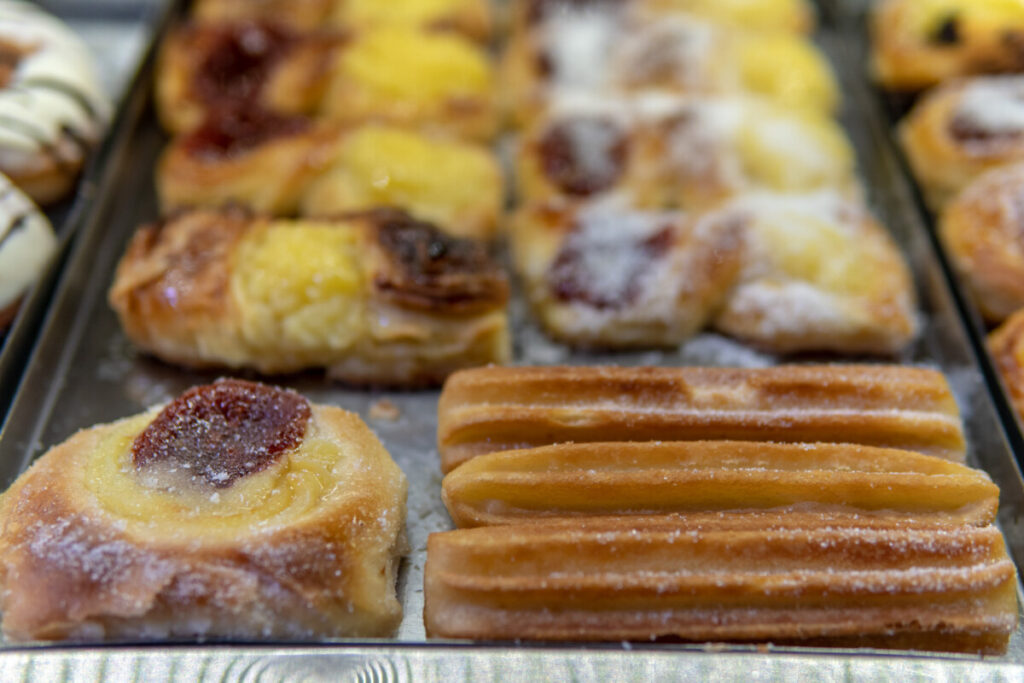
The Real Answer: French Puff Pastry Is Called “Pâte Feuilletée”
Pâte feuilletée starts as a simple dough of flour, water, and salt (called the détrempe), which a baker wraps around a block of cold butter, then rolls out and folds, usually in thirds, five or six times, resting the dough in the refrigerator between folds so the butter stays solid instead of melting into it. Each fold roughly triples the layer count, so a finished sheet can hold over 700 alternating layers of dough and butter, with no yeast anywhere in the recipe. When the pastry hits a hot oven, the water in that cold butter turns to steam, and it’s the steam pushing the layers apart, not fermentation, that makes the pastry rise. That’s also why the texture is dry and flaky rather than soft and airy like a yeasted bread.
If you’re buying pâte feuilletée ready-made at a French supermarket rather than eating it in a bakery, check the label: “pur beurre” means it’s made with real butter, while unlabeled versions often use margarine or vegetable shortening and puff less dramatically.
You’ll see pâte feuilletée on French menus and in bakery windows as the base for both sweet and savory pastries: palmiers, chaussons aux pommes (apple turnovers), mille-feuille (the layered “Napoleon” pastry), jalousies, and savory galettes and vol-au-vents. It’s also the dough French home cooks buy pre-rolled at the supermarket when a recipe just calls for “pâte feuilletée.”
Puff Pastry vs. Viennoiserie: Why a Croissant Doesn’t Quite Count
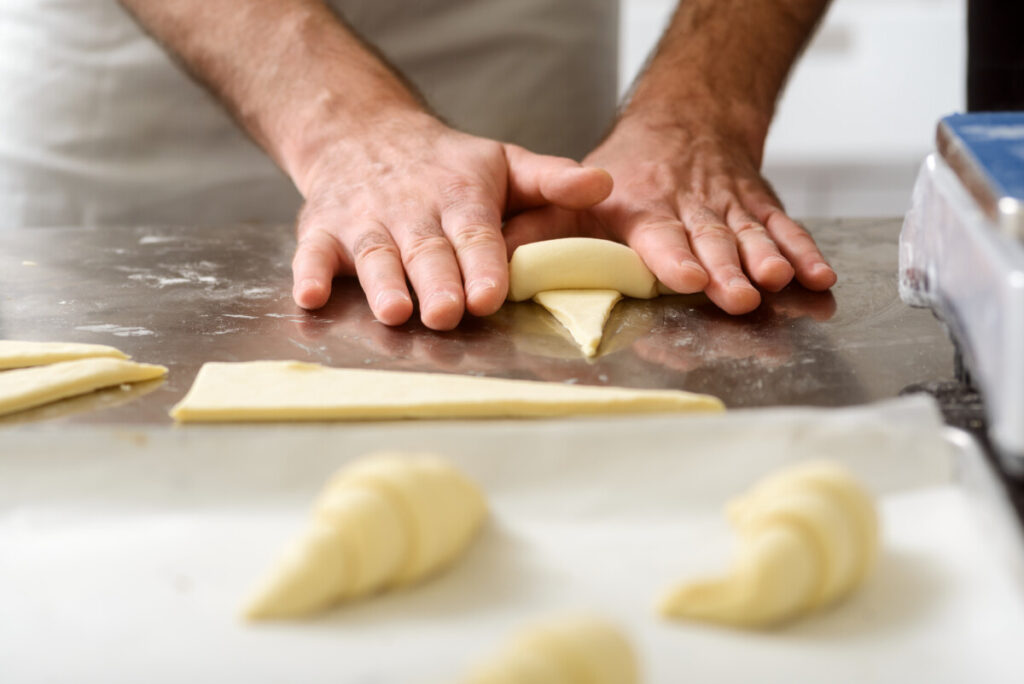
Bakers draw the line at leavening: pâte feuilletée is unleavened, laminated dough. Des croissants et Pain au chocolat are made with the same butter-lamination technique but with a yeasted, enriched dough — that puts them in a separate category called viennoiserie. Both groups are flaky and buttery, and French bakeries usually display them side by side, so the line blurs in everyday conversation. If you ask a boulanger for “une pâte feuilletée” and point at a croissant, they will understand you, but technically you are asking for two different doughs.
Even the croissant’s history is imported: the shape traces back to the Austrian kipferl, brought to Paris in the 1830s by an Austrian baker, August Zang, who opened one of the city’s first “boulangeries viennoises.” French bakers later adapted it into the laminated, buttery pastry sold today.
The Full Family of French Puffy Pastries
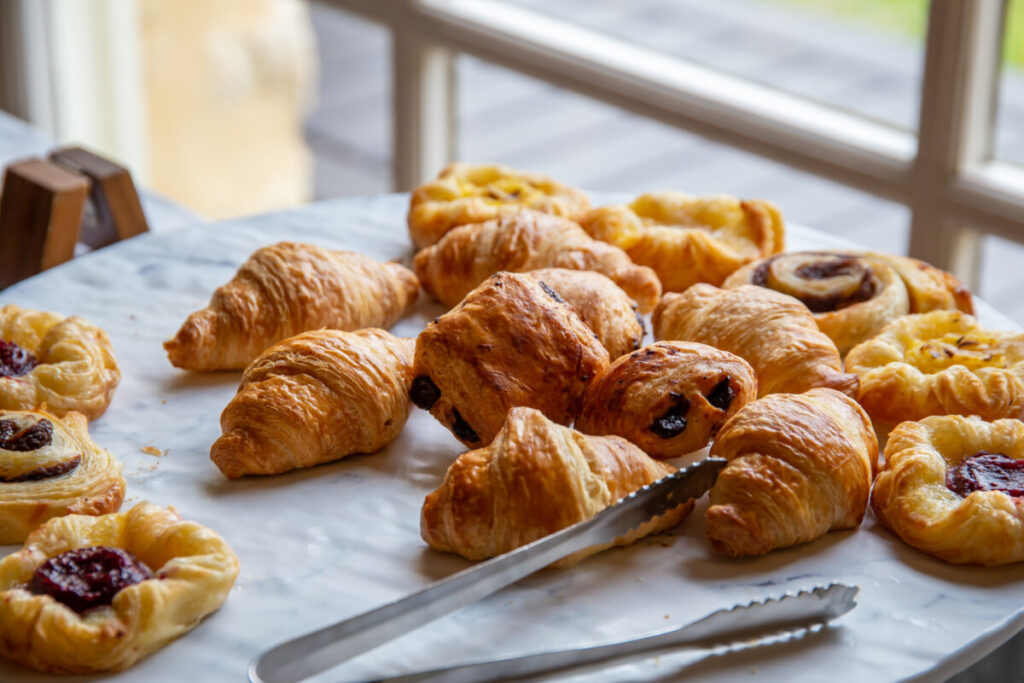
“French puffy pastry” covers a wider family than most visitors expect. Some items are pure pâte feuilletée, some are yeasted viennoiserie made with the same lamination technique, and one famous name on this list, the éclair, is not laminated at all. Here is how the main ones sort out:
Pastry | Dough type | What it is |
|---|---|---|
Croissant | Viennoiserie (yeasted, laminated) | Crescent-shaped, buttery and flaky, the default French breakfast pastry. |
Pain au chocolat | Viennoiserie | Rectangular croissant dough wrapped around two batons of dark chocolate. Called “chocolatine” in and around Toulouse and Bordeaux. |
Palmier | Pâte feuilletée | Pure puff pastry rolled in sugar and folded into a palm-leaf (or “elephant ear”) shape, caramelized until crisp. |
Chausson aux pommes | Pâte feuilletée | An apple turnover — puff pastry folded into a “slipper” shape around stewed, cinnamon-spiced apple. |
Mille-feuille | Pâte feuilletée | Stacked, thin layers of puff pastry with pastry cream between them, topped with fondant icing — the French “Napoleon.” |
Kouign-amann | Laminated yeasted dough | From Brittany; the name means “butter cake” in Breton. Layered with sugar that caramelizes into a crackling top. |
Jalousie | Pâte feuilletée | A long, slatted puff-pastry tart (the name means “venetian blind”) usually filled with almond cream or jam. |
Éclair | Choux pastry (not laminated) | Piped, egg-heavy dough that puffs from steam inside a hollow shell, then filled with pastry cream and glazed. Often mistaken for a puff-pastry item, but it isn’t. |
One more pastry worth knowing: tarte Tatin, mille-feuille’s cousin, uses puff pastry as its base but is really a caramelized apple tart baked upside down and flipped just before serving. You will see it on nearly every French bistro dessert menu.
What Does Puffy French Pastry Cost in Paris?
Expect to pay €0.90-€1.90 for a plain croissant and roughly €1.10-€1.90 for a pain au chocolat, depending on the arrondissement. A 2026 Paris bakery-price survey (France Hotel Guide, covering roughly 100 boulangeries) put the citywide average croissant price at about €1.22. Prices run lowest in the outer districts (around €0.90 in the 13th) and highest in pricier central and western arrondissements like the 2nd, 7th, and 16th, where rent and rising butter costs push prices toward €1.90. Palmiers, chaussons aux pommes, and mille-feuille typically cost more, in the €2.50–€5 range, since they take more labor and often more filling.
How to Order Like a Local: French Bakery Vocabulary
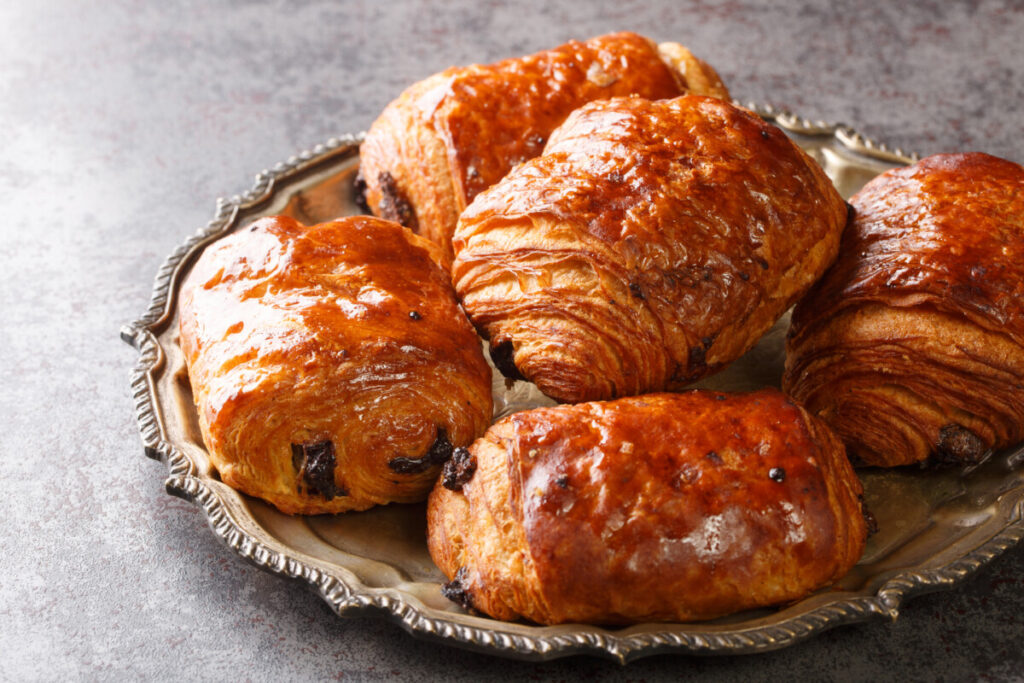
You do not need much vocabulary to order well in a Parisian boulangerie. Point and say “un croissant, s’il vous plaît" ou "un pain au chocolat.” In Paris, “pain au chocolat” is the safe choice; save “chocolatine” for a bakery in Toulouse or Bordeaux, where roughly 16% of the country, concentrated in the southwest, uses that word instead. For the pure puff-pastry items, ask for “un palmier,” “un chausson aux pommes,” or “une part de mille-feuille” (a slice of mille-feuille). Most boulangeries sell pastries individually and don’t expect tipping — just point, pay, and eat it warm on the walk out, which is completely normal in Paris.
Not French: Clearing Up the “Factura” Confusion
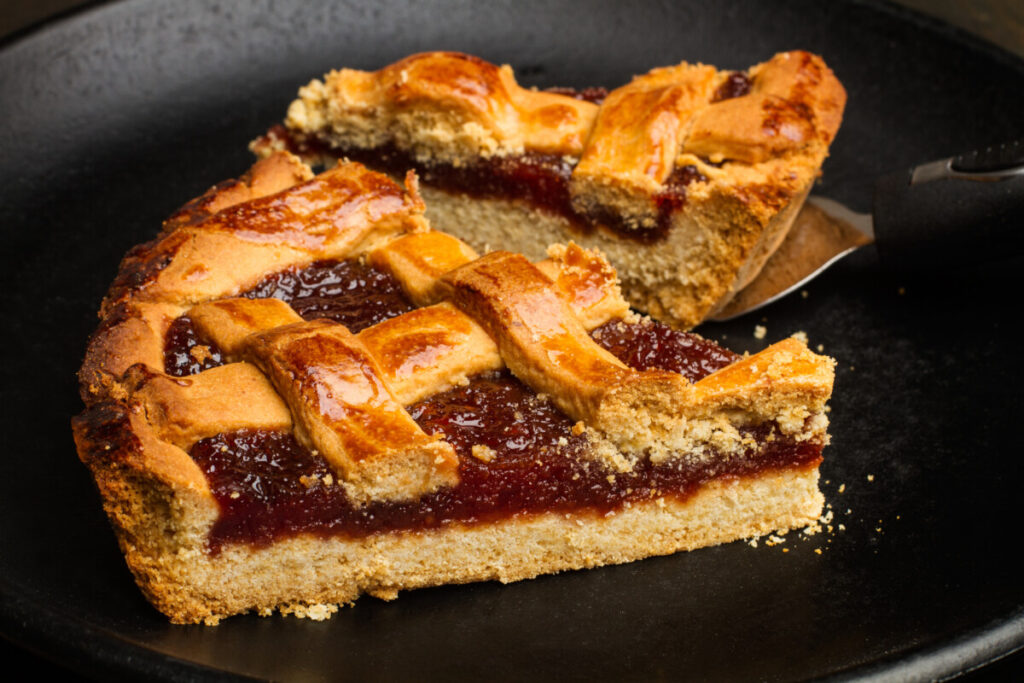
If a search brought you here after seeing “factura” described as French pastry, that’s a mix-up worth correcting: factura is the everyday word for viennoiserie-style pastries in Argentina and Uruguay, not a French term. Argentina’s baking tradition was shaped by a wave of Italian, German, French, and Spanish immigrants between 1880 and 1930, so some factura recipes do have French roots — but the word itself, and pastries like facturas de manteca or the dulce-de-leche-filled varieties, are South American, not something you’ll hear a Parisian baker use. Uruguay’s version of the same tradition is usually called bizcochos, with stronger German influence via the krapfen. Neither term belongs on a Paris bakery menu.
FAQ
Is a croissant puff pastry?
Not technically. A croissant uses the same butter-lamination technique as puff pastry, but the dough is yeasted, which puts it in the viennoiserie category rather than pure pâte feuilletée (puff pastry). Pastries made from true puff pastry — no yeast — include palmiers, chaussons aux pommes, and mille-feuille.
What is puff pastry called in French?
Pâte feuilletée. It translates roughly to “leafed dough,” a reference to the hundreds of thin, leaf-like layers created by repeatedly folding butter into the dough.
Is factura a French pastry?
No. Factura is the term used in Argentina and Uruguay for viennoiserie-style baked goods. It reflects Italian, German, French, and Spanish immigrant baking traditions from the late 1800s and early 1900s, but it isn’t a word used in France.
Where can I try real French puff pastry in Paris?
Any neighborhood boulangerie or pâtisserie will carry it. For a pastry made from true pâte feuilletée rather than viennoiserie, order a palmier, a chausson aux pommes, or a slice of mille-feuille — croissants and pain au chocolat are viennoiserie, not pure puff pastry, even though they’re laminated the same way.
Last updated July 2026. Sources: pastry classification and lamination technique cross-checked against King Arthur Baking and BAKERpedia; croissant/viennoiserie history via Wikipedia and Délifrance; 2026 Paris bakery pricing survey (La Créole, France Hotel Guide); pain au chocolat/chocolatine regional split via The Local France and Connexion France; factura origins via Wikipedia’s Facturas entry.
Find Things to Do in Paris
Find Accommodation

Continue Planning Your Paris Trip
Best Way to Visit Paris Monuments Efficiently: Discover Top Sights in Less Time
Paris has 2,000+ monuments, so see the best without losing hours on the metro. Group sights by neighborhood,…
Read Guide →Paris Fashion Week Travel Guide: Ultimate Insider Tips and Hotspots
You don't need a runway seat to experience Paris Fashion Week. Catch street style, designer boutiques, pop-up installations,…
Read Guide →
Travel Agencies in Paris: 10 Current Agencies and Tour Operators for 2026
Planning a Paris trip and want local expertise? Ten travel agencies for 2026, from boutique luxury specialists to…
Read Guide →