
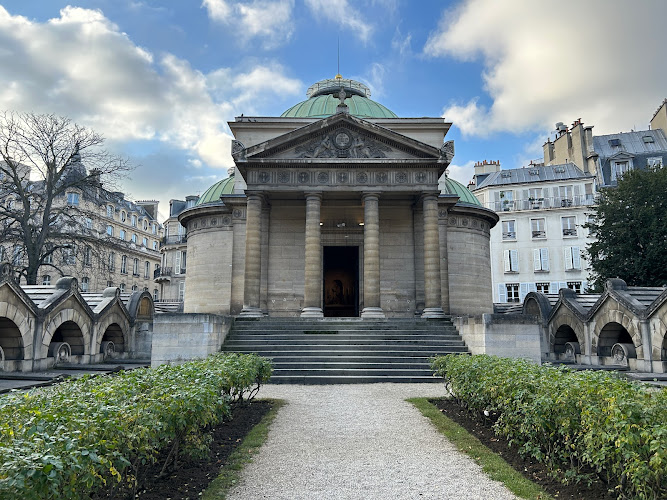
Description
The Chapelle expiatoire is a hidden gem in Paris that is often overlooked by tourists. Located in the 8th arrondissement at 22 rue Pasquier, this small chapel is steeped in history and significance. Built in the 13th century, the Chapelle expiatoire was constructed to commemorate the end of the French Revolution. It is the only surviving building of the Chapel of the Holy Blood, which was destroyed during the revolution. Today, the Chapelle expiatoire is a place of pilgrimage for Catholics and is still used as a place of worship. It is visited by the French President and the French Prime Minister every year. The chapel’s significance is not only historical but also spiritual. It offers a peaceful and serene atmosphere for visitors to reflect and connect with their faith. The Chapelle expiatoire’s architecture is also noteworthy. Its neoclassical design and intricate details make it a stunning example of French craftsmanship. The chapel’s interior is adorned with beautiful frescoes and sculptures, adding to its overall beauty. Overall, the Chapelle expiatoire is a must-visit for those interested in French history and culture. Its significance, beauty, and peaceful atmosphere make it a unique and worthwhile destination in Paris.
Key Features
The Chapelle expiatoire is a neoclassical chapel dedicated to King Louis XVI and Queen Marie Antoinette, located in tranquil surroundings. The main feature of this monument is its historical significance as a memorial to the executed royals. The chapel's architecture and serene atmosphere make it a must-see for visitors interested in French history and culture.
Accessibility and Amenities
The museum provides accessibility features to accommodate visitors with disabilities, including wheelchair access and restroom facilities. Additionally, visitors can avail of amenities such as audio guides and a gift shop offering unique souvenirs related to the chapel and its history.
Planning Your Visit
To avoid crowds, it's best to visit the Chapelle expiatoire during weekdays in the morning. The average visit time is approximately 1 to 1.5 hours, allowing visitors to explore the chapel and its surroundings thoroughly. A recommended itinerary includes exploring the chapel, learning about its history, and taking a moment of reflection in the tranquil environment.
What Makes the Chapelle expiatoire Notable
The Chapelle expiatoire is a neoclassical memorial chapel in Paris’s 8th arrondissement. Commissioned by Louis XVIII and completed in 1826, it honours Louis XVI and Marie Antoinette, who were initially buried on this site after their executions during the Revolution. Its purpose is inseparable from the difficult history it commemorates: this is a place to consider the aftermath of the Revolution rather than a broad survey of royal France.
For visitors, the monument offers a concentrated encounter with memorial architecture. The neoclassical setting gives the chapel a formal, restrained character suited to its subject. It makes a useful stop for anyone tracing the Revolution’s legacy in the modern city, especially travellers who want to balance Paris’s major palaces and museums with a more reflective historic site.
Location and Neighbourhood Context
The chapel stands at 22 rue Pasquier in the 8th arrondissement, a central district associated with grand avenues, department-store streets, churches and business addresses. This part of Paris feels markedly different from the medieval lanes of the Latin Quarter or Marais: the urban fabric is wider, more ordered and shaped by nineteenth-century planning.
It works well as a thoughtful pause while exploring the Madeleine and Saint-Augustin side of central Paris. The surrounding streets are easy to combine on foot with the Boulevard Haussmann area and its architectural perspective. Allow time to approach slowly rather than treating the chapel as a quick photo stop; the contrast between the busy 8th arrondissement and a memorial dedicated to Revolutionary loss is part of the visit’s interest.
Visitor Highlights
- A precise historical focus: the chapel directly addresses the original burial place of Louis XVI and Marie Antoinette after their executions.
- Neoclassical architecture: a concise stop for travellers interested in Parisian commemorative design and the visual language of the Restoration period.
- A reflective counterpoint: especially rewarding for visitors exploring the French Revolution beyond its better-known sites.
- Easy to pair with central Paris: suitable for an itinerary around Madeleine, Saint-Augustin or Boulevard Haussmann rather than a full day on its own.
- Best for history-minded visitors: the experience is likely to resonate most with those who value context, architecture and remembrance over spectacle.
Practical Planning Tips
Check the official Chapelle expiatoire website before setting out for current opening arrangements, admission conditions and any temporary changes. Historic monuments can have seasonal schedules, conservation work or closures linked to national events, so it is sensible not to rely on an old listing.
Visit earlier in the day if you prefer a quieter, more contemplative atmosphere, then continue on foot through the surrounding 8th arrondissement. Give yourself enough time to read the site’s historical interpretation and look carefully at the chapel’s neoclassical character. If your Paris schedule is tight, combine it with other nearby stops rather than allocating an entire afternoon. The chapel’s modest scale is its strength: approach it as a focused historical interlude.
Frequently Asked Questions
Why was the Chapelle expiatoire built?
It was commissioned by Louis XVIII as a memorial to Louis XVI and Marie Antoinette, who were originally buried on the site after their executions during the Revolution.
When was the chapel completed?
The Chapelle expiatoire was completed in 1826.
Where is the Chapelle expiatoire in Paris?
It is at 22 rue Pasquier in the 8th arrondissement. Confirm current visiting details with the official website or by phone at +33 1 44 32 18 00 before your visit.