
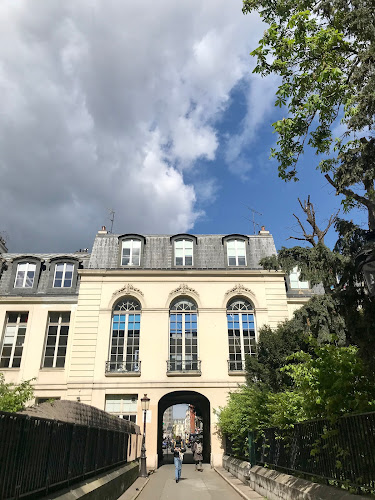
Medieval manor transformed by urban development into architectural curiosity
At 17-19 rue Pierre-Demours and 28 rue Bayen in the 17th arrondissement, the Château des Ternes stands as a remarkable survivor of medieval Parisian rural architecture, where a 14th-century “villam externam” mentioned in 1320 Abbey of Saint-Denis documents evolved into an 18th-century classical manor before 19th-century urban speculation transformed it into one of Paris’s most unusual architectural monuments. This extraordinary site demonstrates how historical buildings can adapt to dramatic urban transformation while preserving essential architectural elements that document centuries of evolving relationship between rural countryside and expanding metropolitan development through building fragments that tell complex stories of adaptation, survival, and creative preservation.
Pomponne de Mirey’s classical renovation and aristocratic vision
The removal of medieval moats and drawbridge elements during this classical renovation illustrates how aristocratic modernization could eliminate defensive features that no longer served practical purpose while preserving essential architectural elements that maintained property dignity and historical continuity through design approaches that honored site heritage while embracing contemporary residential functionality required for 18th-century aristocratic country living near expanding Paris.
19th-century speculation and architectural sacrifice
Architectural remnants and preservation triumph
Today’s integration of architectural remnants with contemporary functions—including municipal daycare center operation within preserved 18th-century spaces—demonstrates how successful historical preservation enables ongoing community service while maintaining architectural heritage through adaptive reuse that honors original design excellence while serving current neighborhood needs that require both functional efficiency and cultural connection to local historical identity preserved through distinctive architectural elements.
Contemporary cultural significance and urban curiosity
Today’s status as both Historical Monument and active community facility demonstrates how successful preservation enables buildings to achieve ongoing social relevance rather than museum status through uses that honor architectural heritage while serving contemporary neighborhood needs, proving that the finest historical architecture achieves immortality through continuing community service that maintains both cultural education and practical functionality within urban contexts that require buildings capable of transcending purely historical significance to serve ongoing social mission through architectural excellence that connects past achievement to present community benefit.
Essential information
- Medieval origins: “Villam externam” documented 1320 (Abbey of Saint-Denis)
- Classical renovation: 1715 by Pomponne de Mirey (royal secretary)
- Location: 17-19 rue Pierre-Demours, 28 rue Bayen, 17th arrondissement
- Urban integration: Rue Bayen pierced through building center
- Preservation status: Historical monument (June 13, 1949)
- Surviving elements: 18th-century facades, baroque portal, architectural arcade
- Current use: Municipal daycare center and community facility
- Historical context: Medieval farm to aristocratic manor to urban monument
Architectural and historical significance
- Classical architecture: 18th-century facades with tall arched windows
- Urban curiosity: Street passing through building center
- Preservation achievement: Architectural fragments rescued from complete destruction
- Community adaptation: Historical spaces serving contemporary social needs
- Educational value: Documents medieval to modern urban development evolution
Historical fragments create urban architectural poetry
The Château des Ternes embodies the complex relationship between historical preservation and urban development, where medieval origins and 18th-century classical architecture survived 19th-century speculative destruction to become one of Paris’s most architecturally curious monuments through creative conservation that transformed potential complete loss into distinctive urban landmark serving both historical education and contemporary community needs. This extraordinary site proves that threatened historical architecture can achieve new cultural significance through adaptive preservation strategies that honor original architectural excellence while accommodating practical urban development requirements, creating monuments that document the layered complexity of metropolitan evolution while serving ongoing neighborhood functions. For architectural history enthusiasts, urban development scholars, or anyone interested in how creative preservation can rescue threatened historical buildings, this fragmentary château offers a fascinating encounter with adaptive conservation excellence, where baroque portals, classical facades, and improvised architectural arcades demonstrate the innovative solutions required to maintain historical presence within expanding urban contexts that demand both heritage protection and practical functionality, proving that the finest preservation achievements emerge when architectural significance motivates creative conservation strategies that enable ongoing community service while documenting the complex relationship between individual historical buildings and the broader metropolitan development pressures that threaten but can also inspire innovative architectural solutions serving both cultural memory and contemporary urban needs.