
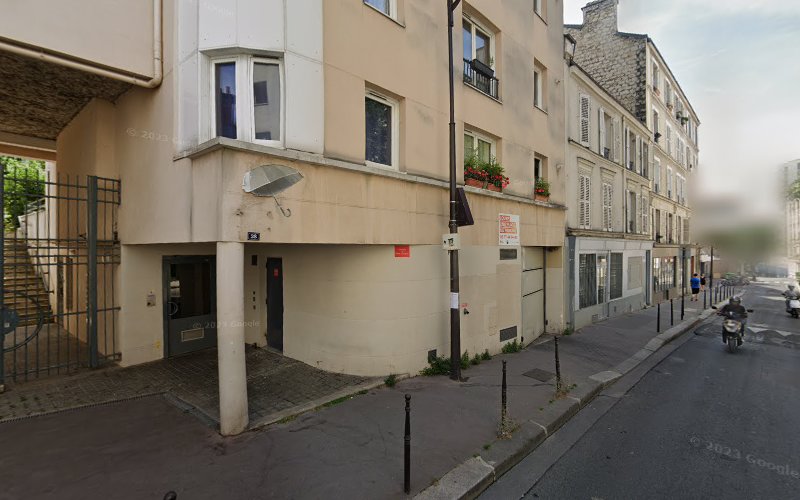
Description
Hidden in the heart of the 5th arrondissement, the Collège des Trente-Trois is a hidden gem that is often overlooked by visitors to Paris. Founded in 1830 by Pierre-Simon Laplace, the school was created to train young men in the arts and sciences, and to prepare them for a career in the civil service. Originally intended for the sons of French aristocrats, the school was soon opened to the sons of the middle class, and eventually to the sons of the working class. Today, the Collège des Trente-Trois remains a prestigious institution, with a student body of 400 who are widely known for their excellence. The school is considered one of the best in the world, and its graduates go on to achieve great success in a variety of fields. While the Collège des Trente-Trois is not open to the public, its impressive façade and historic significance make it a must-see for history buffs and architecture enthusiasts alike. The building’s neoclassical design is a testament to the elegance and refinement of 19th-century Parisian architecture, and its location on the charming impasse des Bœufs adds to its allure. For those interested in the history of education, the Collège des Trente-Trois offers a fascinating glimpse into the past, when education was reserved for the elite. And for those who simply appreciate beautiful buildings and the stories they tell, the Collège des Trente-Trois is a true Parisian treasure.
Key Features
- The Collège des Trente-Trois, located in the 5th arrondissement, is renowned for its impressive architectural design, reflecting a blend of historical and modern elements.
- The museum houses a diverse collection of artifacts and artworks, including rare historical documents and intriguing archaeological finds.
Accessibility and Amenities
- The museum is equipped with wheelchair-accessible entrances and facilities to ensure a comfortable visit for all visitors.
- Visitors can take advantage of amenities such as restrooms, a cafeteria offering a selection of refreshments, and a gift shop offering unique souvenirs and books related to the museum's collections.
Planning Your Visit
- To avoid crowds, it's best to plan the visit during weekdays, particularly in the morning or late afternoon.
- On average, visitors spend around 1-2 hours exploring the museum. A recommended itinerary includes starting with the historical exhibits, followed by the art collection, and concluding with a visit to the museum's gift shop.
What Makes the Collège des Trente-Trois Notable
The Collège des Trente-Trois belongs to the medieval educational landscape of Paris rather than to the city’s grand, freestanding monuments. Founded in the 14th century within the University of Paris, it was a small college created to house 33 poor scholars. Its name and number refer to the traditional 33 years of Christ’s life, giving the institution a religious as well as educational purpose.
Its interest lies in what it reveals about the Latin Quarter: this was a dense working quarter of schools, colleges, religious houses and lodging for students, shaped by the University of Paris over centuries. The Collège des Trente-Trois is therefore best approached as a historical address and a prompt for understanding medieval student life, patronage and charity, rather than as a conventional museum visit.
Location & Neighborhood Context
The site is at 7 impasse des Bœufs in the 5th arrondissement, on Paris’s Left Bank. The 5th is closely associated with the Latin Quarter and rewards unhurried exploration on foot: its streets often change scale quickly, from busier routes to narrow passages and quieter corners. An impasse is a short dead-end street, so allow a little extra time to locate the address and treat the approach as part of the experience.
For orientation, combine the stop with a wider walk through the Latin Quarter rather than making it the sole destination of a day. The neighborhood’s university history is its most useful thread: look at the street pattern, the close-set buildings and the relationship between small lanes and larger public streets. The Seine is also within the broader Left Bank walking area, making this a natural addition when moving between central Paris and the older scholarly quarter.
Visitor Highlights
- A medieval University of Paris story: the college was founded to support 33 poor scholars, a specific example of educational charity in medieval Paris.
- A Latin Quarter lens: it helps place the 5th arrondissement in the long history of students, teaching and religious institutions on the Left Bank.
- A compact walking stop: suitable for visitors building a self-guided route around historical streets rather than seeking a large-ticket attraction.
- Best for context-led explorers: particularly worthwhile for readers interested in medieval Paris, the history of education or lesser-known addresses.
Practical Planning Tips
Plan this as an exterior, neighborhood-based stop unless you have independently confirmed access for your date. The historical importance is tied to the former college, so do not expect the format of a staffed monument with an interpretation route. Check the precise address on a reliable map before leaving, since small impasses can be easy to pass.
Morning is useful for a calmer, more deliberate walk; late afternoon works well if you are already in the Latin Quarter and want to read the area through its streets. Keep the visit brief, then give yourself time to continue on foot. No advance booking is ordinarily relevant to viewing a street address, but confirm any access arrangements directly if you intend to enter a building or private area.
Frequently Asked Questions
What was the Collège des Trente-Trois?
It was a small medieval college of the University of Paris, founded in the 14th century to house 33 poor scholars.
Why is it called the Collège des Trente-Trois?
The number 33 commemorates the 33 years of Christ’s life.
Where is the historic site?
It is associated with 7 impasse des Bœufs in the 5th arrondissement, in the Latin Quarter on the Left Bank.