
<\!-- wp:heading -->
Napoleon\u2019s elite teacher training academy and Alphonse de Gisors\u2019 cloistered campus
<\!-- /wp:heading --><\!-- wp:paragraph -->
At 45 rue d\u2019Ulm in the 5th arrondissement, the École normale supérieure occupies one of the most prestigious addresses in French higher education and represents the pinnacle of the grandes écoles system. Founded by Napoleon I in 1808 as a “pensionnat normal” to “train in the art of teaching letters and sciences,” this institution has evolved into France\u2019s most selective and influential academic establishment, shaping intellectual life through nearly two centuries of educational excellence.
<\!-- /wp:paragraph --><\!-- wp:paragraph -->
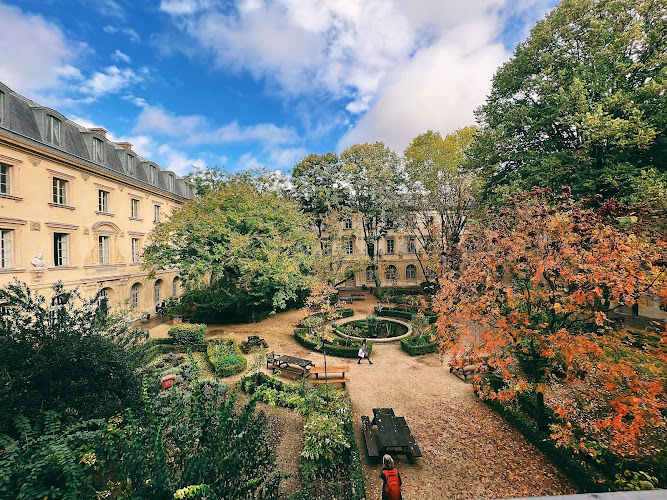
The schoolu2019s move to its current Rue du2019Ulm location in 1847 placed it at the heart of the Latin Quarter on the “quasi-rural site of the former vineyard of the Ursuline convent,” creating an academic sanctuary within one of Parisu2019s most intellectually vibrant neighborhoods. This strategic positioning reinforces the institution\u2019s role as a bridge between monastic scholarly tradition and contemporary academic innovation.
<\!-- /wp:paragraph --><\!-- wp:heading {"level":3} -->
Alphonse de Gisors\u2019 monastic architectural vision
<\!-- /wp:heading --><\!-- wp:paragraph -->
Architect Henri-Alphonse de Gisors designed the school\u2019s buildings from 1841 to 1847, organizing them around a vast square courtyard “in the manner of a cloister” that creates an atmosphere of scholarly contemplation and intellectual community. The entrance pavilion in dressed stone, inspired by classical architecture, establishes the institution\u2019s academic dignity while maintaining accessibility to the Latin Quarter\u2019s broader intellectual life.
<\!-- /wp:paragraph --><\!-- wp:paragraph -->
Above the entrance portal, two female figures representing letters and sciences flank the medallion of Minerva, Roman goddess of wisdom, creating an iconographic program that honors both the breadth of academic disciplines and the classical foundations of Western education. This symbolic decoration reinforces the school\u2019s mission of comprehensive intellectual excellence.
<\!-- /wp:paragraph --><\!-- wp:heading {"level":3} -->
Competitive selection and normalien tradition
<\!-- /wp:heading --><\!-- wp:paragraph -->
The ENS\u2019s legendary selectivity, achieved through the grueling concours examination requiring two years of preparatory study, admits only two hundred normaliens annually from thousands of candidates. This extreme selectivity creates an academic environment comparable to the Ivy League, Russell Group, or C9 League, establishing the ENS as France\u2019s premier intellectual training ground.
<\!-- /wp:paragraph --><\!-- wp:paragraph -->
The normalien tradition of academic excellence and public service has produced generations of French intellectual leaders, demonstrating how elite educational institutions can serve broader national interests while maintaining standards that attract the most capable students from across France and internationally.
<\!-- /wp:paragraph --><\!-- wp:heading {"level":3} -->
Architectural expansion and scientific innovation
<\!-- /wp:heading --><\!-- wp:paragraph -->
The school\u2019s growth beyond de Gisors\u2019 original buildings reflects expanding academic mission and scientific advancement. Jacques and Albert Guilbert\u2019s chemistry and natural sciences buildings (1930-1937) on rue Erasme, inaugurated in 1936 by Léon Blum and Albert Lebrun, demonstrate how educational architecture can adapt to serve evolving scientific research needs while maintaining campus coherence.
<\!-- /wp:paragraph --><\!-- wp:paragraph -->
Philippe Gazeau\u2019s 2005 library, featuring entirely glazed facades with stainless steel sun-breakers, shows how contemporary architectural approaches can enhance traditional academic environments while providing state-of-the-art facilities for 21st-century scholarship and research.
<\!-- /wp:paragraph --><\!-- wp:heading {"level":3} -->
Historic monument status and cultural preservation
<\!-- /wp:heading --><\!-- wp:paragraph -->
The protection of the schoolu2019s facades and roofs as historical monuments by the November 14, 1994 decree acknowledges the ENSu2019s architectural significance while recognizing its role in French educational and intellectual history. This preservation ensures that future generations can experience the physical environments where France\u2019s intellectual elite have been trained for nearly two centuries.
<\!-- /wp:paragraph --><\!-- wp:paragraph -->
The school\u2019s unique position as one of the few grandes écoles maintaining a central Paris campus demonstrates commitment to remaining integrated with broader Parisian intellectual life rather than retreating to suburban isolation, preserving the urban connections essential for comprehensive cultural and academic engagement.
<\!-- /wp:paragraph --><\!-- wp:heading {"level":3} -->
Napoleonic legacy and republican excellence
<\!-- /wp:heading --><\!-- wp:paragraph -->
The ENS\u2019s evolution from Napoleon\u2019s “pensionnat normal” to contemporary academic powerhouse demonstrates how educational institutions can transcend their political origins to serve broader intellectual and cultural purposes. Though suppressed in 1824 as a “nexus of liberal thought,” the school\u2019s eventual restoration and expansion prove the enduring value of academic excellence and intellectual freedom.
<\!-- /wp:paragraph --><\!-- wp:paragraph -->
For visitors to Paris interested in French educational history, elite institutional architecture, or the Latin Quarter\u2019s intellectual heritage, the École normale supérieure offers insight into how academic excellence can be nurtured through architectural environments that combine monastic scholarly tradition with contemporary research capabilities. The school demonstrates that the finest educational institutions emerge when rigorous academic selection meets inspiring physical environments that honor both individual intellectual development and collective scholarly mission.
<\!-- /wp:paragraph -->